


TRA Life and Health

The TRA Life and Health provides a space for deepening our understanding of life across theoretical boundaries - studying everything from the tiniest molecules to the interaction of different organisms within ecosystems. Researchers from the fields of medicine, life sciences, pharmacy, nutrition research, mathematics and computer science are together studying - amongst others - organoids to better understand specific diseases or deploying artificial intelligence as a tool for neuroscience.
Research
More about our research profile, topics and TRA projects.
About us
Find out more about our objectives, members and TRA organization.
Offers
Find out more about research support and events organized by the TRA Life and Health.
Technologies
Find an overview on infrastructure, facilities und technologies used in the TRA Life and Health's research area
News from the TRA
Notifications
Highlights and Announcements
-

Great Data - Great Science: TRA Workshop on Data Management and Data Science Across Disciplines (06.10.2026)
06.10.2026, 9:00-18:00 Uhr© Egor Komarov/Unsplash -

TRA Life and Health bei der Bonner Wissenschaftsnacht
© Meike Brömer/Uni Bonn -

Transdisciplinary wins!
Award-winning TRA Life and Health projects© M. Dziedzic/Unsplash, modified by TRA Life and Health -
Bonn Organoid Club
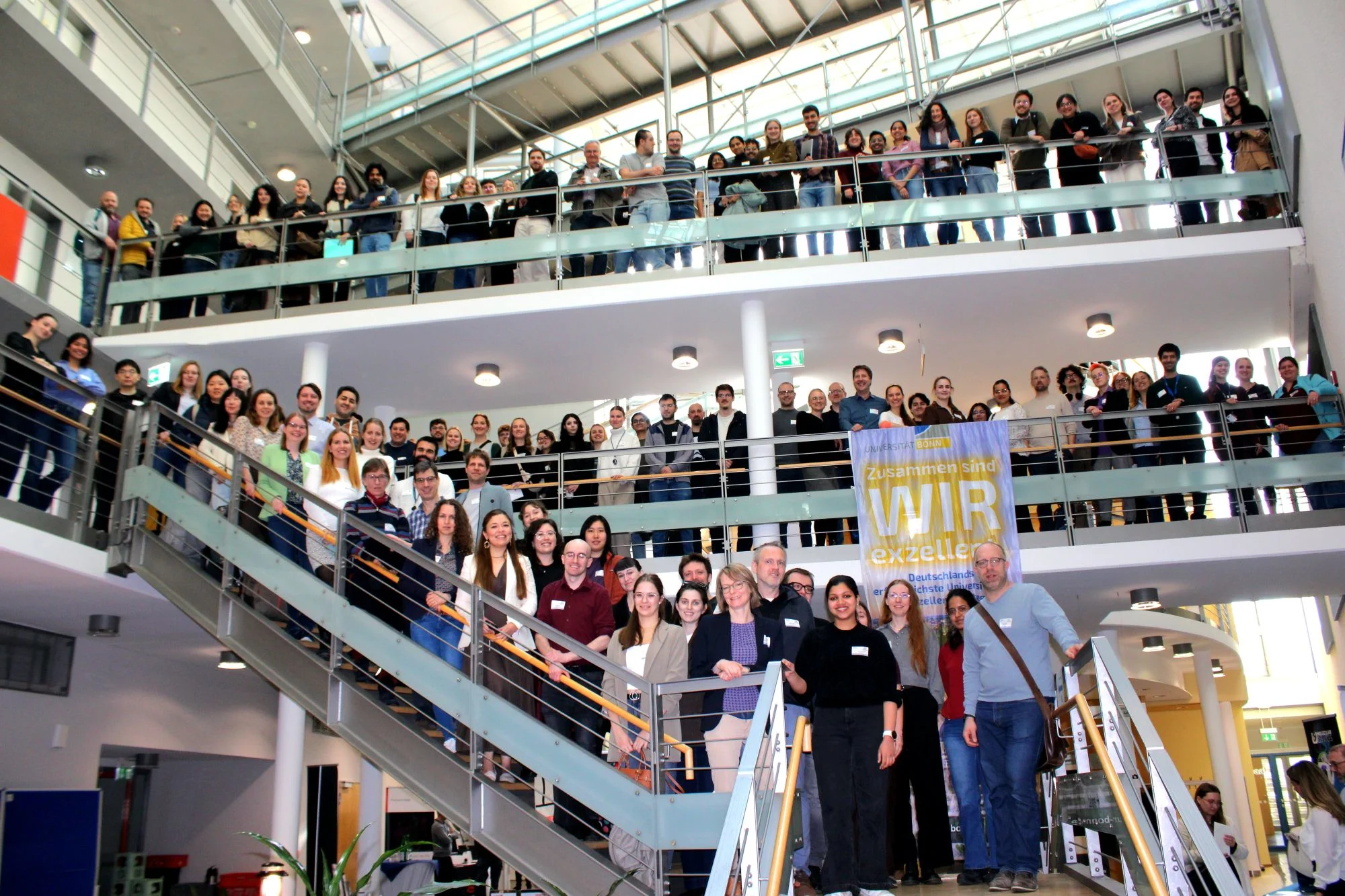
Read more about our symposium!© L. Achenbach/Uni Bonn -

Spatial Biology Club
Exploring the complexity of life© Uni Bonn -

Mathematical Life Sciences Club
Meet our community!© Uni Bonn
Get Involved in the TRA
As a member of the TRA, you can access funding opportunities, take part in events and build new networks.
Become a member!
TRA members benefit from regular sponsorship offers and opportunities for networking beyond the boundaries of the specialist field. We look forward to meeting you!
Who are our members and what are their research topics?
Our members are professors and group leaders of the University of Bonn and cooperating Bonn institutions from medicine, life sciences, pharmacy, nutrition research, mathematics, computer science and other fields.
Meet our Researchers
Inter- and transdisciplinary research actively pursued at the University of Bonn and is promoted across faculty boundaries. The faces of TRA Life and Health are our Hertz Chair, our Argelander professors and the numerous committed scientists, such as the members of our steering committee.
Prof. Dr. Dirk Baumjohann
Within TRA Life and Health, Dirk Baumjohann combines basic immunological research with clinical translational issues.
Doctoral Student
Annalena Liesen
"I joined the TRA Life and Health as a scientific staff representative on the steering committee to experience and promote the exchange between different areas of the life sciences."
Contact

Meike Brömer
Read more...
Transdisciplinary Research Areas
Spaces for innovation in research and teaching - these are the six transdisciplinary research areas at the University of Bonn.
University of Excellence
Since summer 2019, we have been one of eleven German Universities of Excellence. Read more about our research profile and our future concept.
Research Funding
Research and Innovation Services at the University of Bonn will support you in all matters relating to your externally funded project.