


Research Profile TRA Life and Health
The transdisciplinary research area (TRA) promotes scientific collaboration between scientists from medicine, life sciences, pharmacy, nutrition research, mathematics and computer science. In addition to the research foci already established at the University of Bonn in the field of life and health, new research areas are promoted under the program "Construction and Deconstruction of Life". To this end, we have established a Hertz Professorship for "Artificial Intelligence and Neuroscience" (Prof. Dr. Dr. Dominik Bach). The area of "Construction" is strengthened by two Argelander Professorships in "Organoid Biology" (Jun.-Prof. Dr. Elena Reckzeh and Jun.-Prof. Dr. Ana Ivonne Vazquez-Armendariz).

Construction
This research focus area concerns the construction of reductionistic systems of living matter through the usage of stem cell technologies, gene editing, nanotechnology and biomaterials as well as semi-synthetic biohybrids to derive deterministic or self-organizing models of development and disease.
The Bonn Organoid Club provides a forum for researchers active in the TRA and other interested scientists to exchange information and views regarding the development and usage application of organoids in a wide range of biological systems.


Deconstruction
TRA scientists utilize state-of-the-art technologies to study the immune and nervous systems and other complex biological systems of subjects ranging from simple model organisms to human beings. Immunologists and neuroscientists collaborate with systems biologists and mathematicians in the ImmunoSensation2 Cluster of Excellence, which represents a primary focus within the Transdisciplinary Research Area.
Breakthroughs have been attained in understanding certain functions on the organism level through intricate study, but a general theoretical and scale-independent comprehension of these systems remains elusive. This TRA will be increasingly focusing its work on the nexus point of artificial intelligence, machine learning and life sciences, studying behavioral disease phenotypes on the basis of high-dimensional data of varying complexities.
Another key element in building predictive models of human disease is the integration of clinical, genetic, molecular, and cellular data by relying on mathematics and modeling. Bonn researchers with interest in mathematics and modeling in the life sciences meet regulary in the MaLiS (Mathematical Life Sciences) Club.
Research Professorships of the Transdisciplinary Research Area

Argelander Professorship for Organoids and Chemical Biology Jun.-Prof. Dr. Elena Reckzeh
Elena Reckzeh combines chemical biology with organoid research to further develop the area of 'Construction' in TRA Life and Health's research profile.

Argelander Professorship for Organoid Biology Jun.-Prof. Dr. Ana Ivonne Vazquez-Armendariz
Ana Ivonne Vazquez-Armendariz adds a new area of focus to TRA Life and Health's research profile 'Construction' with her expertise on lung organoids.

Hertz Chair for Artificial Intelligence and Neuroscience Prof. Dr. Dr. Dominik Bach
Dominik Bach establishes a new focus for the profile area "Deconstruction" at the interface between neuroscience, psychiatry and computer science in TRA Life and Health.
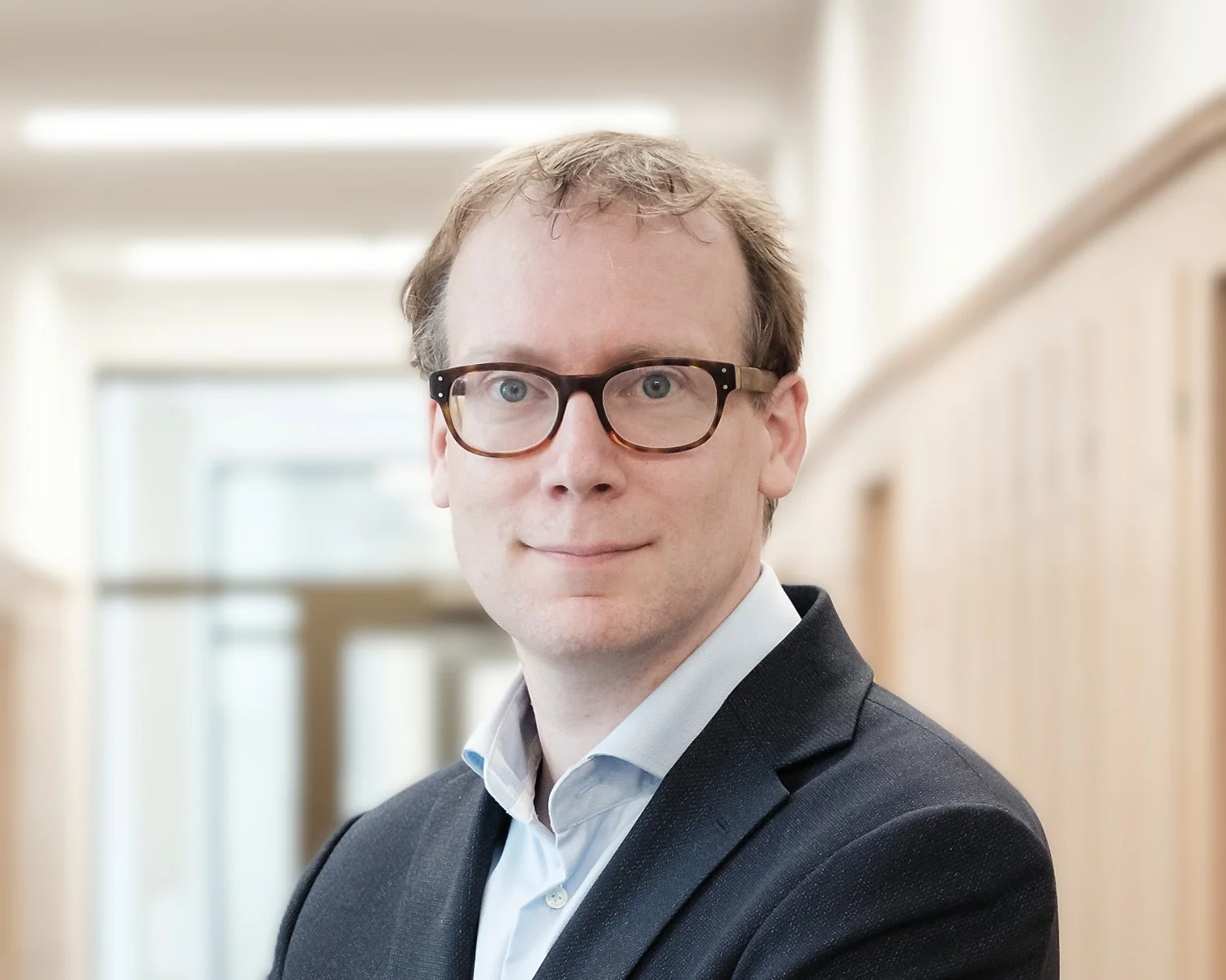
Professor for Cognitive Computational Neuroscience
Prof. Dr. Floris de Lange
Floris de Lange holds a part-time professorship at the Center for AI and Neuroscience (caian) and brings new expertise for studying perception, action and decision-making to the University of Bonn.

Bonn Organoid Club
The Bonn Organoid Club is a forum for biomedical researchers to share expertise and reagents for organoid models. One focus here is on technical aspects that are of interest to many scientists in this field. In addition, external scientists are invited to present their research on the topic of "organoids" to the Bonn community. The organizers of the Bonn Organoid Club are Florian I. Schmidt, Elena Reckzeh and Ana Ivonne Vazquez-Armendariz, supported by the “Life and Health” Transdisciplinary Research Area (TRA).
In 2024, we had two big events: "Bonn Organoid Day" (June 18, 2024) with around 80 Uni-Bonn participants, and the first "Bonn Organoid Symposium" (Nov. 6, 2024) with international keynote lectures and more than 150 particpants.
Mathematical Life Sciences (MaLis) Club
The "MaLiS" Club meets regularly to discuss ongoing projects around mathematical questions in medicine and life sciences, either at the Venusberg Campus or in Endenich/Poppelsdorf. Interested scientists from the University of Bonn and cooperating local institutions are welcome to participate.
Scientific organizers: Alexander Effland, Jan Hasenauer and Kevin Thurley


Spatial Biology Club Bonn
Recent advancements in single-cell omics technologies have illuminated tissues' molecular and cellular heterogeneity, driving transformative insights into health and disease. The emergent field of spatial omics technologies is poised to build upon these insights, elucidating the complexities of life at all scales. However, this rapid technological evolution poses a pivotal experimental and computational challenge: deciphering life through the lens of spatially informed datasets.
This club highlights the latest developments in spatial technologies, machine learning, and data analytics by invited speakers, workshops and meetings. Technologies for this research field are presented by the Competence Hub for Spatial Biology.
Organizers: Özgün Gökçe, Felix Meissner, Andreas Schlitzer and Dagmar Wachten
Excellent research - funded by TRA Life and Health
We regularly award innovative and transdisciplinary projects in the field of “Life and Health” with our Transdisciplinary Research Prizes. At the same time, projects are funded according to thematic calls, which sharpen the research profile and can serve as preparation for larger third-party funded projects.
Collaborative Research Projects
Scientists at the University of Bonn and the TRA are leading a large number of collaborative research projects in the field of life and health.
- EXC 2151 - ImmunoSensation2: The immune sensory system
- TRR 237 - Nucleic acid immunity
- TRR 259 - Aortic diseases6655
- TRR 333 - Brown and Beige Fat Organ Crosstalk, Signaling and Energetics ( BATenergy)
- SFB 1089 - Synaptic micronetworks in health and disease
- SFB 1454 - Metaflammation and cellular programming
- SPP 2453 - Integration of mitochondria into the cellular proteostasis network
- GRK 2873 - Tools and Drugs of the Future
- GRK 2168 - Myeloid antigen presenting cells and the induction of adaptive immunity
- FOR 2743 - Mechanical Stress Protection12121111
- FOR 5775 - Macrophage Niche Network Dynamics - Defining macrophages as choreographers of tissue development and function
NRW-funded network iBehave
Contact

Dr. Meike Brömer