


SYNERGY BUBBLES
With SYNERGY BUBBLES we are looking for activity focused, transdisciplinary working groups, which bring together ongoing and future activities in the TRA around specific transdisciplinary topics.
By forming a SYNERGY BUBBLE you will:
- work closely in an interdisciplinary team on a selected topic
- have flexibility in topics ranging from research to teaching or even beyond
- be eligible to compete for the TRA Matter SYNERGY PRIZE
- have a voice in future interdisciplinarity in university wide discussions
- be poised to compete for future cross-TRA funding initiatives
Are you interested to form a SYNERGY BUBBLE? – To become an action-focused working group within TRA Matter?
TAKE ACTION and apply now!
Application deadline is 15.06.2026.
We are also offering a SYNERGY BUBBLES Workshop on May 19, 2026 between 1 and 4 pm at the FTD (Kreuzbergeweg 24). The event will provide the opportunity to discover ongoing initiatives, provide community help for setting up a Bubble and to find new collaborators. Please register here by using the following link!
Further information’s are available for download:
- Call on SYNERGY BUBBLES, including guidelines and requirements +application form for submitting your proposal
- White-paper on SYNERGY BUBBLES
- Guiding principles of TRA Matter
FUNDED SYNERGY BUBBLES
Astrochemistry

SYNERGY BUBBLE Members: Serena Viti, Andreas Hansen, Frank Bigiel, Cristiano Porciani, Stefan Grimme, Robin Dahl, Christian Selzer, Minou Greve, Mathilde Bouvier, Milan Staffehl
Astrochemistry combines astronomy, physics, chemistry, computer science, and statistics to study the formation and destruction processes of (complex, prebiotic) molecules under the extreme conditions of space. Its main goal is to use chemical models to establish unique molecular tracers that characterize different types of gases in the interstellar medium of galaxies. This requires accurate chemical quantities in space, such as (i) rate coefficients and branching ratios for the reactions involved; (ii) binding and desorption energies that govern the relationship between interstellar gas and dust grains; and (iii) accurate rest frequencies that enable us to identify new transitions and new molecules. Our bubble will bring together spectroscopists, computational chemists, astrochemists, and observers to obtain fundamental information for astronomically relevant molecules in order to identify and characterize them in space.
Molecular Quantum Information
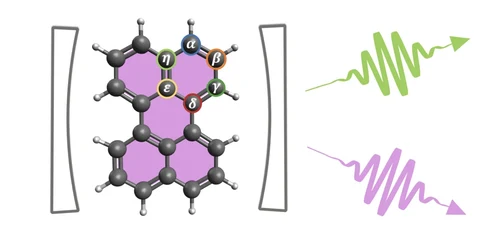
SYNERGY BUBBLE Members: Daqing Wang, Moritz Sokolowski, Connie Lu, Nikolay Kornienko, Olav Schiemann, Tianyu Fang, Ricardo Alvarez, Hanna Cramer, Pauline Lemp, Yang Wang
Molecules offer a compelling, but yet largely under-explored platform for quantum information science. Their manifold of internal degrees of freedom, spanning structural, electronic, vibrational, and spin states, provides a natural means for encoding, transmitting, and sensing quantum information. Devices based on organic molecular matter have already proven their strengths in many applications. However, the concept of using individual molecules as qubits for storing and handling information remains mostly unexplored. The proof of this concept is the long-term strategic goal of this synergy bubble and the research topics developed within it. In pursuing this aim, this bubble will strengthen and expand the existing collaboration between physics and chemistry in Bonn. With the advances in modern computing and AI, the bubble is well-positioned to seed a new research direction that, in the future, could evolve into an interdisciplinary research center at the University of Bonn.
The Practice, History, and Philosophy of Physics
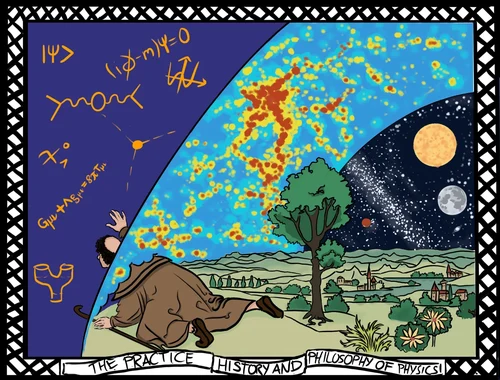
SYNERGY BUBBLE Members: Dennis Lehmkuhl, Sebastian Neubert, Christoph Hanhart, Ulf-G. Meißner, Cristiano Porciani, Philip Bechtle, Christian Röken, Henry Schumacher, Kartik Tiwari
The practice of physics is deeply interwoven with conceptual and interpretational questions. Such questions famously involve the interpretation of quantum mechanics and general relativity but also the interpretation and selection of the data produced by particle accelerators or gravitational wave interferometers. And yet, such questions often get short shrift during a physics degree. On the other hand, philosophy students, trained primarily in tackling conceptual and interpretational questions, typically do not have the necessary physics and mathematical background to tackle such questions in the domain of physics.
The Synergy Bubble “The Practice, History, and Philosophy of Physics” aims to strengthen the ties between the Department of Physics, the Department of Astronomy, and the Lichtenberg Group for History and Philosophy of Physics, all within shouting distance in of each other at the University of Bonn. One aim is to develop a joint physics and philosophy degree in which students study modern physics, its history and its philosophical interpretation within one structured course, where the physics and philosophy components complement each other in the most fruitful way. At the same time, there will be close research collaborations between practicing physicists and historians and philosophers of physics, creating an environment that would be unique in Germany and closely follow the Humboldtian ideal of a unity of research and teaching.
Towards a comprehensive set of AI tools for astrophysics
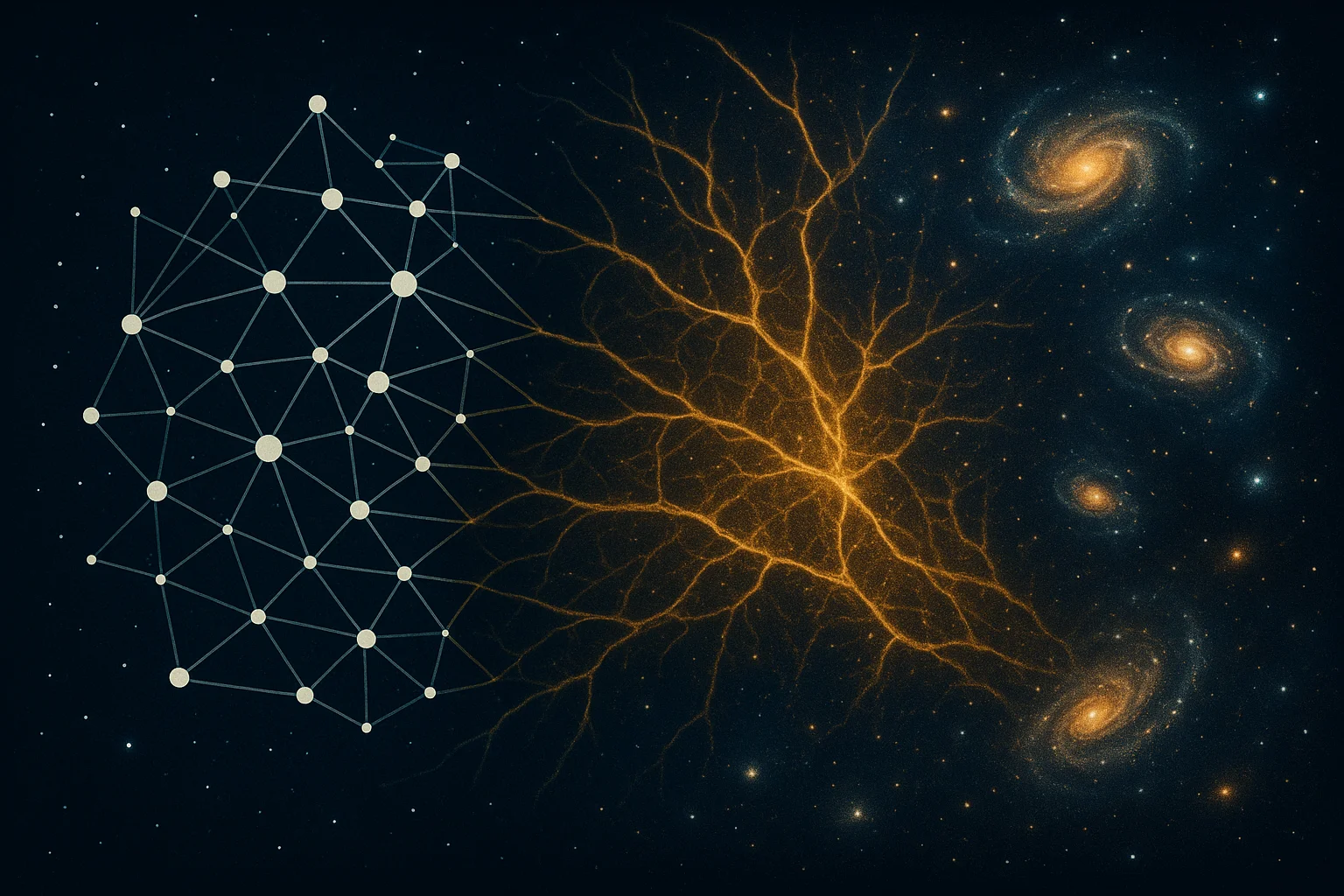
SYNERGY BUBBLE Members: Lucie Flek, Thomas Reiprich, Serena Viti, Cristiano Porciani, Zorah Lähner, Florian Pacaud, Jakob Dietl, Toka Alokda, David Kaczer, Shivam Rawat
To fully exploit the influx of high-quality observational data (and their high-fidelity simulated counterparts) astrophysicists require new, state-of-the-art methods and models. Over the past two decades, many areas of astrophysics (cosmology, extragalactic astronomy, exoplanet research, ...) have adopted statistical and AI techniques for data analysis and modelling. Yet, these are often ad-hoc tools, narrowly tailored and developed inconsistently. A paradigm shift is needed in how astrophysicists use computational tools. Data complexity and the demands of physical interpretation now exceed the capabilities of standard approaches, making dedicated methodological research essential. This SYNERGY BUBBLe initiative aligns with the recently funded Excellence Cluster Dynaverse, which integrates advanced computational methods with astrophysical research to address complex, data-intensive challenges. By complementing Dynaverse’s goals, the SYNERGY BUBBLE will help to create a connected ecosystem for methodological innovation. We will bring together astrophysicists and data/machine learning scientists to develop an open-source suite of statistical and AI tools, readily applicable or adaptable to a wide range of astrophysical problems. Released to the community, this suite will encourage adoption, feedback, and contributions, fostering sustained progress in data-driven astrophysics.
Mitoxantrone Modification for Breaking Resistance in Cancer Cells and for Overcoming Vancomycin Resistance in Bacteria
SYNERGY BUBBLE Members: Andreas Gansäuer, Gerd Bendas, Tanja Schneider, Anna Müller, Marianne Engeser, Melina Arts, Helena Skalski, Philipp König, Christian Köhler, Anika Joest
A major reason for high mortality rates caused by malignant tumor diseases is the development of resistance of tumors against therapeutic treatments. Resistance phenomena are not limited to cytotoxic agents but also covers other treatments. Antibiotics save millions of lives every year and enable high–risk medical interventions, such as in oncology, since cancer patients carry an increased risk of infection due to immunosuppression during treatment. Despite their central role in human healthcare, the pipeline for developing new antibiotics has dwindled, while bacterial resistance to antibiotics has become a “silent pandemic”, causing millions of deaths globally and threatening the very foundation of modern medicine. In this TRA-synergy bubble, we will address two important areas for overcoming drug resistance starting with a unique chemical scaffold based on the established drug mitoxantrone (MX) for combining chemical, cell biological and microbiological approaches. First, we will propose to break MX resistance in breast cancer cells. Secondly, to overcome vancomycin resistance in enterococci we will potentiate the recently discovered antibiotic activity of MX. This will be achieved by chemically modifying MX to improve its drug profile, using a recently developed modular method for synthesizing polypropionate building blocks and by employing modern screening methods for identifying active derivatives. The essential understanding for a mechanism-based platform for drug design will be provided by state of the art analytical methods, e.g. to follow DNA intercalation of the indicated derivatives by Microscale Thermophoresis (MST), address their intracellular accumulation and circumvention of efflux transporters by flow cytometry, both reflected by cell toxicity assays using fluorimetric readouts.
Our approach critically relies on the interaction between groups from microbiology, pharmacy, and chemistry. Our team consists of scientists at all levels of a scientific career (PhD students, Post-doc, Junior group leaders and Professors).
Contact for further information

Dr. Birgit Westernströer
Read more about TRA Matter ...
Research
Areas, topics, collaborative research & awards
About TRA Matter
Principles, organisation, members & network
Pinnboard
Articles, videos & announcements of the past years