


Our Vision
Issues related to sustainability and sustainability research play a key role in teaching. We develop new teaching and study offerings which are integrated into curricula as a visible part of the various degree programs. The University’s sustainability strategy is continuously further developed in a participatory process within the framework of our BOOST (Bonn Program for Sustainability Transformation) sustainability agenda. Strategic objectives and measures for teaching are being developed in a dedicated working group.
Working through a range of formats, the University of Bonn offers all its students the opportunity to engage with sustainability topics in an interdisciplinary and practice-oriented manner. In line with the UNESCO Education for Sustainable Development (ESD) program, we take on special responsibility for empowering future generations to better structure society to meet future challenges and more prudently approach the environment and our use of natural resources.

Strengthening sustainability in teaching
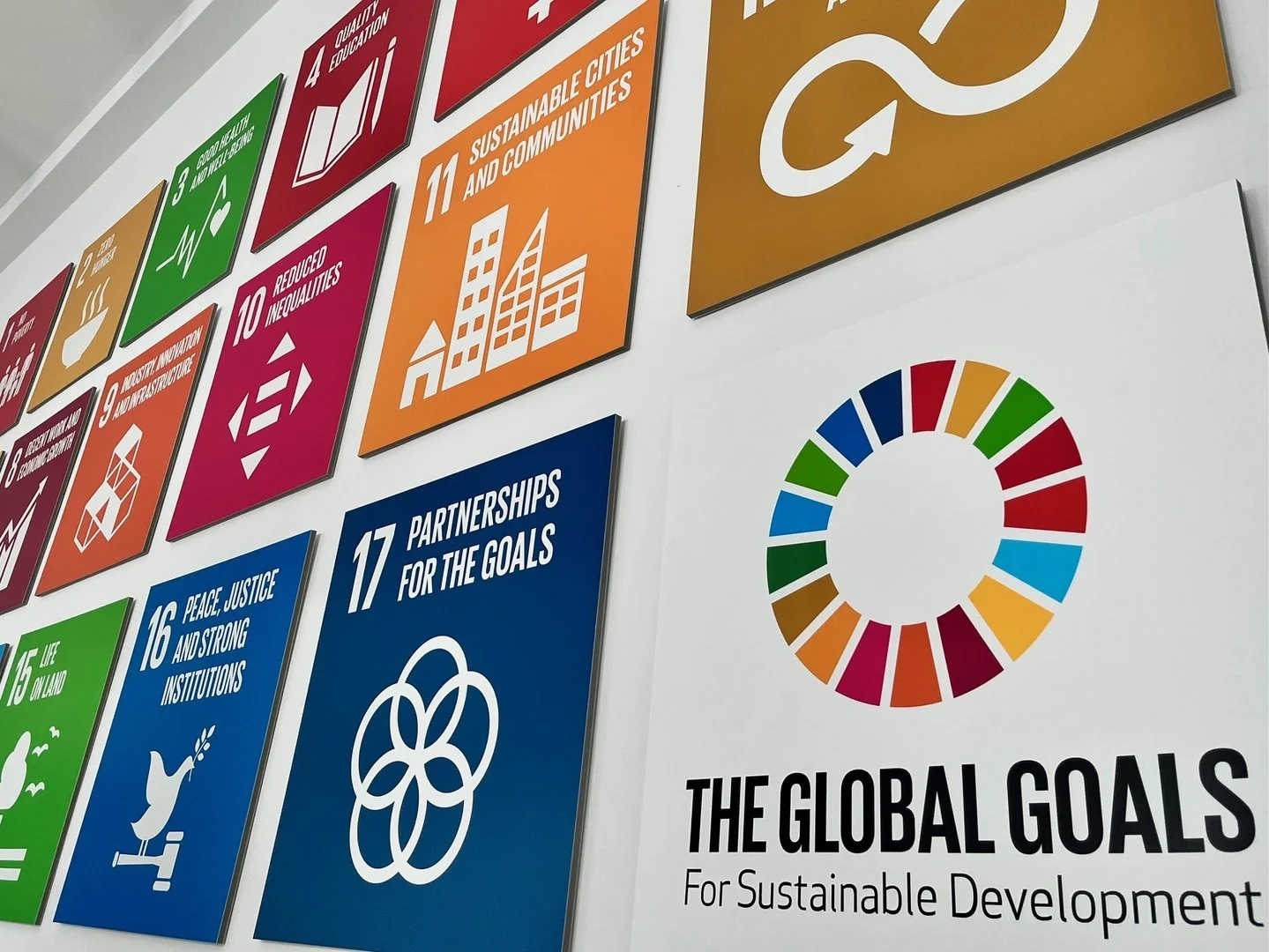
The SDG simulation game (Sustain2030) and the ClimatePuzzle (ClimateFresk) are two interactive formats that teach sustainability topics in a practical and collaborative way. Both are suitable for use in university teaching and continuing education and can be flexibly integrated into seminars, workshops or events.
The SDG simulation game provides a playful approach to global sustainability goals, while the ClimatePuzzle presents the scientific principles of climate change in an understandable and participatory way.
Are you interested in these formats? Please contact nachhaltige-lehre@uni-bonn.de for more information and to discuss possible applications.
Current teaching activities on the topic of sustainability
The University of Bonn offers all interested parties a regularly changing program of courses on sustainability topics.
Below you will find events that are open to students from all faculties. The complete list of lectures can be found here.
Service Learning
Service learning aims to combine academic knowledge and research with responsible action in civil society. Students work together with partners outside the university to independently design projects or regularly get involved in socially relevant institutions.

The Future Challenge - Working together for more sustainability in daily life
Climate neutrality and sustainability are widely discussed topics, but implementing them in everyday life remains a major challenge for many. However, the journey does not have to be arduous or discouraging—rather, it becomes easier the more people participate and support one another.
This is precisely where the University of Bonn’s new seminar concept, The Future Challenge, comes in. It brings people together to develop the skills needed to integrate sustainability into daily life effectively.
Student Sustainability Lab for Transformation
In the Student Sustainability Lab for Transformation, students from various disciplines collaborate with university stakeholders to design and implement their own sustainability projects. The seminar aims to create spaces for structural change and experiences of self-efficacy, to strengthen action competencies, and to make it tangible that transformation is possible through collective commitment and strategic approaches – especially driven by students.

Habitats in the Vertical
This interdisciplinary service-learning seminar is a cooperative project between Biology Education, the Vice-Rectorate for Sustainability at the University of Bonn, and the Beuel-Mitte Climate District. It combines academic work with civic engagement and fosters active exchange between the university and the local community.
The focus is on urban nature, with particular attention to building-nesting species such as house sparrows, common swifts, and bats. The goal is the long-term preservation of biodiversity in urban areas. Participants engage with both the ecological importance of urban biodiversity and the threats it faces.
Public lecture series
Sustainability—Concepts, Topics and Perspectives
The sustainable transformation of society is a key challenge of our times, touching on questions and problems from all areas of life. The University of Bonn, a University of Excellence, sees itself as an agent of change and wants to help shape pending transformation processes with the research it undertakes. Many researchers are studying sustainable development issues, thus establishing a valuable knowledge base for answering pressing social questions and making political decisions. Researchers of this lecture series provide an overview of key sustainability questions in their respective area of research.

UNESCO Chair
The University of Bonn hosts one of only 16 UNESCO Chairs in Germany, which are characterized by outstanding research and teaching in the areas in which UNESCO works. At the UNESCO Chair in Human Water Systems, Prof. Dr. Mariele Evers and her team are studying the sustainable use of water as a resource from a transdisciplinary perspective.
Interdisciplinary Activities

Master's programme in continuing education "Global Health"
Global Health is an interdisciplinary field that aims to improve health worldwide.
The interdisciplinary master's programme is aimed at university graduates who have relevant professional experience and wish to further their qualifications with a scientifically based degree.

Joint degree program with the United Nations University (UNU)
The Master’s degree program in the Geography of Environmental Risk and Human Security is offered jointly with the Institute for Environment and Human Security at the United Nations University.
It is research-based and focuses on the issues of vulnerability, resilience and adaptation.

Campus Ackerdemie
The CampusAckerdemie program shows future teachers how to set up their own school garden and integrate it effectively into the everyday life of their school.
Research-based teaching focuses on topics such as environmental interrelationships, food production and sustainable eating.
Funding Instruments

A grant program that’s diverse, sustainable and digital
The “vielfältig.nachhaltig.digital” (“diverse.sustainable.digital”) internal grant program is designed to further develop studying and teaching at the University of Bonn with an eye on the future.
Funding is awarded on an annual basis.

Sustainability poster competition
Students from all faculties and departments whose courses included aspects of sustainability were able to enter this competition and showcase their projects to a wide audience by presenting a poster.
2020
Establishment of the Service-Learning Coordination Office
2021
Establishment of the UNESCO Chair of Human-Water Systems
2023
National Award - Education for Sustainable Development by UNESCO