


TRA Modelling: Mathematics, Modelling and Simulation of Complex Systems

In the TRA Modelling, scientists from applied mathematics, computer science, quantitative economics, life sciences, medicine and geosciences work together to gain a more comprehensive understanding of complex systems. By integrating diverse data and mutually influencing factors, models are developed that enable better analyses and more precise predictions. These will be used to tackle major social challenges more effectively.
Research
- Research profile
- TRA funded projects
- Collaborative Research related to TRA Modelling
About us
- Membership
- Organizational structure
- Network of our institutional partners
Offers
- Funding opportunities for TRA Modelling members
- Central services of the University of Bonn
Events
- Announcements of current TRA events
- Review of previous TRA events
News from the TRA
Notifications
Highlights and Announcements
-
Events
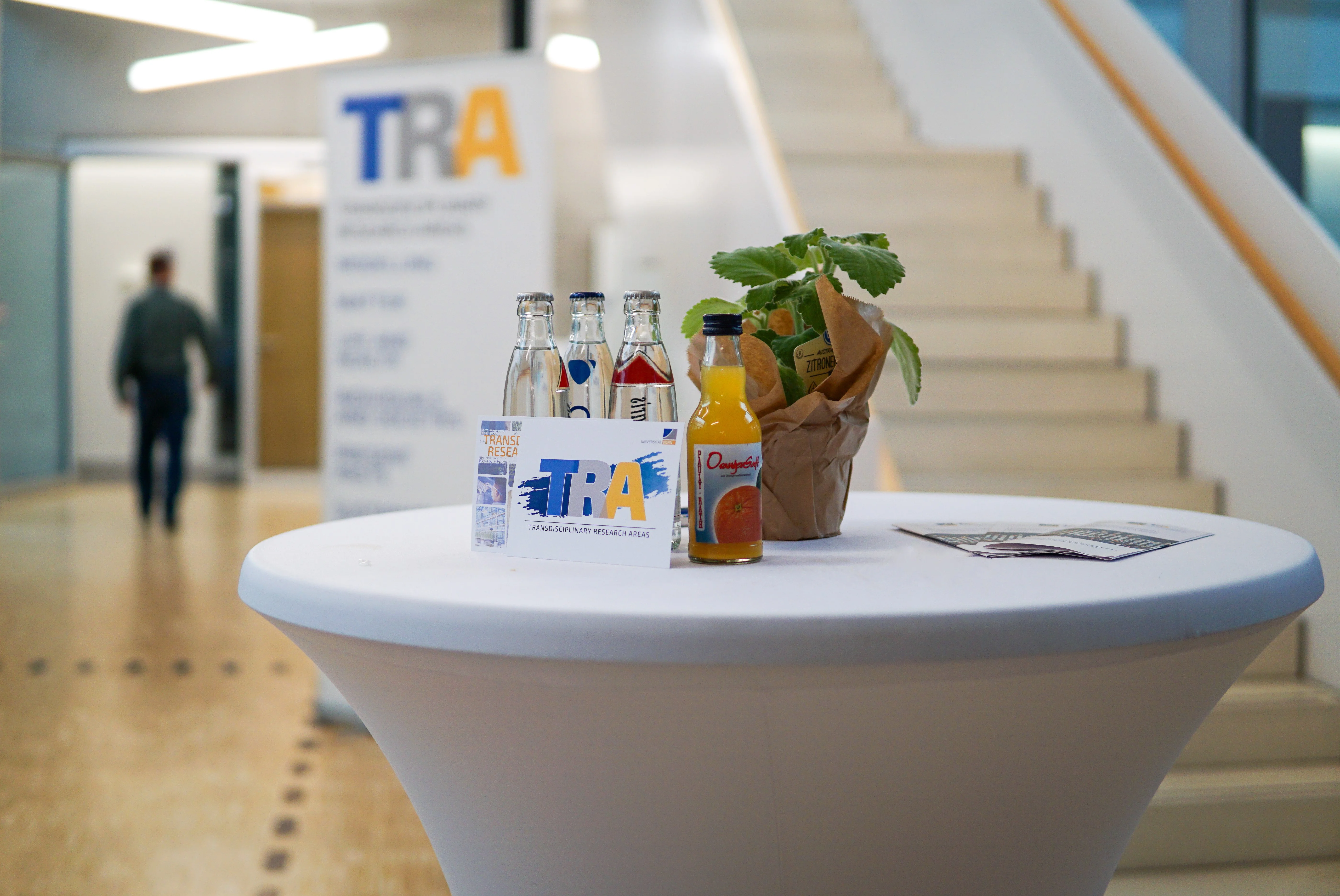
Transdisciplinary exchange and networking - We offer opportunities for exchange and networking for our members in organizing events ourselves, often together with several TRAs and university partners. In addition, the TRA Modelling supports innovative and cross-disciplinary events of our members upon request.© Christina Schiegl (TRA) -

Report Optimization and Algorithmic Game Theory
All about the inauguration symposium for Hertz Chair László Végh in April 2025© Colourbox -

Report TRA Networking Event 2025
© Colorbox -

Large-Scale Deep Learning for the Earth System 2024
The workshop highlighted the role of AI in advancing climate science, focusing on topics like machine learning-based weather prediction and AI-based Earth system models. It was jointly organized by the Center for Earth System Observation and Computational Analysis (CESOC), the European Centre for Medium-Range Weather Forecasts (ECMWF), and with the support of the TRA Modelling at the University of Bonn, the Forschungszentrum Jülich and the University of Cologne.© TRA Modelling -

Report Symposium on High Performance Computing (HPC)
Report on TRA event on October 20, 2023.© Volker Lannert/Uni Bonn
Get Involved in the TRA
As a member of the TRA, you can access funding opportunities, participate in events, and build new networks.
Membership in TRA Modelling
In TRA Modelling, researchers from a wide range of disciplines create models that can not only describe complex systems, but also analyze them.
Membership is open to all scientists who work independently in the research field of TRA Modelling and are employed at the University of Bonn or a cooperating research institution.
Directory of our members and their research priorities
Search for new cooperation partners within our network of over 160 scientists - we will be happy to support you with new joint projects or events.
Meet our Researchers
Inter- and transdisciplinary research actively pursued at the University of Bonn and is promoted across faculty boundaries. The faces of TRA Modelling are our Hertz Chair, our Argelander Professor and the numerous dedicated researchers.
Hunting the optimal solution
Prof. László Végh
The mathematician Prof. László Végh is Hertz Chair of TRA Modelling. He will foster the connection between algorithms and optimisation problems.
Contact

Daniel Minge
Read more...
Transdisciplinary Research Areas
Spaces for innovation in research and teaching - these are the six transdisciplinary research areas at the University of Bonn.
University of Excellence
Since summer 2019, we have been one of eleven German Universities of Excellence. Read more about our research profile and our future concept.
Research Funding
Research and Innovation Services at the University of Bonn will support you in all matters relating to your externally funded project.