


Animal Research at the University of Bonn
The University of Bonn conducts animal research as part of its research in medicine, the natural sciences and agriculture. As a University of Excellence, it is conscious of its responsibility toward the animals on which it experiments, ensuring that they are given maximum protection and upholding all ethical principles and provisions of animal welfare law.
As one of the first signatories of the Transparent Animal Testing initiative (Initiative Transparente Tierversuche; Website in German only), the University of Bonn undertakes to provide transparent information about animal testing, play an active role in helping to shape the public debate surrounding animal experiments, share experiences and communicate details of its activities.

FAQs
Facts and figures
§ 7 of the German Animal Welfare Act (Tierschutzgesetz, TierschG; Website in German only) defines animal testing as, among other things, “intervention or treatment for experimental purposes on animals where it might bring pain, suffering or harm to these animals.” It serves to answer scientific questions and may only be conducted if it is essential for one of the purposes listed in § 7a TierSchG and is ethically justifiable. These purposes include basic and translational research as well as animal testing for use in training, advanced training and continual professional development.
Animal testing is used to obtain scientific findings. However, it is only permitted if the experiment in question cannot be done in any other way. Alternative methods, including computer simulations and 3D cell cultures such as organoids, are already used wherever possible. However, there are still some cases where this is not an option.
The research areas at the University of Bonn that conduct animal testing range from basic research to the development of treatments and therapies. In biomedical research, for example, animal testing helps to tell us more about certain biochemical processes and thus develop new therapeutic approaches and methods. Mice and rats are primarily used for this purpose. The main priority in the research done on livestock is the welfare of the cows, chickens and pigs involved, with researchers studying how they can be kept under the best possible conditions.
You can watch a video on the topic here: “Warum machen Wissenschaftler Tierversuche?” (“Why do researchers experiment on animals?”)
Animal testing in Germany is subject to a strict licensing procedure set out in the TierSchG and the Animal Protection Experiment Ordinance (TierSchVersV). Before any animal testing can be carried out, a license is required from the competent authority, which in the University of Bonn’s case is the North Rhine-Westphalia (NRW) State Agency for Nature, Environment and Climate (LAVE). The authority is advised by an independent committee during the licensing process (§ 15 TierSchG).
The committee is made up of medical and veterinary professionals, members of animal welfare organizations and researchers. In addition, only people with the necessary knowledge and skills may perform animal testing.
You can find more information in the video entitled “Das Genehmigungsverfahren bei Tierversuchen” (“The licensing procedure for animal testing”) produced by the initiative Tierversuche verstehen (“Understanding animal testing”).
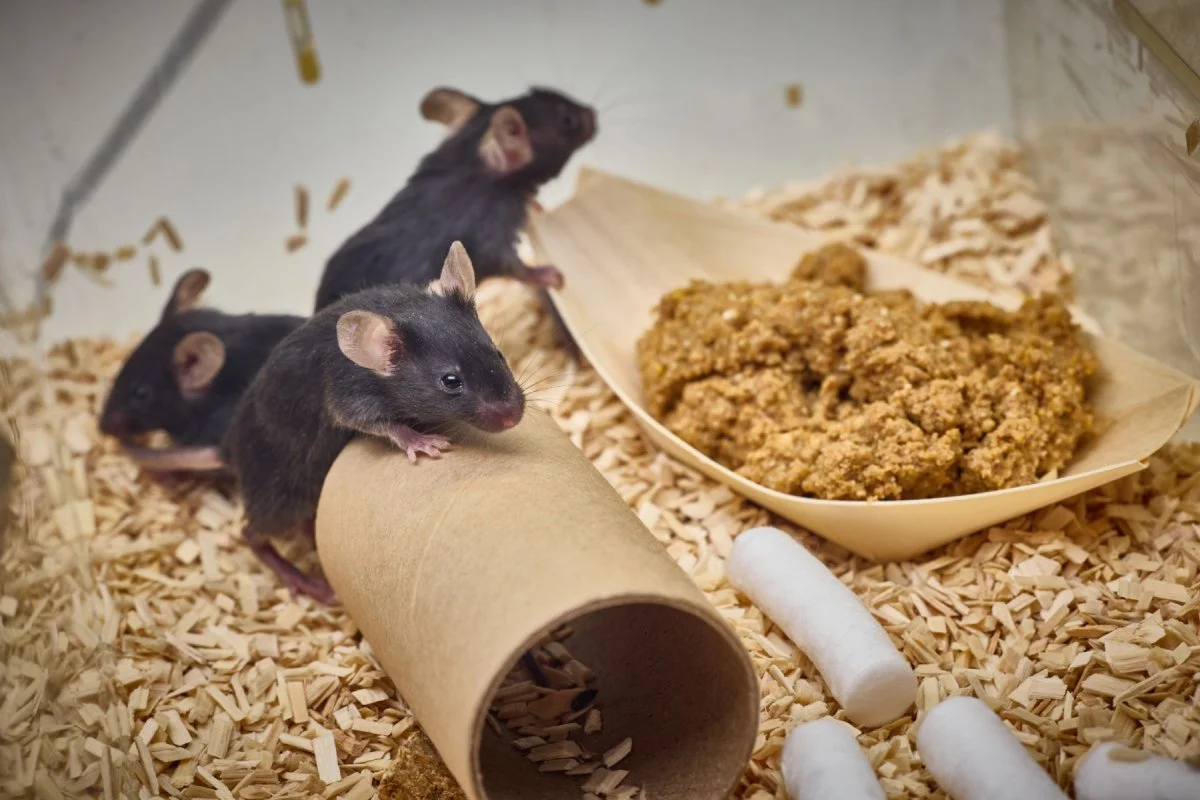
Most of the laboratory animals at the University of Bonn are mice or rats. However, frogs, reptiles, guinea pigs, fish, chickens, pigs, cows and New World camelids are also used.
Besides the Animal Welfare Unit, several animal welfare officers also supervise animal testing at the University of Bonn. They advise on planning and drafting applications for animal testing, supervise ongoing experiments and the animals’ accommodation and ensure compliance with animal welfare rules, regulations and legislation. In particular, the welfare officers provide advice “on animal well-being and on opportunities to improve animal well-being while they are being acquired, accommodated and looked after and on their medical treatment” (§ 5 TierSchVersV).
There are also extremely strict requirements governing how animals are kept (§ 2 TierSchG and § 1 TierSchVersV). The animals are housed in appropriate accommodation and are looked after and cared for by competent staff. Ensuring the protection and welfare of the animals is the top priority.
3R: Replace, Reduce, Refine
The guiding principle in animal testing research is known as “3R”: Replace, Reduce, Refine. The main aim is thus to replace animal testing with another method. Where this is not possible, the testing must be reduced to a minimum. Finally, everyone involved is called on to minimize the suffering endured by laboratory animals and improve (“refine”) their well-being by housing and looking after them under the best possible conditions.
To lend particular support to this aim of striking a balance between medical advances and the highest possible standards of animal welfare, the Faculty of Medicine at the University of Bonn has joined forces with the seven other medical faculties at NRW universities to set up the 3R Competence Network NRW. Its main office is based at the dean’s office in the Faculty of Medicine at the University of Bonn and is supported by a coordination office at RWTH Aachen University.
Das 3R-Prinzip: Replace Reduce Refine
Bild © Tierversuche verstehen / YouTube
Rehoming
As part of a rehoming programme, former laboratory animals can be placed with private individuals to find a forever home. The university has an implementation plan for this, and private individuals must meet certain conditions.
Alternatives to animal testing
As well as endeavoring to reduce animal testing in line with the 3R principle, the University of Bonn is also keen to research and develop alternatives, such as creating organoids (“mini-organs”) that are already enabling some experiments on animals to be replaced.
Contact
Animal Welfare Unit
The Animal Welfare Unit supervises animal testing at the University of Bonn.
Contact
tierschutz@verwaltung.uni-bonn.de
University Communications
University Communications at the University of Bonn helps the media with their inquiries.
Contact
kommunikation@uni-bonn.de