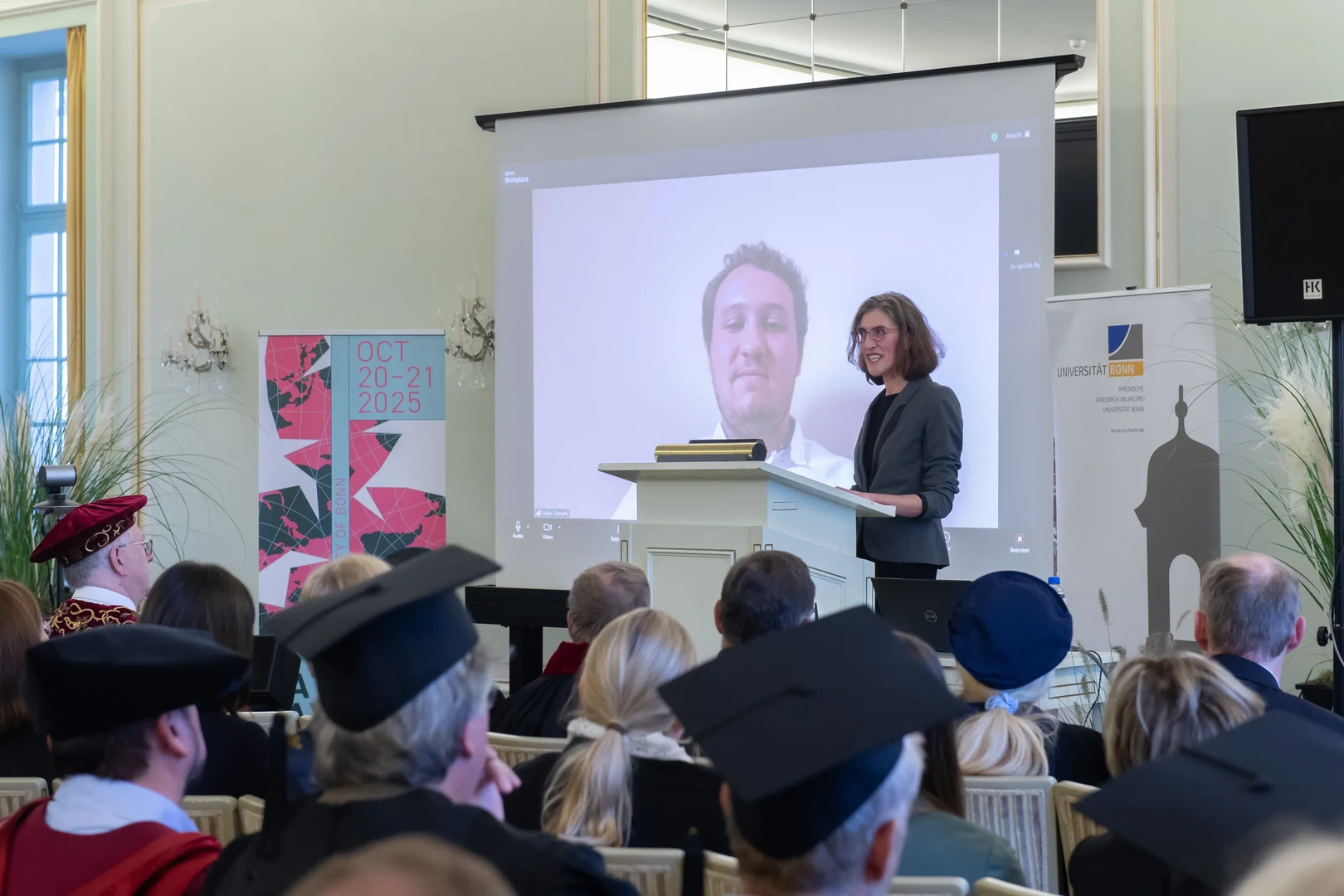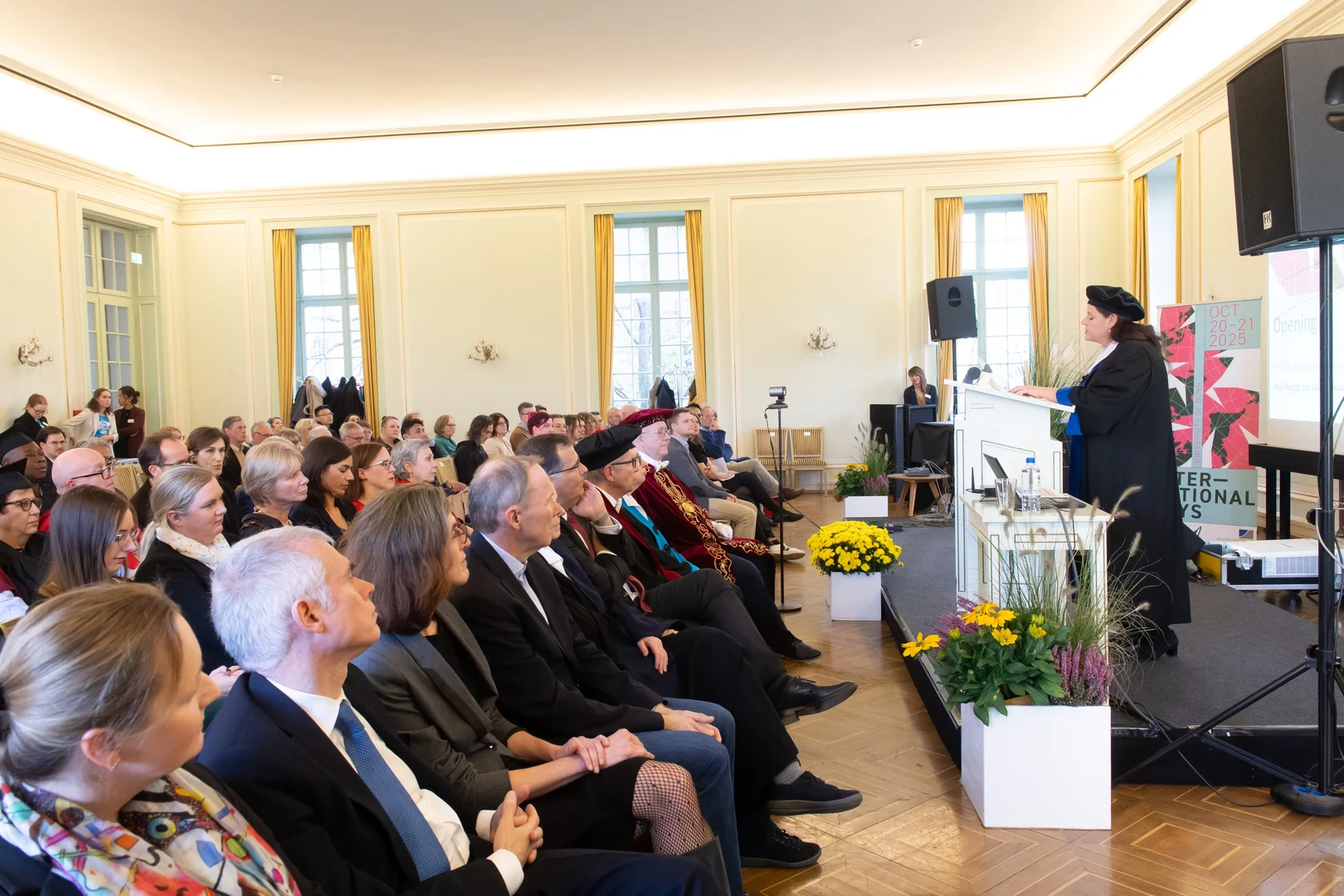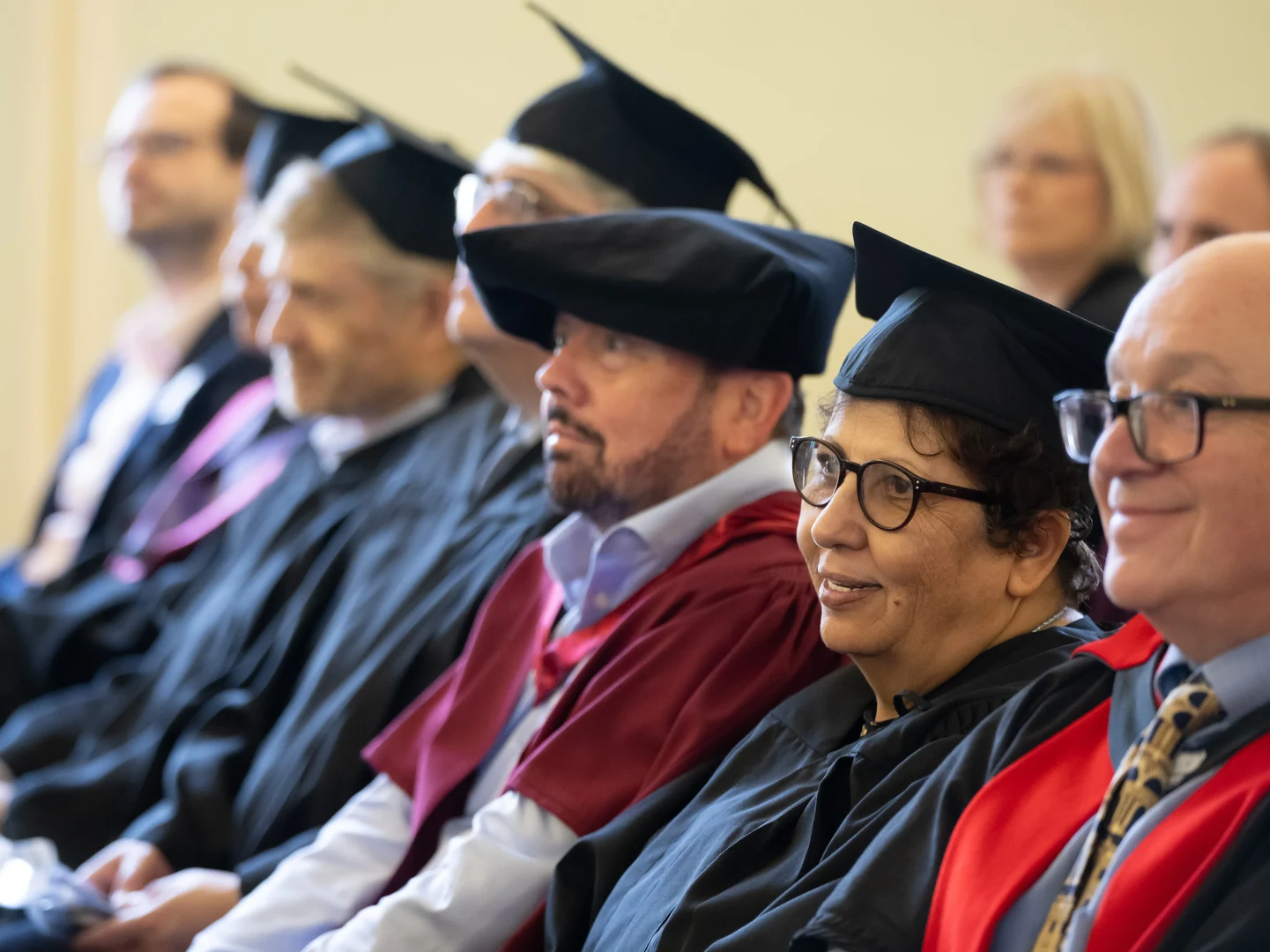


“Yet again, we’ve been able to reward a group of early-career researchers for excellent final theses and outstanding commitment in partnership with the French, Spanish and UK governments and the DAAD this year,” said Professor Birgit Ulrike Münch, Vice Rector for International Affairs at the University of Bonn, during the ceremony. “These prizes reflect all the main hallmarks of the University of Bonn: excellence, cosmopolitanism and an internationality that is actively embraced. Our students are impressive examples of just how diverse and relevant research work is at our University, from eco-feminist literature studies through to climate science and linguistics. Each of these awards acknowledges outstanding research and the willingness to take responsibility as part of a global academic community. We are extremely grateful to the various embassies for sponsoring these prizes, and it’s a great honor for us to be allowed to present them.”
The prizewinners in 2025
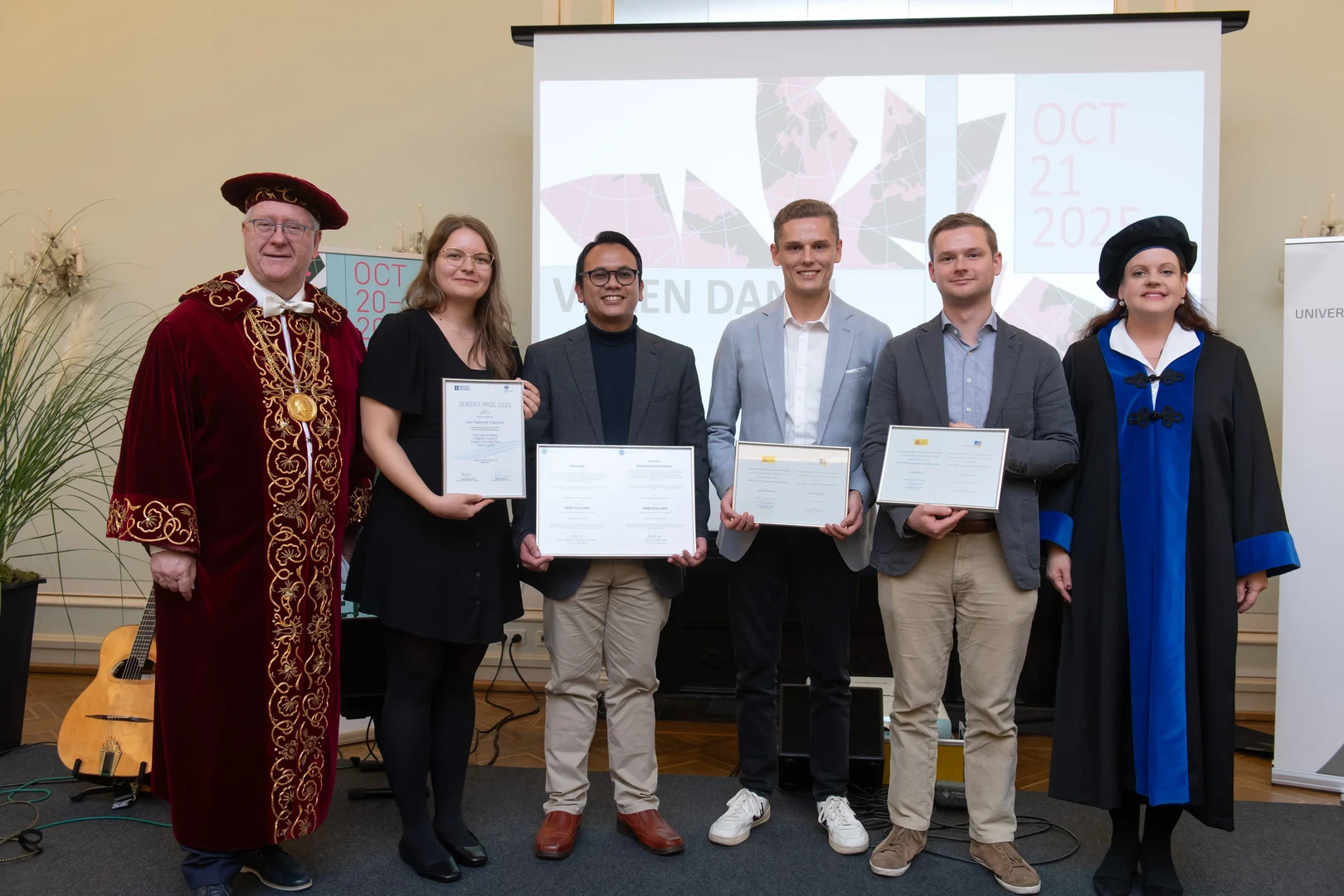
Queen’s Prize — Lara Putensen
Lara Putensen won the Queen’s Prize for her master’s thesis entitled “Pop Goes Profanity: Vulgarity Trends in English Chart Hits from 2000 to 2024.” Created by Queen Elizabeth II when she visited the University of Bonn in 1965, the award recognizes outstanding achievements in the field of English studies. In her thesis, Putensen analyzes how the use of vulgarity in English-language pop lyrics has changed over the past two decades and what this reveals about processes of language change in society.
Premio Rey de España — Steffen Heidkämper
There were two recipients of the Premio Rey de España this year. The first was Steffen Heidkämper for his bachelor’s thesis “Zur Konstruktion kollektiver Identität in argentinischen und chilenischen Fußballhymnen: eine sprachwissenschaftliche Diskursanalyse” (“On Building Collective Identity in Argentinian and Chilean Football Songs: A Linguistic Discourse Analysis”), which looks at how language and music help to form national and regional identities in a football context and provides a fascinating example of the links between linguistics and cultural identity research.
Premio Rey de España — Leonhard Brandt
Also awarded the Premio Rey de España was Leonhard Brandt for his master’s thesis entitled “Die Natur des Widerstands – Cuerpo-Territorio bei Menchú und Payeras? Eine ökofeministische Annäherung an guatemaltekische Testimonialliteratur des Bürgerkriegs” (“The Nature of Resistance—Cuerpo-Territorio in Menchú and Payeras? An Eco-Feminist Approach to Guatemalan Testimonial Literature of the Civil War”). Brandt’s thesis combines eco-feminist theories with Latin American literature studies and offers some fresh angles on the relationship between the body, territory and resistance in Guatemalan civil-war literature.
Prix de la République française — Julian Dämpfle
The Prix de la République française went to Julian Dämpfle for his bachelor’s thesis “Die maschinelle Übersetzung von deutschen Pressetexten ins Französische mit DeepL. Eine Fehleranalyse” (“Machine-Translating German Press Texts into French using DeepL. An Analysis of Errors”). Dämpfle examines the strengths and weaknesses of modern translation software compared to human translation ability, which is an extremely pertinent topic in this age of AI-powered language processing. The prize also funds a research stay in France for either study or documentation purposes.
DAAD Prize — Yohanes Ginting
Presented by the German Academic Exchange Service, this year’s DAAD Prize was won by Yohanes Ginting, a doctoral student at the Institute of Geosciences, in recognition of his outstanding academic achievements and social engagement. As part of his doctorate in Meteorology, Ginting is researching the carbon dynamics of tropical peatlands on Borneo, combining measurements taken in the field with remote sensing and modeling to understand the impact of land-use changes and climate extremes on these sensitive ecosystems.
Alongside his research, Ginting is involved in “Children in the Climate Crisis,” a project that is expanding environmental education in schools and daycare centers. He has also launched the NEXUS platform, a dialogue and networking initiative for early-career researchers. “This prize means a great deal to me,” Ginting says. “It recognizes my research work as well as what I’m doing for our community. This gives me motivation to continue my academic career with even more passion than before.”
Promoting young talent is essential
Rector Professor Michael Hoch congratulated the victorious early-career researchers and stressed how indispensable promoting young talent is, especially at a time of major global and political challenges. “Research can help us build bridges to the wider world,” he said, adding that dialogue and exchange with other countries held the key to finding a common understanding and making progress.
Turning to the representatives from the countries and organizations that sponsor the awards, he said: “Thank you very much for your support! These accolades are something truly special. They show early-career researchers that they’ve achieved remarkable things — and give them fresh confidence to continue their research journey with courage and passion. After all, their research is going to do much to strengthen our democracy and the tolerant society we live in, both now and in the future.”