


In the long term, the VCI will become a place where people can implement innovative ideas using state-of-the-art computer graphics methods. With this type of technology, doctors, for example, will be able to create moving 3D models of patients, known as digital twins, in order to detect diseases such as Parkinson's more accurately. But there are also many other areas where the VCI can be used to create virtual figures and replicas of our real environment. These could then interact and collaborate with real people in the so-called metaverse, a digital, interactive intermediate world.
A unique place for research and innovation in Europe
“What sounds like science fiction to many people is already not only a thriving business sector with countless start-ups, but also a valuable tool for scientific discovery,” explains Bonn-based computer scientist Prof. Dr. Matthias Hullin, who is jointly responsible for the scientific management of the Visual Computing Incubator with his colleague Prof. Dr. Reinhard Klein.
In the future, the VCI will enable behavioral studies to be conducted in digital space, new therapeutic approaches in psychiatry to be developed and tested, and astronomical and geographical simulations to be carried out. The researchers also plan to record eyewitness accounts and live concerts at the highest technical level, create a forum for interactive digital art, and further advance research into computer graphics techniques. In short, there will be a wide range of offerings that will put the results of Bonn's research in the field of visual computing to the test in practice.
“The Visual Computing Incubator at the University of Bonn is creating a unique European center for research and innovation in technologies and applications of the metaverse. It is part of the Institute of Computer Science and will be equipped with hardware that is otherwise only found at large companies such as Google VR or Netflix,” explains Prof. Hullin. The building on Propsthof will house a high-resolution LED wall for virtual film and television productions, which can be used for technology demos, for example, numerous motion capture and virtual reality devices, a well-equipped data center, and the Capture Stage, a large laboratory for creating digital twins.
Creation of photorealistic 3D models of people and objects
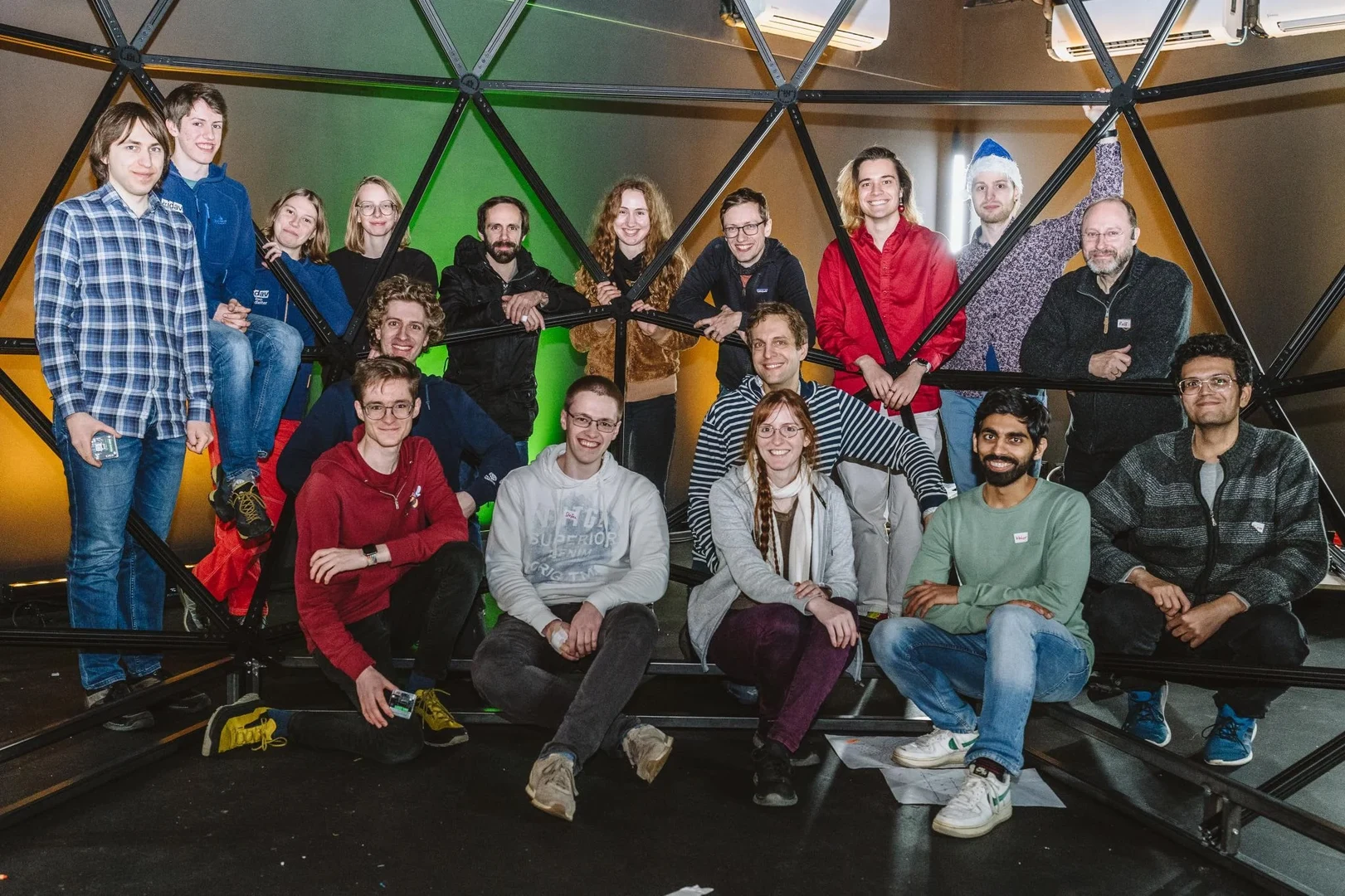
Before this could happen, however, the necessary conditions had to be created: At the end of 2024, the VCI team moved into the first elaborately redesigned room in the Propsthof building. There, a floor slab had to be removed to create the necessary height for the more than six-meter-high scaffolding, which was erected with the help of numerous volunteers in December 2024.
Over the coming months, the VCI team will equip it with hundreds of electronic and optical devices so that, once the neighboring VCI server room has been completed, it can serve as a capture stage: an area for recording movements and 3D images in the highest quality, as used in the film industry. The researchers use technologies such as motion capture to digitally reproduce people or objects and their movements and behavior with precision.
This enables not only researchers but also start-ups to develop and implement disruptive business ideas, such as virtual reality applications, novel approaches in media production, or data-intensive mobile applications. Your partner in this endeavor is the Transfer Center enaCom at the University of Bonn, which supports young start-up teams and new technology developments with its start-up and innovation consulting services. The VCI is funded by the Ministry of Economic Affairs, Industry, Climate Protection, and Energy of the State of North Rhine-Westphalia as part of a special grant from the Excellence Start-up Initiative.NRW with approximately 3 million euros.
Technology available for use now
Scientists and those interested in starting a business can already gain experience with VCI technology and implement their own ideas. This is made possible by an interim solution at the Institute of Computer Science. It is available for start-up projects in the university environment, is integrated into numerous courses, and is already being used in various research projects.
Curious? Further information and contact details can be found on the VCI homepage: https://cg.cs.uni-bonn.de/project/visual-computing-incubator