


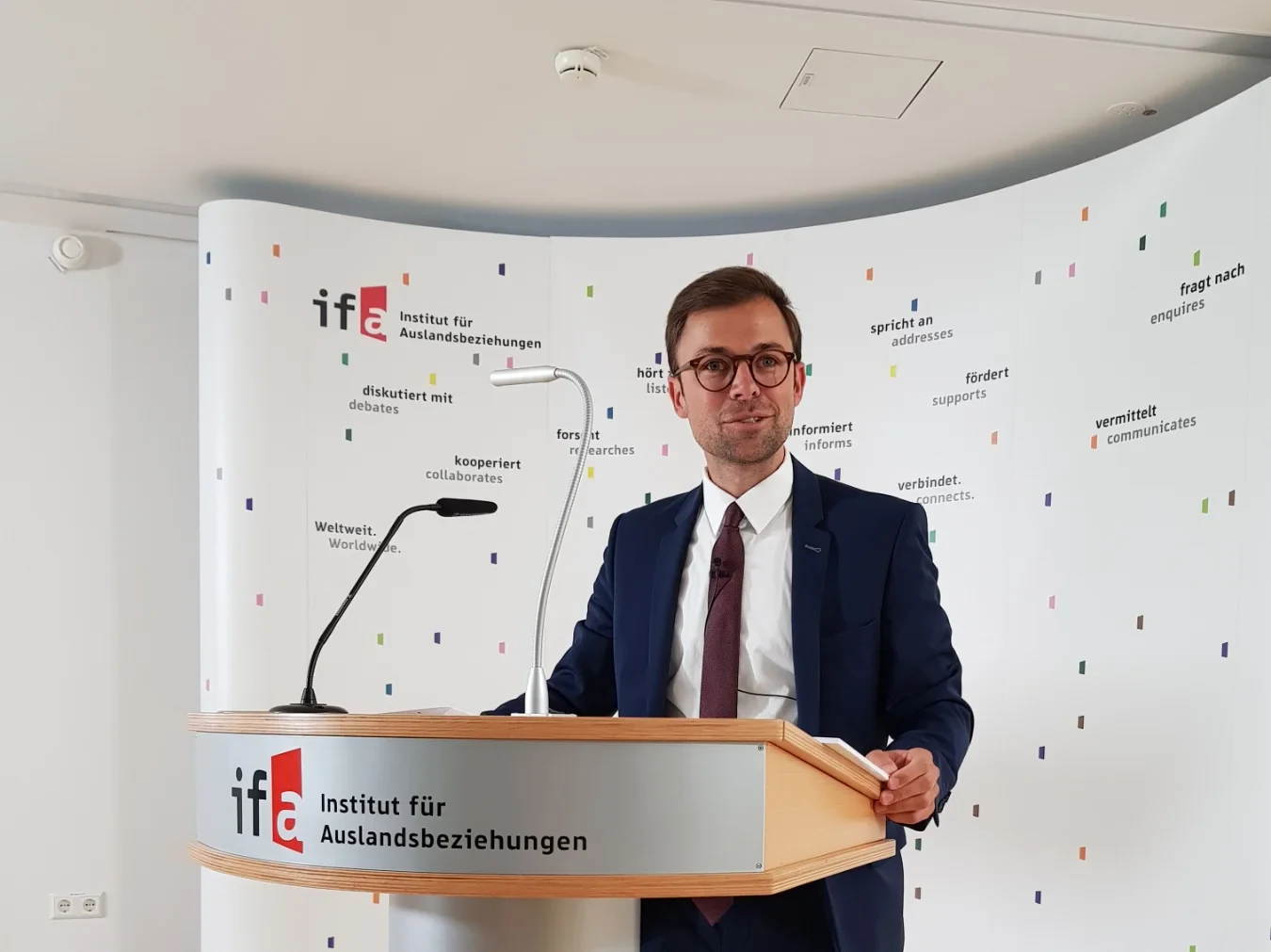
Key players on the international stage employ military force or economic means—“hard power,” in other words—in their attempts to assert their interests and resolve conflicts. Yet it is often “soft power” that achieves the breakthrough: China is currying favor with its “panda diplomacy,” the Fridays for Future movement is making waves, and the coronavirus pandemic is calling on everyone to pull together. In his doctoral thesis, the political scientist Dr. Hendrik W. Ohnesorge, Managing Director of the Center for Global Studies (CGS) and a member of the Individuals, Institutions and Societies Transdisciplinary Research Area (TRA) at the University of Bonn, investigated how actors use soft power as a strategic tool to achieve their own aims in the global battle for power and influence. His work has now been honored with the Research Award on Foreign Cultural Policy.
Worth €3,000, the prize has been awarded every year since 2001 in recognition of outstanding doctoral theses from an EU country on a cultural or foreign policy topic. The award is designed to stimulate academic debate on cultural and foreign policy issues and raise its profile among a wider specialist audience.
ifa – Institut für Auslandsbeziehungen sees itself as Germany’s oldest intermediary organization. It works all over the world to encourage peaceful and enriching coexistence between different peoples and cultures. ifa promotes artistic and cultural exchange through exhibition, dialogue and conference programs and serves as a center of expertise for German cultural and educational diplomacy. It boasts a global network and is committed to long-term partnerships.
“Soft Power: The Forces of Attraction in International Relations,” Springer International, 2020; https://doi.org/10.1007/978-3-030-29922-4
University of Bonn press release: https://www.uni-bonn.de/de/neues/127-2020
About ifa: https://www.ifa.de/en