


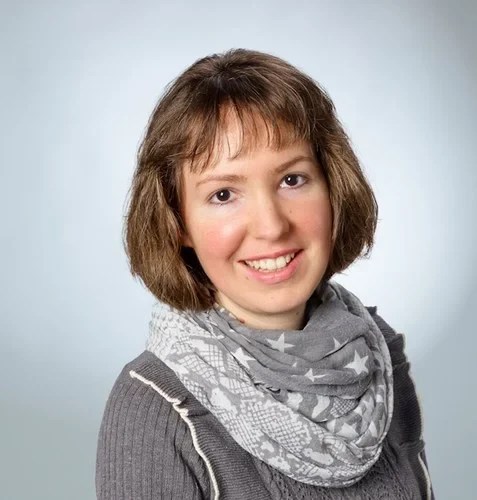
What exactly are your responsibilities at the Bonn Graduate Center?
At the Bonn Graduate Center, I am primarily responsible for overseeing the university's funding programs for doctoral candidates. This includes advising doctoral students on the various funding programs, formally reviewing the applications received, preparing the selection committee meetings, and subsequently communicating the funding decisions. In addition, I have other tasks such as presenting the funding programs at events, revising funding guidelines, and maintaining the websites for the funding programs. I also support the team at the Bonn Graduate Center in organizing events and administering the Doctorate plus qualification program for doctoral students.
What do you like most after your first three weeks?
I received a very warm welcome in department 7.3 – Support of Early-Career Researchers, which made it easier for me to get started in my new job! I really like the open, collegial atmosphere and the variety of tasks that have been assigned to me so far. I experienced a well-prepared, structured onboarding process, which I have not always experienced in the past. In addition, it was helpful for me to have had the opportunity to get to know colleagues from other departments in Division 7 through various formats beyond my own department. I look forward to continuing to work with my colleagues at the Bonn Graduate Center in the coming months!
Which experiences from your doctoral studies are particularly helpful in your everyday professional life today?
A doctoral project requires perseverance, patience, and a high degree of self-organization, because you work intensively and independently on a topic for several years. I experienced both good and difficult times during my own doctoral studies. My doctoral project in modern history required two very long research stays in Canada, which took a lot of time to prepare and were fraught with uncertainty in terms of my own doctoral topic. When planning the research stays, I did not yet know whether I would actually find suitable material for my work in the archives and whether I would be able to find suitable interview partners for my work. Through my doctoral studies, I learned to persevere even in difficult phases, to be patient, and to organize myself well—aspects that are certainly beneficial to me today in my everyday work when completing tasks and collaborating with colleagues.
Did you specifically work toward a career in science management?
During the first half of my doctoral studies, I toyed with the idea of taking up a postdoctoral position after completing my doctorate. However, the uncertainty associated with a career in science, permanent fixed-term contracts, and the high pressure to continuously publish results and attract third-party funding ultimately led me to decide to leave science after my doctorate and pursue a different path. In the second half of my doctoral studies, I therefore began actively attending internal university information events on career paths for doctoral students outside of science in order to gain an overview of alternative professional fields. A position in science management particularly appealed to me because the field encompasses a wide range of exciting and varied tasks due to its diverse areas. In addition, a career in science management offers me more reliable professional prospects and the opportunity to continue working in a science-related environment. Even though I no longer conduct research myself, I can still follow scientific developments and trends through my work in research management.
If you could give one piece of advice to a newly started doctoral candidate, what would it be?
There is certainly no one “right” piece of advice, because every doctorate is different, depending on the discipline, the doctoral thesis topic, and, last but not least, the supervision situation. However, every doctorate will have an initial phase in which you are busy defining and narrowing down the topic of your doctoral thesis. You will receive many suggestions on how to focus your topic, which literature is relevant, which experts to talk to, and which conferences to attend. During this phase, I would advise you to take advantage of these offers, but also to make sure that you develop your own focus for your work early on and confidently defend it on the basis of your own research and preliminary work. When presenting your doctoral thesis topic in colloquia or at conferences, you should develop a sense of which suggestions are relevant to the focus of your work and which are less so. This helps you to keep to the tight schedule that comes with a doctoral thesis and not get lost in trivialities.
Thank you very much for the interview, and we look forward to working with you!