

The Bonn site is part of the new AI4CancerCure.NRW research network, for which the state is providing a total of €200 million from the North Rhine-Westphalia Plan for Good Infrastructure. Within the network, all seven university medical centers in North Rhine-Westphalia (Aachen, Bochum, Bonn, Düsseldorf, Essen, Köln and Münster) and TU Dortmund University are pooling their respective strengths. Together, they aim to use AI across the entire research chain – from gaining a better understanding of cancer biology and developing new drugs to prevention, early detection, and clinical application.
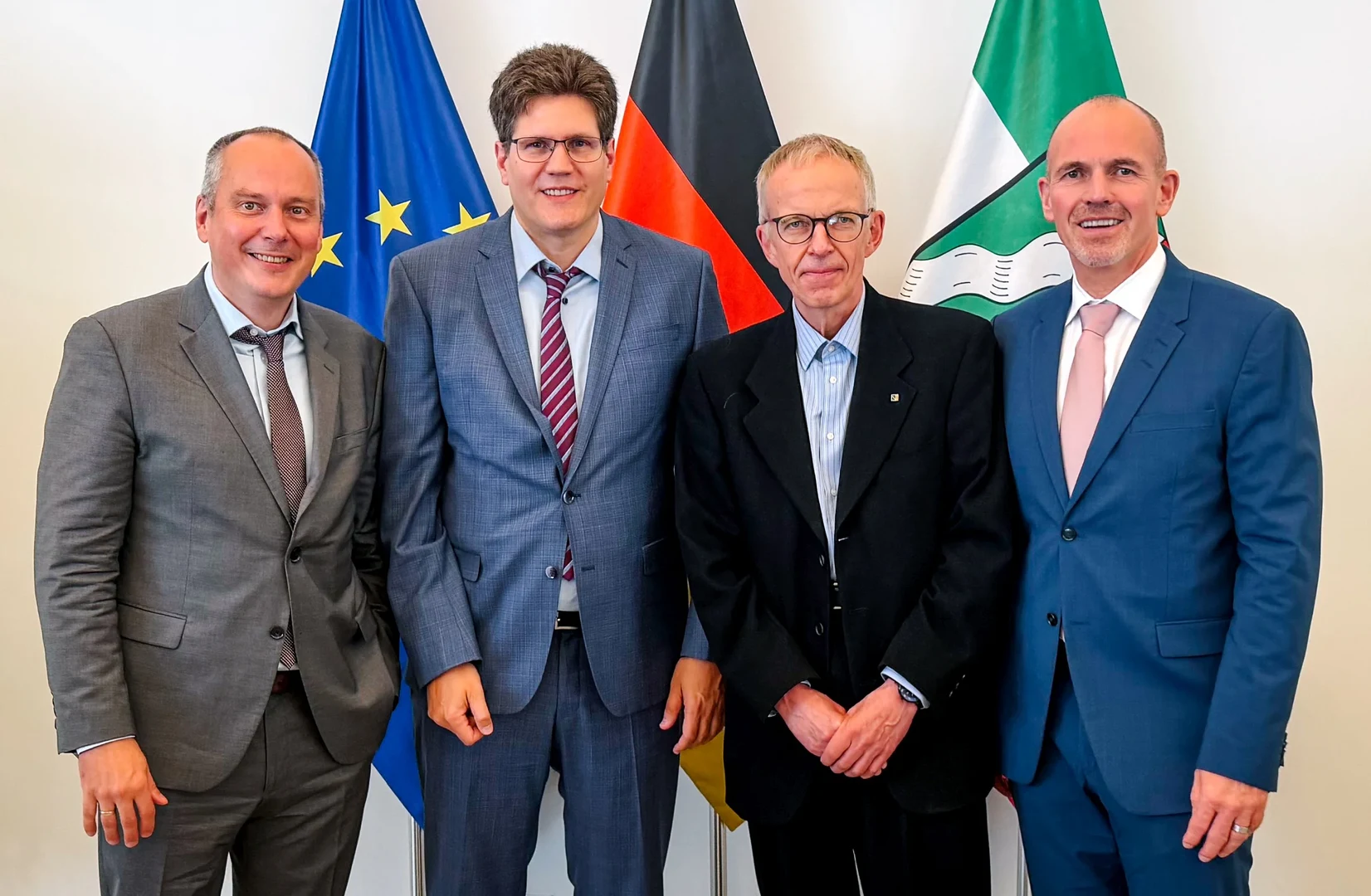
Minister President Hendrik Wüst: “North Rhine-Westphalia is a hub for AI-driven cancer research. Thanks to cutting-edge research and innovative therapies from our state, more and more people can be cured. With the North Rhine-Westphalia Plan for Good Infrastructure, we are also laying the groundwork for further expanding innovation and future technologies. Over €2 billion is going directly to universities, university hospitals, and research institutions so that they can work even more efficiently on solutions for the future. With AI4CancerCure.NRW, we are creating a large, state-wide network of excellence in cancer medicine and bringing cancer research even closer together with cutting-edge AI research. Step by step, we are getting closer to our goal of defeating cancer, a widespread disease.”
Minister of Science Ina Brandes: “We are consistently investing the funds from the North Rhine-Westphalia Plan for Good Infrastructure in the major issues of the future. The fight against the scourge of cancer is one of the most pressing concerns, as a cancer diagnosis changes the lives of hundreds of thousands of people in North Rhine-Westphalia every year. With AI4CancerCure.NRW, we are creating a secure data space and using AI to systematically integrate the fields of cancer biology, data-driven drug design, image- and data-based diagnostics, and the rapid development of medical devices. This has tangible benefits for patients. Cancer can be detected earlier, precise prognoses of disease progression become possible, and personalized therapies will have significantly fewer side effects. In addition, patients will be permanently and structurally integrated into the research process. After all, successful cancer research can only be achieved in collaboration with those affected. I am proud and grateful that AI4CancerCure.NRW will bring us a major step closer to curing cancer.”
From a Digital Concept to a Drug in the Lab
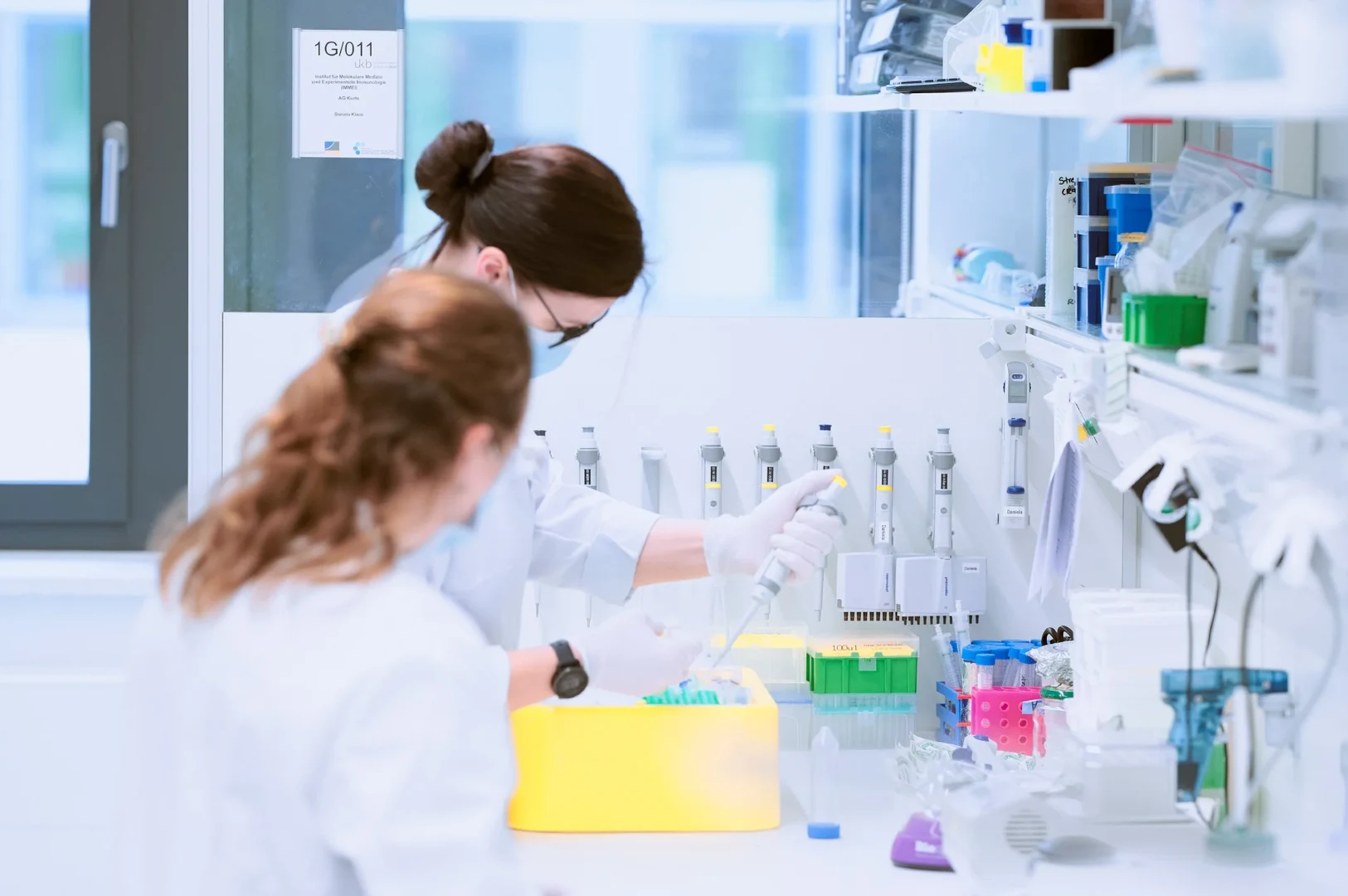
Bonn is taking on a central role within the network: here, new drug candidates will not only be designed with the help of AI, but will subsequently also be produced, analyzed, and experimentally tested for their effectiveness against cancer. To this end, the UKB, the University of Bonn and the Lamarr Institute are pooling their expertise in cancer biology, immunology, structural biology, and artificial intelligence.
“The €25 million grant sends a strong signal for Bonn as a research hub. Together with the Lamarr Institute, we are creating an infrastructure that combines our excellent cancer research with state-of-the-art methods of artificial intelligence. In doing so, we are not only strengthening research at the UKB but also making an important contribution to the statewide network and to the development of new treatment approaches,” says Prof. Dr. Uwe Reuter, Chairman of the Board and Chief Medical Officer of the UKB.
The researchers in Bonn plan to use AI, among other things, to design new antibodies, miniproteins, peptides, and small molecules. These potential active compounds are intended to specifically target structures in cancer cells, thereby providing possible starting points for new therapies.
“With artificial intelligence, we can now design new active compounds on a computer. In Bonn, we then synthesize these candidates, test their properties in the laboratory, and use the results to further develop the next generation of active compounds in a targeted manner. This creates a direct cycle of AI-driven design, experimentation, and optimization — and it is precisely this connection that is a particular strength of our approach,” says Prof. Dr. Michael Hölzel, Director of the Institute for Experimental Oncology at the UKB and a member of the ImmunoSensation³ Excellence Cluster as well as the Transdisciplinary Research Area (TRA) "Life and Health" at the University of Bonn.
New Computing and Laboratory Infrastructure for Bonn
The €25 million for the Bonn site will go toward both expanding AI infrastructure and state-of-the-art laboratory technology. Plans include high-performance GPU servers for developing complex AI models, as well as technologies for the automated production and experimental testing of new drug candidates.
The Lamarr Institute contributes, in particular, its expertise in machine learning and computer-aided drug design. “The close collaboration between the University Hospital and the Lamarr Institute uniquely combines expertise in oncology, structural biology, and artificial intelligence. This creates ideal conditions for new, interdisciplinary approaches in cancer research,” says Prof. Dr. Jürgen Bajorath of the Lamarr Institute, Area Chair of the Life Sciences and Health division and a member of the Transdisciplinary Research Area “Modelling” at the University of Bonn. The new infrastructure enables researchers in Bonn to identify promising therapeutic targets from the NRW-wide network, develop potential drug candidates for them, and test these experimentally. The results will then feed back into the joint research efforts of AI4CancerCure.NRW.
“In recent years, we have strategically built up a collaboration between the medical school and the Lamarr Institute, thereby transforming the University of Bonn’s Faculty of Medicine into a unique hub for applying artificial intelligence to medical problems and bringing innovations to patients more quickly,” says Dean Prof. Dr. Bernd Weber. This creates an important interface in Bonn between artificial intelligence and experimental cancer research. Promising drug candidates will thus be gradually prepared for further preclinical and, in the future, clinical research.
At the Bonn site, the funding will be used to establish a new center for “AI-Designed Therapeutics and Diagnostics,” led by Prof. Michael Hölzel and Prof. Jürgen Bajorath, which exemplifies the close collaboration between the UKB, the University of Bonn, and the Lamarr Institute.