


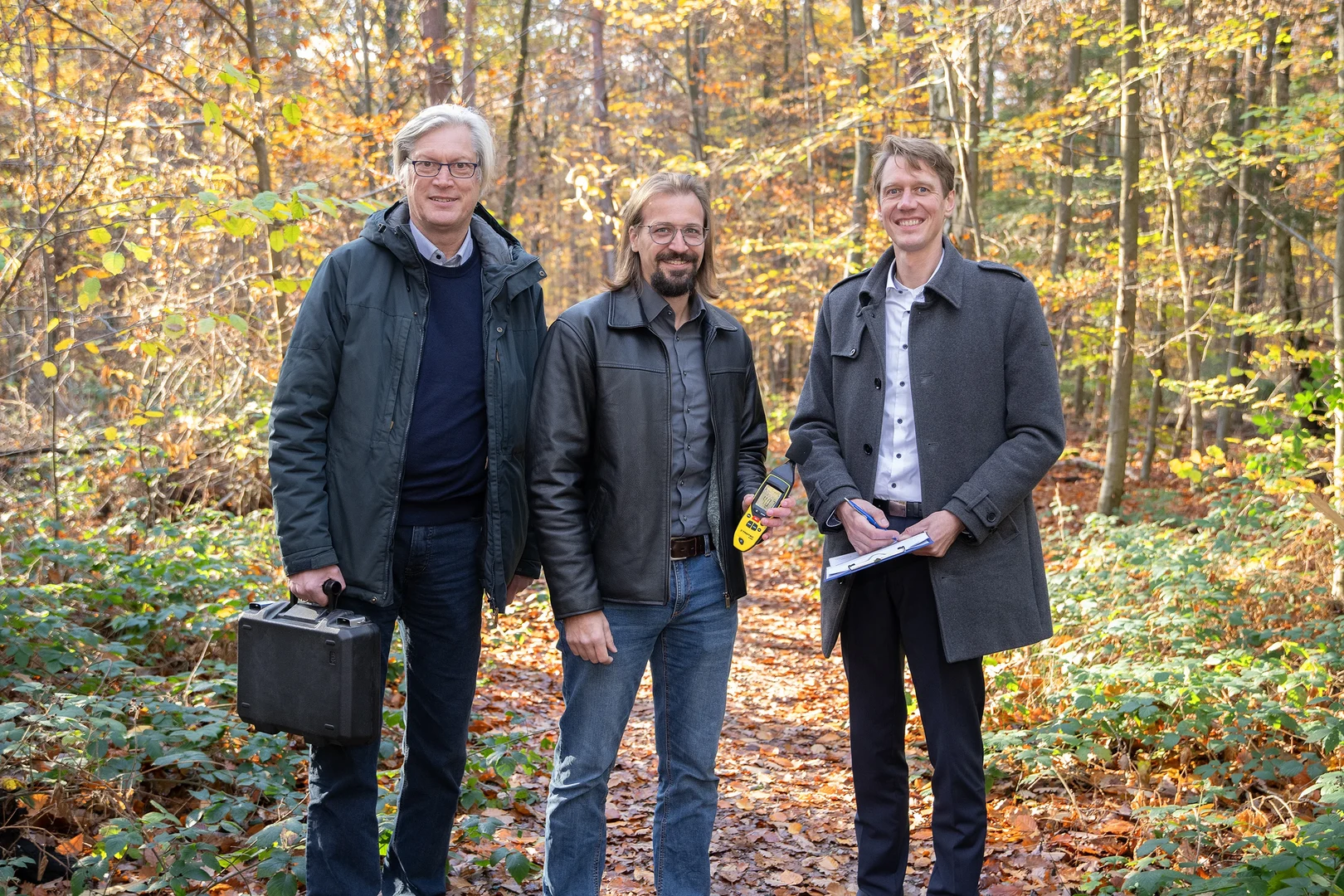
Bonn and Cologne are both attractive and much-loved cities that are growing all the time. A growing population and efforts to mitigate climate change and promote sustainability also means that more and more urban green spaces are being planned. Parks, local recreation areas, woodland and bodies of water are all popular places for city-dwellers to come and spend their leisure time. But what are the benefits, drawbacks and even risks of these green spaces as far as our health is concerned? “Urban biodiversity can exacerbate vector-borne diseases in particular, such as those carried by ticks or mosquitoes, as well as allergy symptoms,” explains Professor Nico Mutters, Director of the IHPH at the University Hospital Bonn. “No systematic research is currently being done into these health risks, which are only being paid cursory attention when green spaces are planned.”
Dr. Timo Falkenberg, a researcher from the IHPH’s GeoHealth Centre, is now set to change all that together with a research group entitled “Green Balance—Positive and Negative Health Impacts of Urban Biodiversity.” His project, which the BMBF is funding to the tune of almost €1.5 million, will examine the positive and negative health consequences and compare the two sides against each other in a “green balance.” It will be adopting a holistic understanding of health, taking physical, mental and social health into account. “For the study, we’ve picked out 10 to 15 green spaces in the Cologne/Bonn region to look at. We’re also measuring things like temperature and particulate pollution and running visitor surveys on what the green spaces are doing for their mental health, wellbeing and lowering their stress levels,” Dr. Falkenberg says.
The animals and other organisms in the urban environment are also being studied. “Urban expansion means that wild animals such as foxes are also spending more and more time in city centers and sometimes carry ticks—which are dangerous to human health—into urban areas,” Falkenberg adds. “We’re analyzing the prevalence of ticks and testing them for Lyme disease, which is a bacterial infection.”
The research project aims to produce recommendations for reducing risks, increasing the positive effects of urban green spaces and communicating these benefits to the decision-makers. Professor Thomas Kistemann, Director of the WHO Collaborating Centre (WHO CC) at the University Hospital Bonn, says: “We’re delighted by the BMBF funding for our research group, which is analyzing the interactions between individual strands of biodiversity, animals and humans following a ‘one health’ or ‘planetary health’ approach in order to identify synergy effects and conflicts between support for biodiversity, ecosystem services and health risks.” Alongside Dr. Falkenberg as head of the research group, three doctoral students will also be carrying out research in the urban green spaces in the Cologne/Bonn region, and applications for these posts are still open.
Nico Mutters and Timo Falkenberg are both members of the Sustainable Futures Transdisciplinary Research Area at the University of Bonn.