


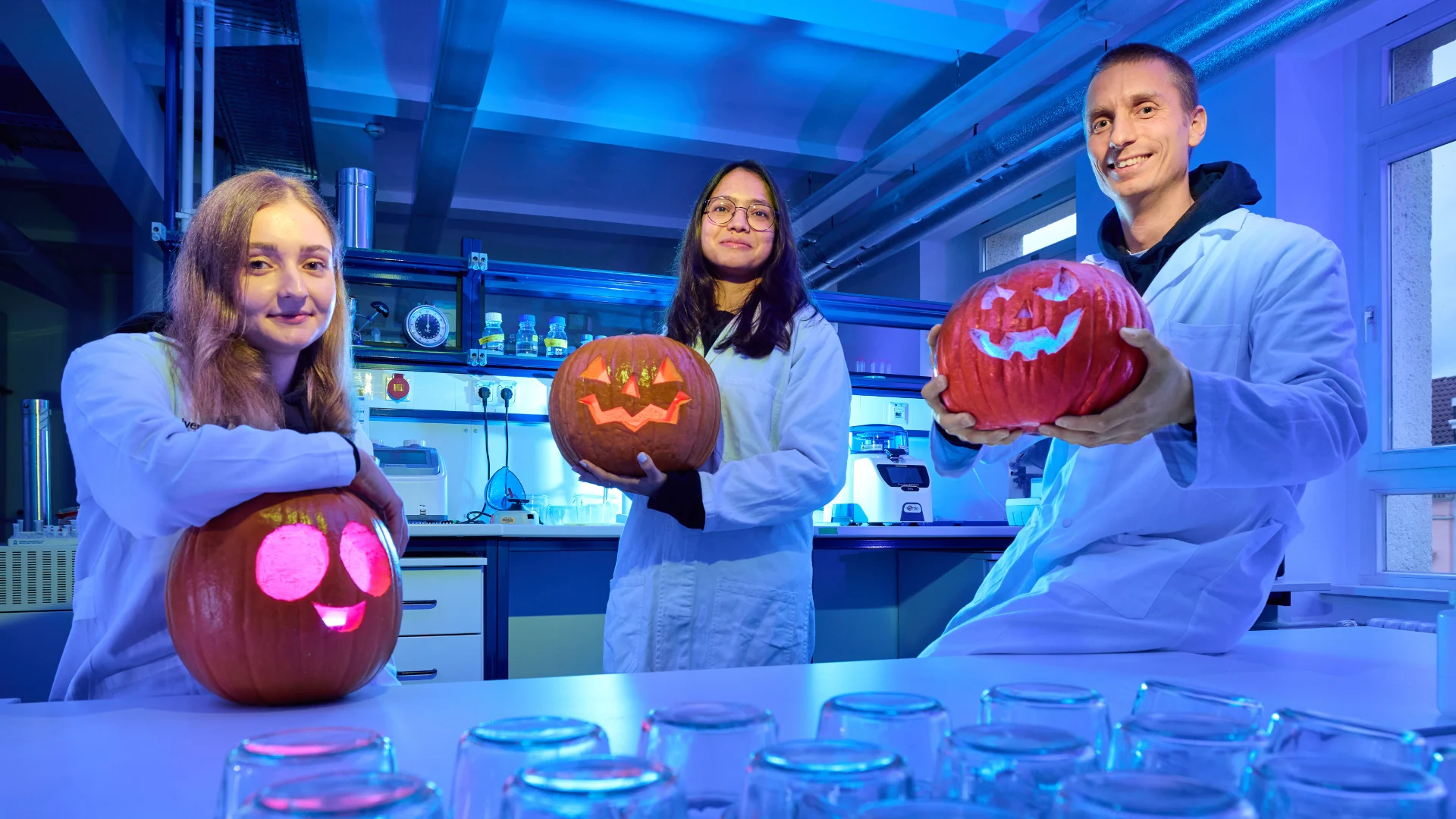
Nancy Choudhary, Marie Hagedorn and Professor Boas Pucker from the Institute for Cellular and Molecular Botany have conducted an extensive study to investigate the genetic information of 258 species from all 15 tribes of the gourd family, which includes pumpkins, cucumbers, zucchini and melons. Their data suggests that all gourds lack the central genes that most flowering plants use to make what are known as anthocyanins.
The role of anthocyanins and carotenoids
Anthocyanins are natural pigments that give many plants’ flowers and fruits their vibrant pink, red and blue hues. They are much more than a visual extra, however, also protecting plants against UV radiation, helping to fend off pathogens and attracting pollinators. The study shows that gourds have entirely relinquished these pigments over the course of their evolution—and not just the enzymes required for pigmentation but also the “switcher” genes that control the whole process.
Instead, gourds make use of other pigments, especially carotinoids, which produce yellow, orange and red shades and have long been associated with the typical coloration in many varieties of pumpkin. The researchers’ genetic analyses revealed much higher levels of activity among carotinoid genes than in related families of plants, a sign that gourds have actively developed this alternative pathway as they have evolved.
Gradual loss of colour
Another fascinating observation is that this loss of anthocyanins appears to have extended over a prolonged period of time: in some very early members of the family, such as Bayabusua clarkei, the researchers still managed to find remnants of the old genes. This suggests that the color has faded in stages—first the controller genes disappeared, then the actual pigment genes.
Evolutionary significance of gene loss
That a whole plant family should lose an entire pigment pathway is seen as unusual. It is rare in evolution for such vital functions to be abandoned completely, especially in such a large and diverse family. The study indicates that even the loss of complex characteristics can be a successful way to adapt.
The preprint furnishes new insights into the emergence and mutation of color systems in plants—and, incidentally, explains why pumpkins are likely to remain orange for ever.