
10. October 2025

Social Networks in the Colonial Era Social Networks in the Colonial Era

The Gerda Henkel Foundation is funding a new project with the involvement of the University of Bonn BCDSS

An international research project has been launched involving Dr. Eva Marie Lehner and Julia Schmidt of the Bonn Center for Dependency and Slavery Studies (BCDSS) Cluster of Excellence at the University of Bonn. The project aim is to study how bureaucratic classifications of people influenced social orders in southern Africa during the colonial period. The collaborative project titled “Economies of Trust: Digital Infrastructure on the Urban Poor in the Cape Colony” is receiving €253,000 of funding from the Gerda Henkel Foundation. A further subproject at the BCDSS is devoted to studying the social networks of single women.

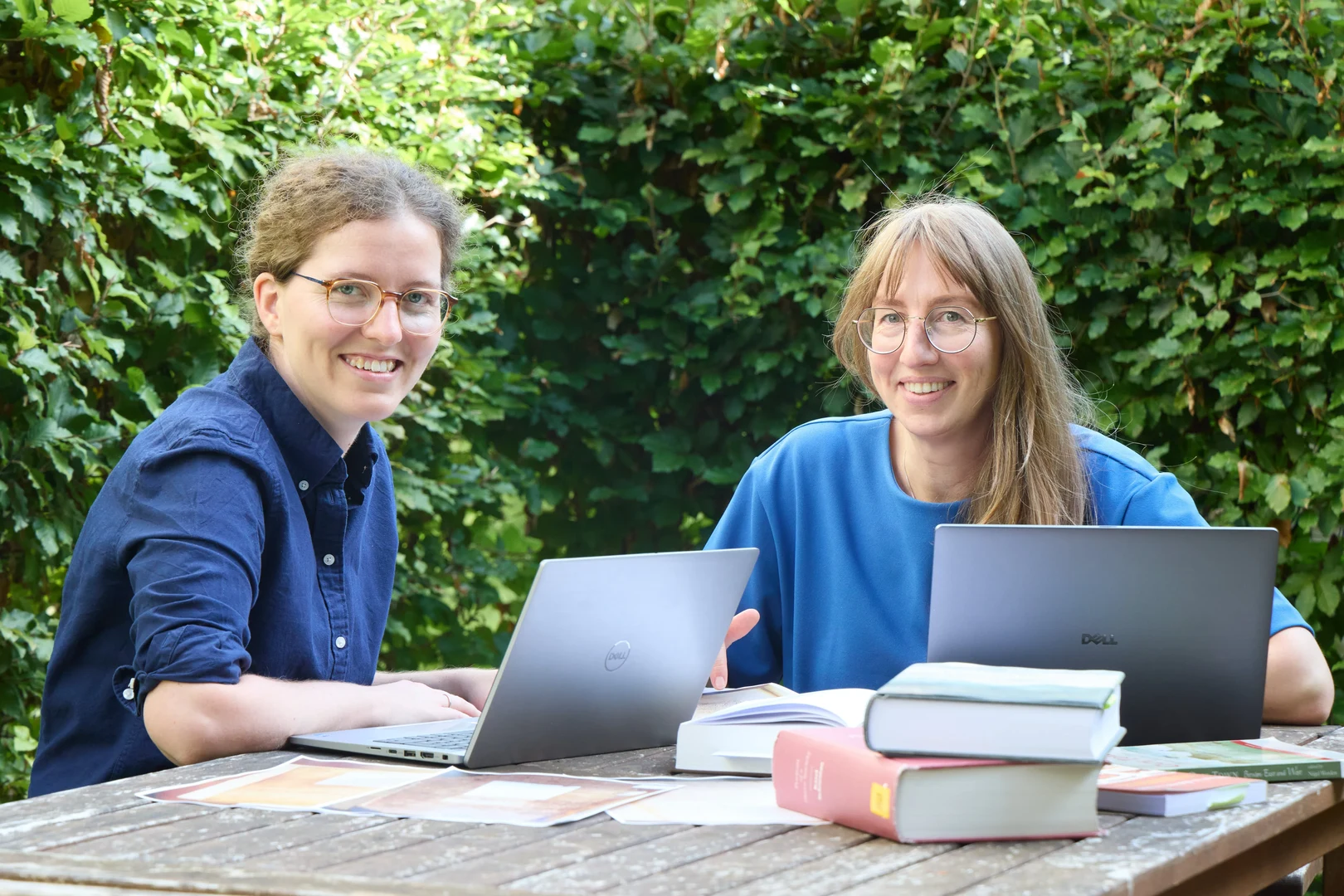
Dr Eva Lehner (right) and Julia Schmidt from the Bonn Centre for Dependency and Slavery Studies at the University of Bonn are researching social networks in the colonial era.
Dr Eva Lehner (right) and Julia Schmidt from the Bonn Centre for Dependency and Slavery Studies at the University of Bonn are researching social networks in the colonial era. © Volker Lannert / University of Bonn
Download all images in original size The impression in connection with the service is free, while the image specified author is mentioned.
Please fill out this field using the example format provided in the placeholder.
The phone number will be handled in accordance with GDPR.

How did social affiliations and trust function in a hierarchical society of strong asymmetric dependencies and violence-based inequality? This is the question investigated by an international research team led by Dr. Dries Lyna (Radboud University Nijmegen), Dr. Eva Marie Lehner (University of Bonn) and Dr. Wouter Ryckbosch (Ghent University), focusing on early modern Cape Town in the period from the mid-17th century through the end of the 18th.

The research focuses in particular on how individual members of the city’s diverse urban underclass positioned themselves strategically within informal networks and formal institutions. “Cape Town has always been a key port city on the Indian Ocean. Sources reveal that its residents included soldiers and sailors from the Netherlands, Germany, Sweden, and the Baltic States, as well as enslaved people from Asia and East Africa, brought there against their will, and the children born of relationships between European men and enslaved women,” says Dr Eva Marie Lehner, who is also a member of the Present Pasts Transdisciplinary Research Area (TRA) at the University of Bonn. ‘The members of this cosmopolitan underclass networked with each other on a basis of necessity and trust. We are digitising a number of historical source documents to find out on what basis loan applications were approved or denied, how women and men obtained witnesses to testify on their behalf in court, and how godparents were chosen for each other’s children.”

The researchers are studying how bureaucratic classifications influenced social structures in early modern Cape Town to gain a better understanding of complex narratives around identity, social relations and social class during the colonial period.

Enslaved women in colonial Cape Town

In a subproject titled 'In God We Trust?', Julia Schmidt, from the Bonn Center for Dependency and Slavery Studies (BCDSS) Cluster of Excellence at the University of Bonn, is studying the support networks of unmarried, free, freed and enslaved women in colonial Cape Town. For example, enslaved women in the Cape Colony were not officially permitted to marry, making them a particularly interesting group for the project. “I am interested in the day-to-day reality of these women’s lives, particularly in relation to their social networks,” explains Schmidt. 'Who could they rely on in times of need? Who was there to provide assistance? How did they organise their lives? Who did they choose as godparents for their children?”

The project thus explores the complex social realities of a society dominated by colonial authorities and the Church and its parish structures. ‘We are interested in how these women positioned themselves within different communities, and in the strategies they employed in view of the social dynamics and power structures resulting from the colonial context,’ says Dr Lehner.

Link to project website

Link to the subproject of Dr. Eva Marie Lehner

The Bonn Center for Dependency and Slavery Studies (BCDSS) Cluster of Excellence has been offering new perspectives on slavery and dependency research since 2019, utilizing the key concept of “strong asymmetric dependencies.” The center’s work focuses on profound social dependencies historically manifest in different parts of the world, including Roman, transatlantic and Mamluk practices of slavery, forced labor, debt bondage, human trafficking and serfdom, thus being concerned with the entire spectrum of coercive, “unfree” statuses. Researchers from 43 different fields engage in transdisciplinary collaboration with 24 international partner institutions. The concept of strong asymmetric dependence serves as an analytical framework for better understanding how power relations have shaped societies throughout history and continue to do so today. The research conducted at the center delivers key insights into dependency relations—like forced migration, inequality and environmental degradation—that pose contemporary global challenges. 

Speaker:

Prof. Dr. Stephan Conermann, Islamic Studies, University of Bonn

Institutions involved:

Max Planck Institute for Legal History and Legal Theory
Bonn International Center for Conflict Studies
German Institute of Development and Sustainability
Rautenstrauch-Joest Museum Cologne
Ruhr University Bochum

The BCDSS’ other partners in the project “Economies of Trust: Digital Infrastructure on the Urban Poor in the Cape Colony” are Radboud University Nijmegen and Ghent University as well as the Laboratory for the Economics of Africa’s Past at Stellenbosch University. The Gerda Henkel Foundation has approved a grant in the amount of €253,000 to fund the research.

Cécile Jeblawei
Press and PR Manager
Bonn Center for Dependency and Slavery Studies Cluster of Excellence
University of Bonn
Phone: +49 228 73 62477
Email: pr@dependency.uni-bonn.de

Wird geladen