


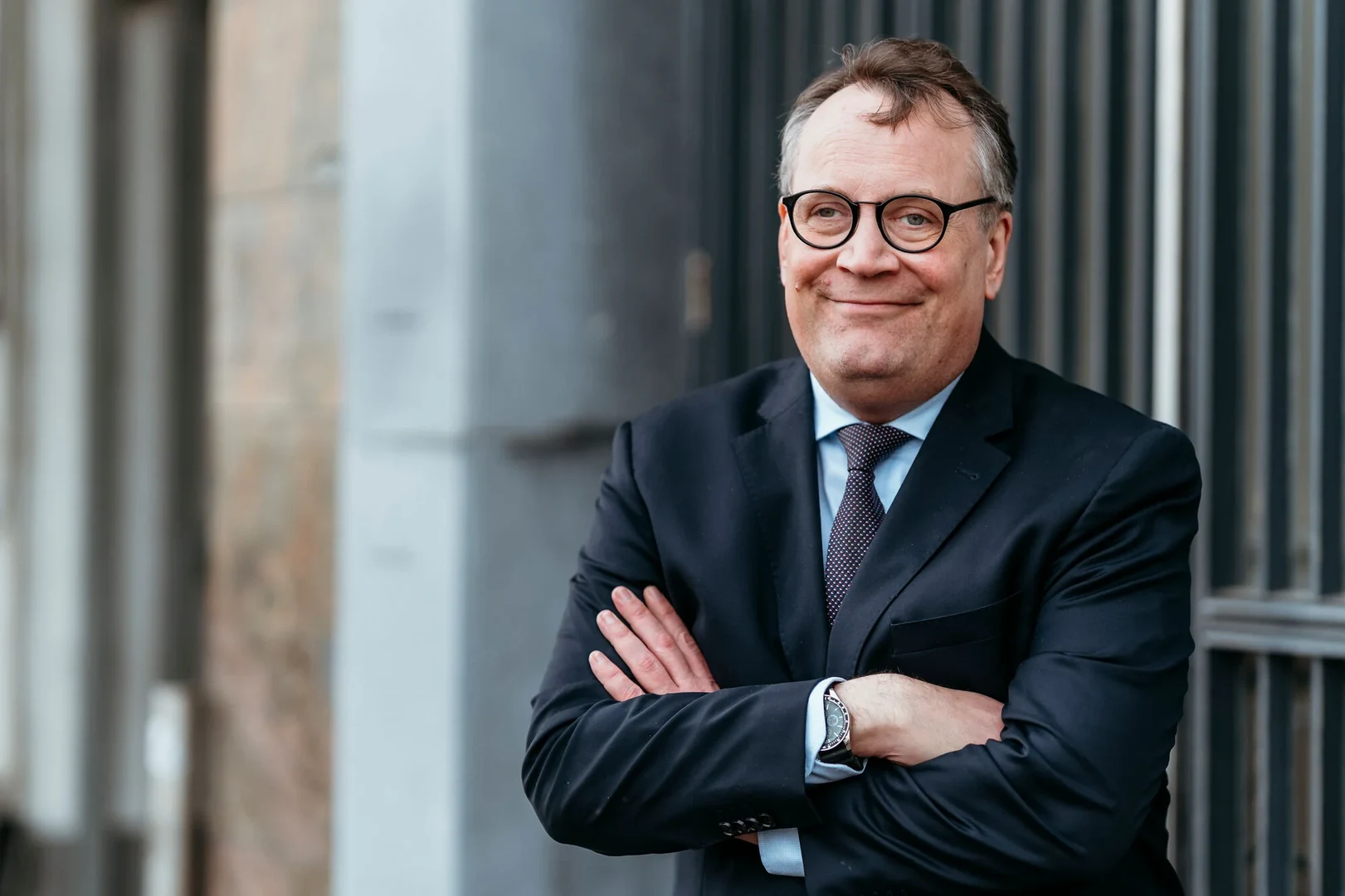
According to the BMG, the “FinanzKommission Gesundheit” has been formed in order to propose ways of stabilizing the contribution rate for statutory health insurance from as early as 2027 onward. Under the two-stage process, in fact, measures that will have an impact in the short term are set to be unveiled sooner, namely by late March 2026. Committee members will then have until December of next year to table a plan for potential structural reforms to statutory health insurance that will enable the rise in spending to be curbed and sufficient income collected. “It’s a daunting task that’ll require some bold suggestions,” Professor Thüsing says. “It’s about going through everything with a fine-tooth comb and keeping what works. I’m delighted to be given the opportunity to tackle the job together with such fantastic colleagues.”
About Gregor Thüsing
A specialist in welfare, labor and privacy law, Professor Gregor Thüsing has been Director of the Institute of Labor & Employment Law and Social Security Law at the University of Bonn since winter semester 2004/2005. He studied law at the University of Cologne, staying on to complete his doctorate—again on a law-related topic (“Der Außenseiter im Arbeitskampf,” or “The outsider in industrial disputes”)—in 1995. Thüsing passed his second state examination in law in 1996 and, two years later, obtained an LLM (Master of Laws) at Harvard Law School and a license to practice as an attorney-at-law for the state of New York. In 2000, he completed his Habilitation in civil law (thesis title: “Wertende Schadensberechnung,” or “Evaluative loss calculation"), which covered civil law, labor and social security law, comparative law and canon law. He went on to hold posts in central corporate development at Bertelsmann AG, as well as being appointed to the Chair for Civil Law, Labor and Social Security Law and Comparative Law at Bucerius Law School.
Gregor Thüsing has sat on the German Ethics Council since 2024. He is much in demand as an expert at consultations arranged by various committees of the German Bundestag (Labour and Social Affairs, Health, Family Affairs, Legal Affairs, European Union Affairs) and has been a member of various other committees and institutions, including the Advisory Council on the Assessment of Developments in the Health Care Sector, the committee formed to prepare the federal government’s 8th Family Report, the Board of the German Association for Data Protection and Data Security, and the scientific committee set up by the BMG to establish a modern compensation system.