

Transdisciplinary exchange on socially relevant energy issues
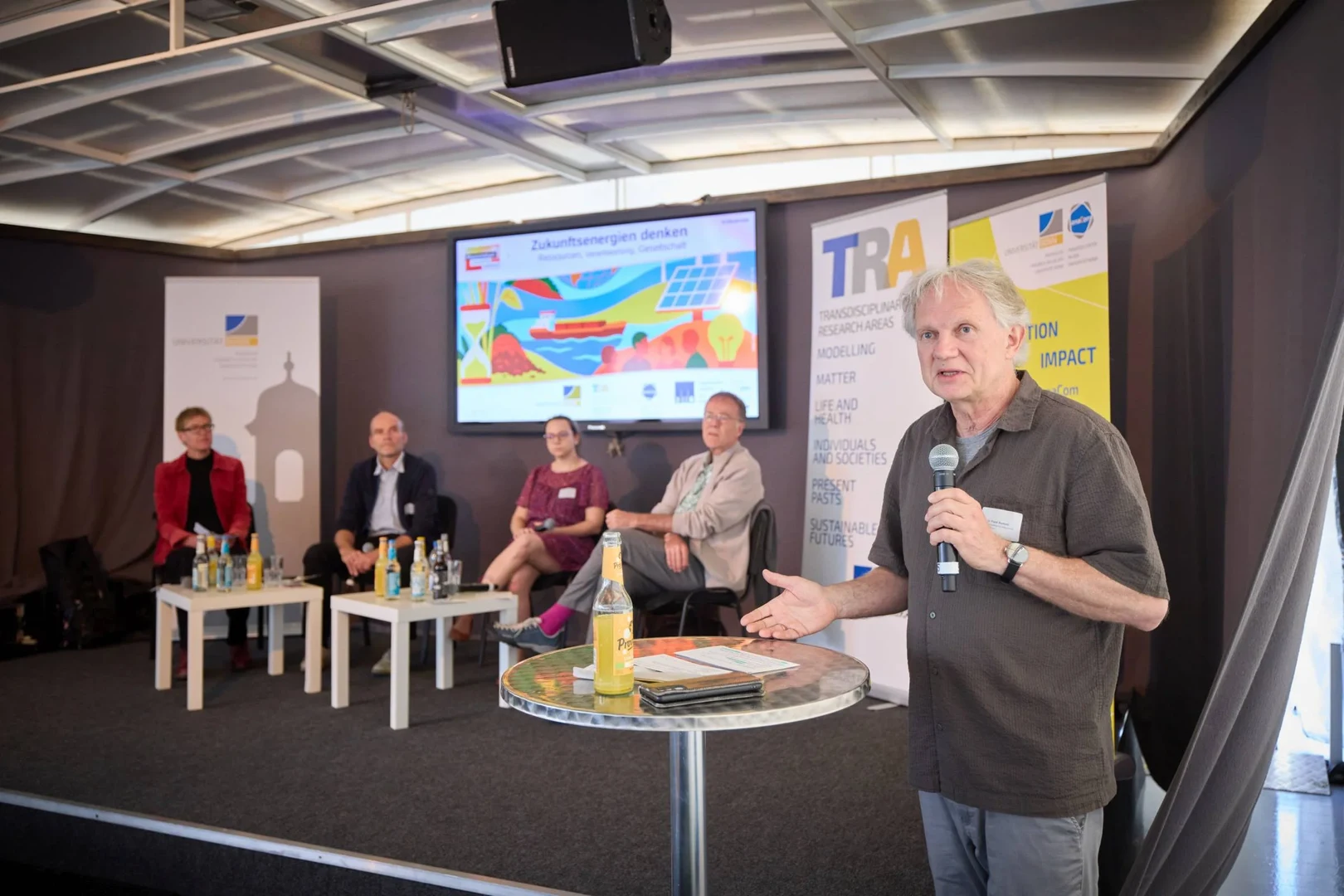
The unique nature of the dialogue was already clear in the welcome address by the evening's scientific host, Prof. Frank Bertoldi from the Argelander-Institute for Astronomy. He emphasized that the format was deliberately chosen to broaden the view beyond the physical and technical understanding of energy. The aim was to focus on socially relevant aspects of the topic—those that often receive less attention in public discourse. To this end, researchers from a wide range of disciplines were invited to participate in an interdisciplinary exchange designed to open up new perspectives and promote dialogue between science and society.
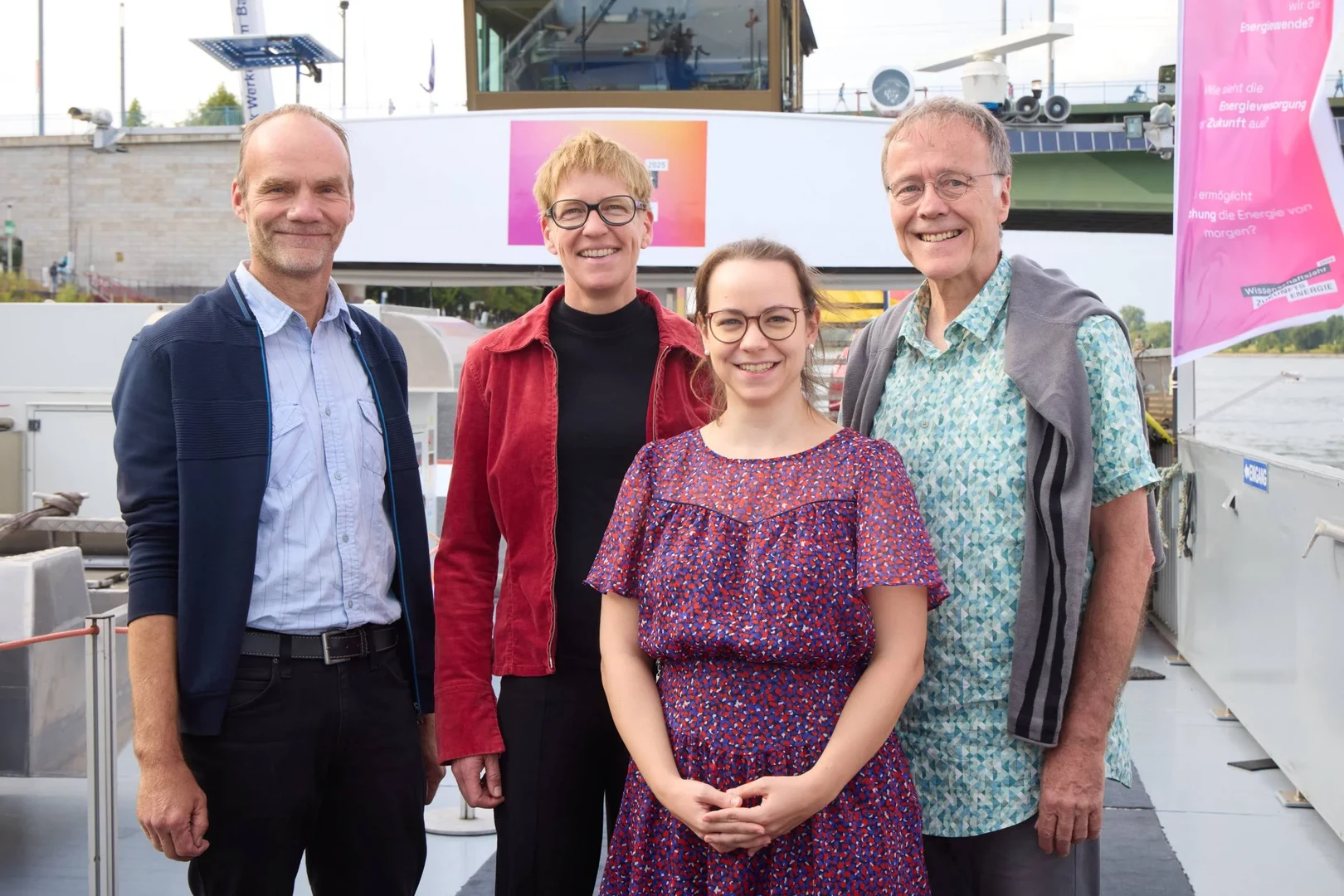
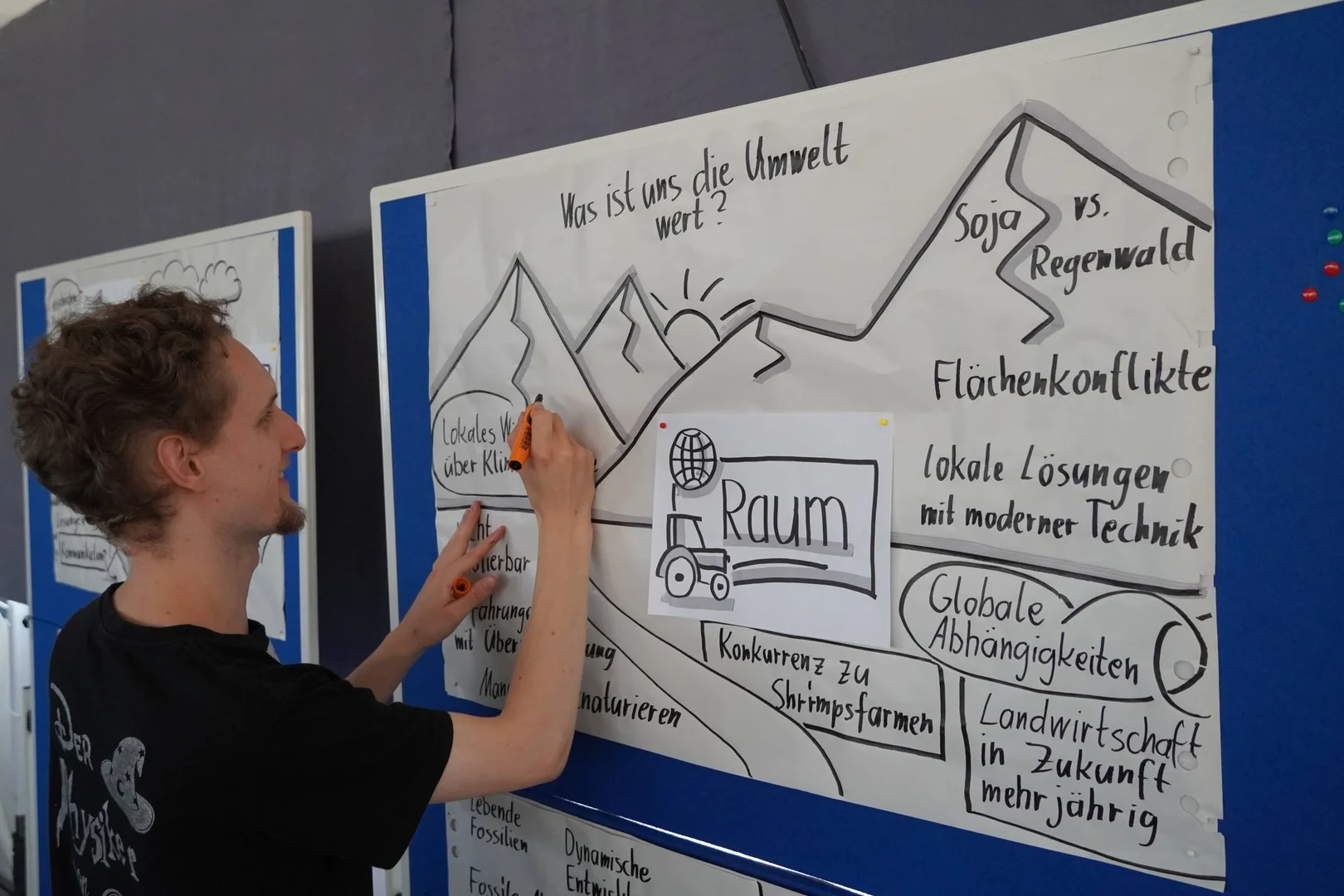
The discussion with environmental economist Jun.-Prof. Julia Mink, ethnologist Prof. Christoph Antweiler, and agricultural scientist Prof. Ralf Pude was moderated by journalist and author Eva Wolfangel. The audience was also involved in the dialogue between the experts and was able to communicate their expectations, questions, and ideas to the moderator via a web-based tool, among other things. The dialogue focused on the question of how energy is thought and designed in different social contexts—for example, in relation to spaces of human action, responsibility within society, or the Anthropocene, the era in which humans have a significant impact on the Earth and its systems. The participants agreed that interdisciplinary and transdisciplinary exchange is of great importance for developing innovative solutions to the challenges of the present and the future.
Impetus for solving energy and environmental issues
Prof. Dr. Christoph Antweiler (Institute for Oriental and Asian Studies) explained how existing knowledge from different cultures can help us to think about the future in the long term and shape it in a fair and sustainable way for future generations. He explained that humanity can only get to grips with major environmental problems if local solutions are used alongside large-scale ones: “There is no single master plan; the world is too dynamic and unpredictable for that. We therefore need knowledge about local solutions in order to build large-scale solutions from the mosaic. In doing so, traditional methods from the past can be combined with modern technologies.”
For Jun.-Prof. Dr. Julia Mink (Institute for Applied Microeconomics), questions of social justice and sustainable action are at the heart of the energy transition. She emphasized the importance of social fairness and environmental protection for a sustainable future and how these can be achieved primarily through political strategies and transnational networks. “The global interconnectedness of the world economy continues to play a central role in the energy sector. This leads to essential distribution issues and international dependency. Relative security of supply is more likely to be achieved through diverse networks than through national self-sufficiency,” explained Jun.-Prof. Mink.
Prof. Dr. Ralf Pude (Institute of Crop Science and Resource Conservation and Scientific Director of Campus Klein-Altendorf) provided illustrative examples from agriculture and horticulture, highlighting particularly innovative approaches to the cultivation and energy utilization of plants. "Well-thought-out cultivation and intelligent use of suitable plant crops can represent a win-win situation for society in many ways. For example, Chinese silver grass can first be cultivated for flood protection, then used as a building and insulation material, and finally used for regional sustainable heat and energy supply. Here we see that it pays to think outside the box to find innovative solutions," said Prof. Pude.
Exchange on equal terms and exciting food for thought
With its interdisciplinary and transdisciplinary format on future energies, the University of Bonn has created a space for exchange, reflection, and shared visions of science and society. New perspectives made it clear that the topic of future energies concerns us all as a society. Energy is much more than electricity from the socket—it is a social good that requires responsibility, education, and participation.
The event was jointly organized by the Transdisciplinary Research Areas (TRAs), the Argelander-Institute for Astronomy, and the Transfer Center enaCom of the University of Bonn.
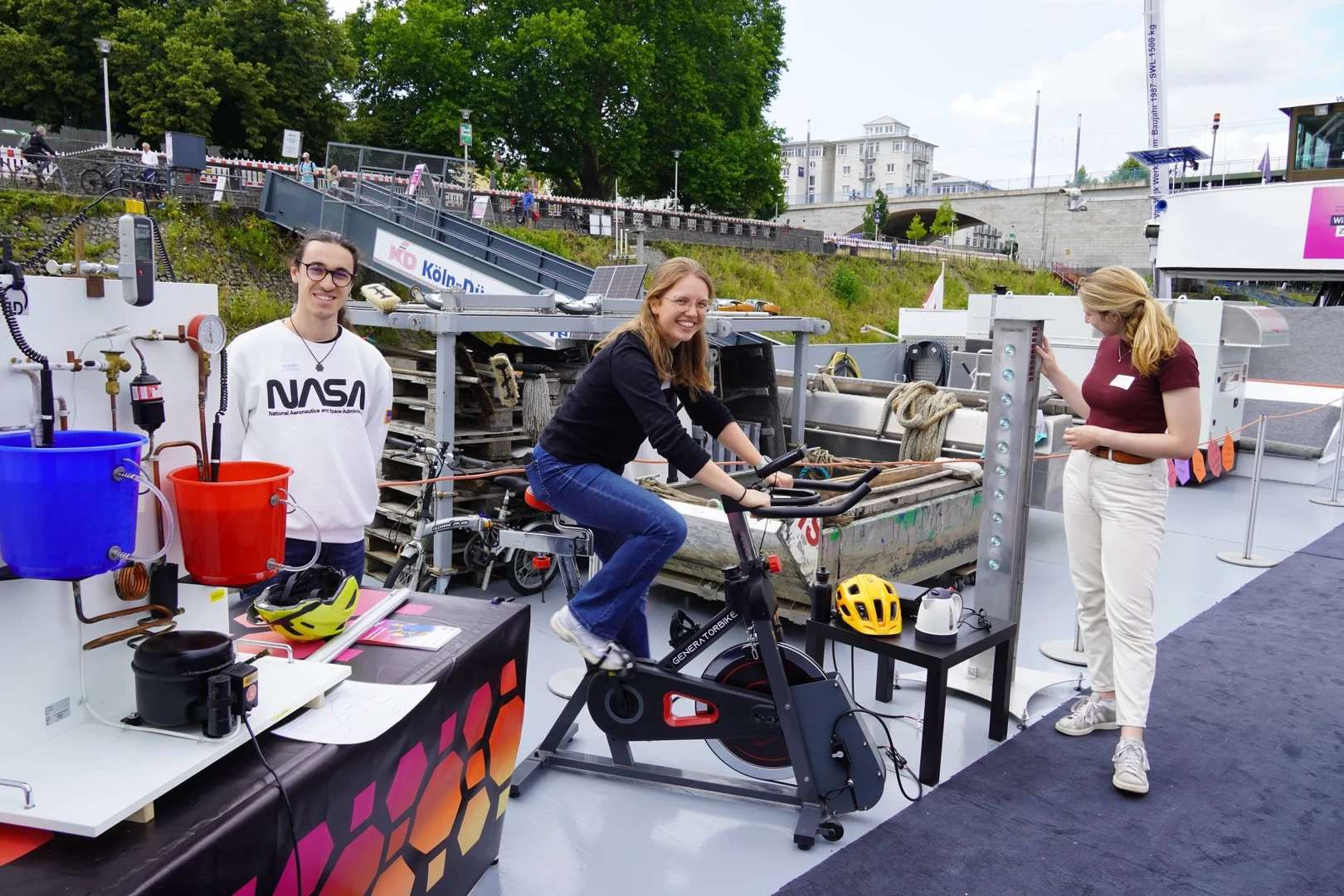
Generating your own energy: hands-on activity of the University of Bonn
A student team from the University of Bonn presented initial ideas for their planned escape room “2051: Energie im Weltraum” (“2051: Energy in Space”) at the hands-on activity “Zeig Watt in dir steckt” (“Show what you've got”) – a contribution to the competition for young scientists “Hochschulwettbewerb” in Science Year 2025. Visitors were able to generate energy themselves through movement and thus learn in a playful way how renewable energies can be used.
MS Wissenschaft is touring Germany until September
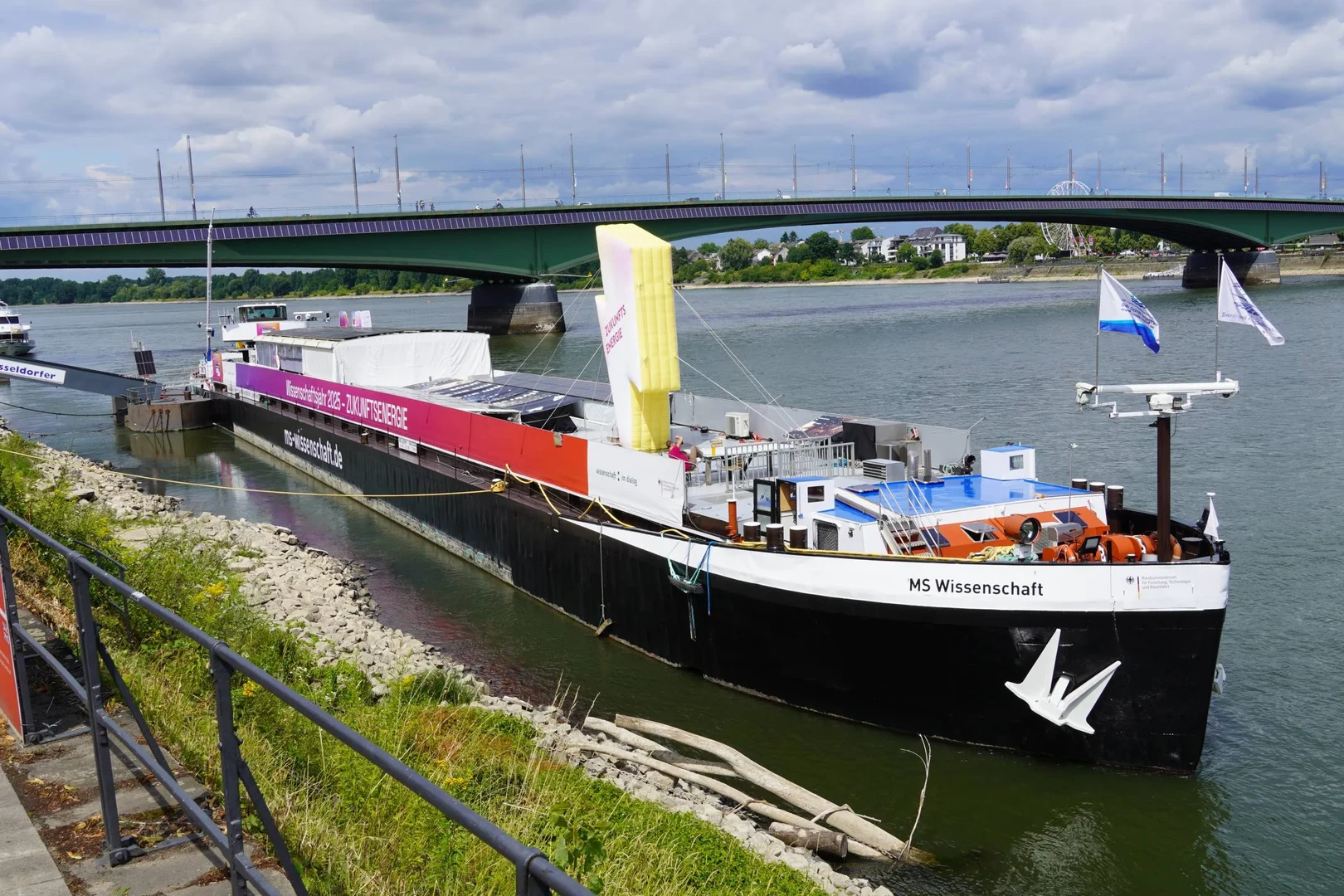
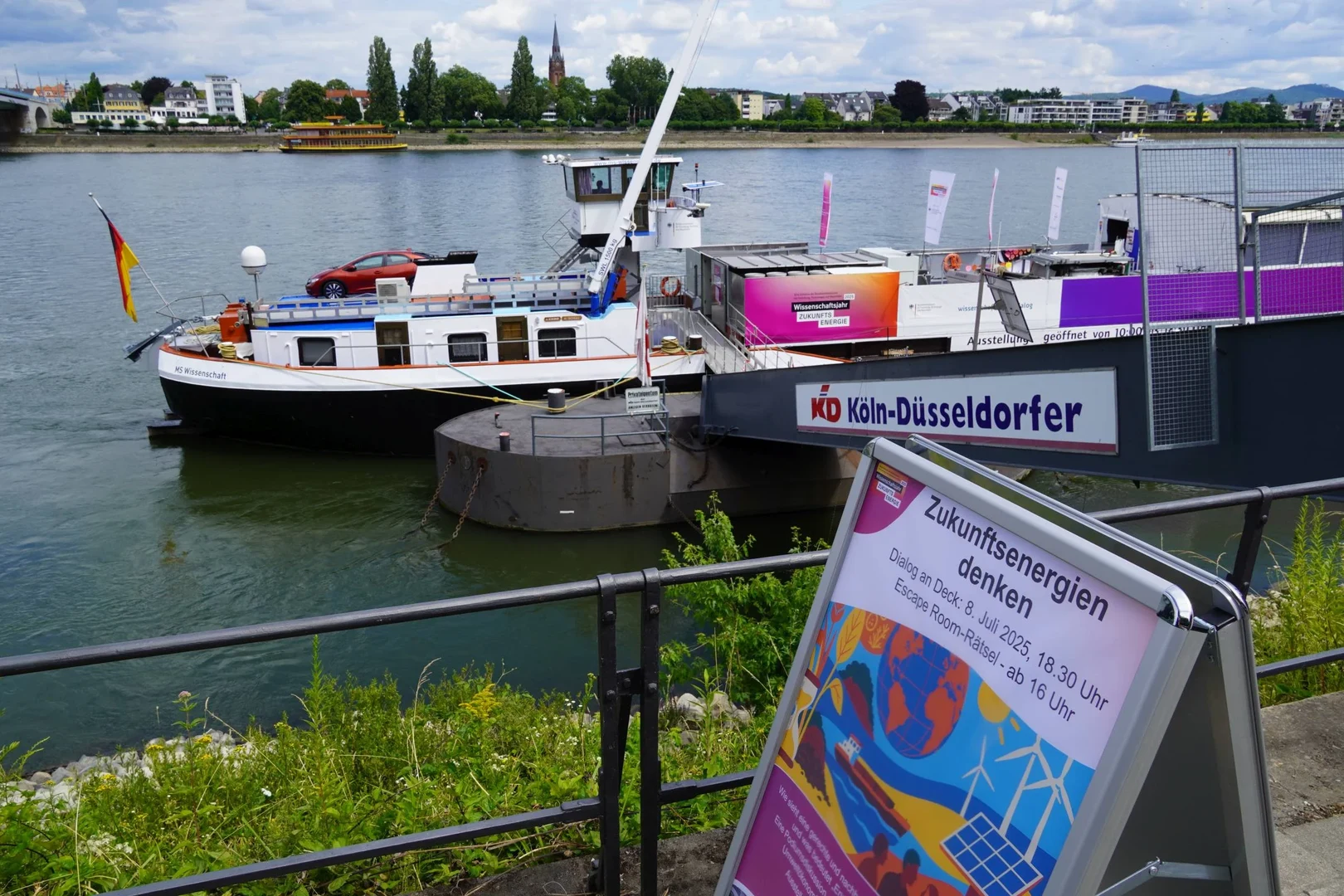
Both program items were part of the MS Wissenschaft's stay in Bonn. In the “Science Year 2025 – Energy of the Future”, the exhibition ship offers over 30 interactive exhibits on the energy supply of the future and brings current research to life for the general public. The tour is organized by Wissenschaft im Dialog (WiD) on behalf of the Federal Ministry of Research, Technology and Space (BMFTR).
The Science Year
The Science Years have been organized by the BMFTR since 2000. The aim of these themed years is to strengthen public interest in science and promote social dialogue on research and innovation.