


Agricultural, nutritional and food sciences
Sustainability, innovation and global food security are core concerns in the agricultural, nutritional and food sciences. Work in this pioneering field is about leveraging science, technology and economics to achieve advances in farming efficiency, nutrition and sustainable production, thereby realizing ever more tremendous opportunities for improving our world through responsible action.
Field of Study - Agricultural, nutritional and food sciences
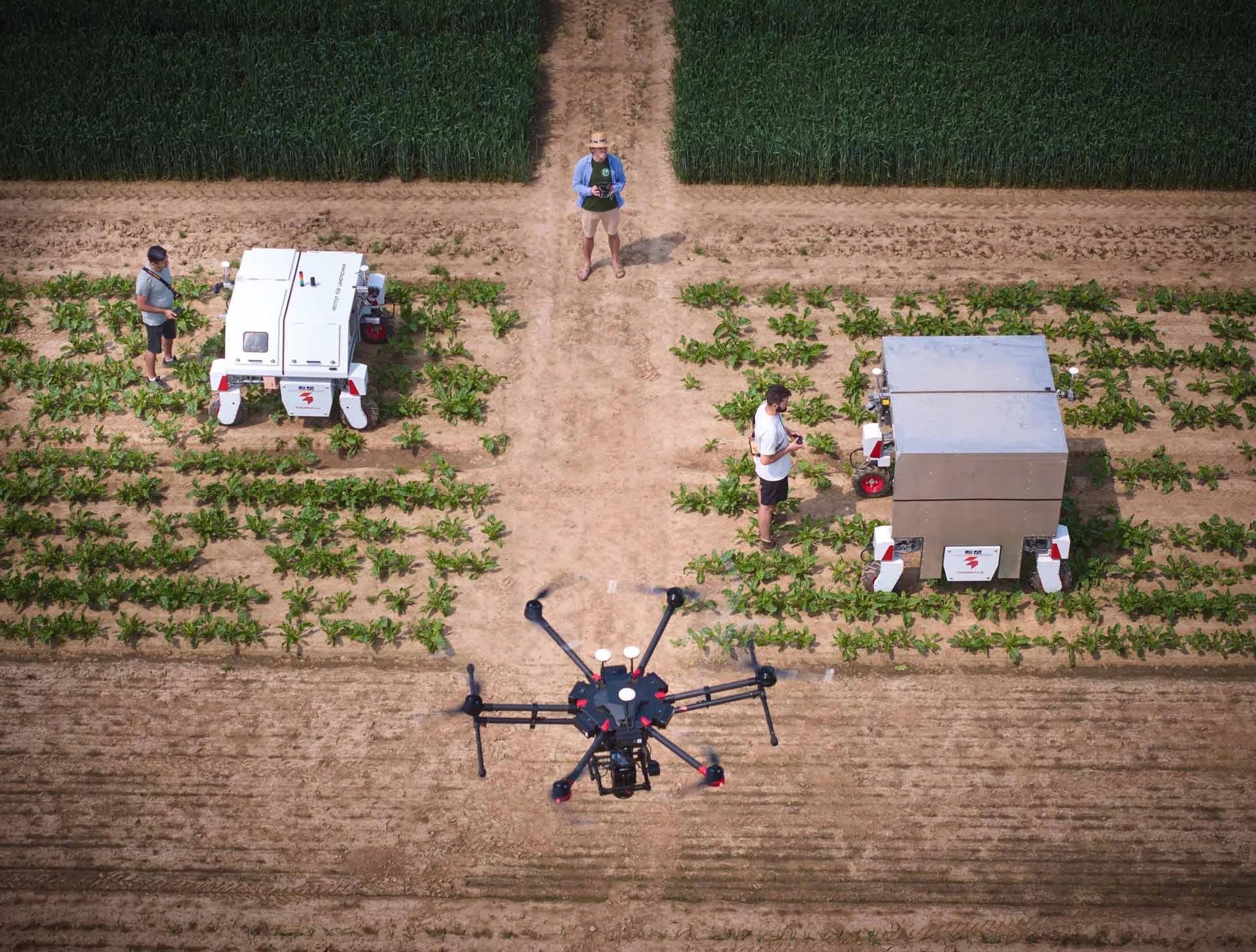
Bild © Universität Bonn / YouTube
What is it all about?
Students of agricultural, nutritional and food sciences investigate and research issues of food production, processing and quality as well as their impact on the environment and human health. Work in this field involves fundamentals of biology, chemistry and technology as well as economics and topics of sociology. The focus is on sustainable agriculture, the economics of sustainability, food security and innovative food technologies. Students learn to analyze complex relationships along the entire value chain in order to develop real-world solutions. As with other natural science, engineering and social science subjects, analytical thinking, interdisciplinary collaboration and a sense of social responsibility take center stage, the aim being to play an active role in helping to shape global challenges such as climate change, healthy nutrition and the sustainable use of resources.
What would the world be like without...
...agricultural, nutritional and food sciences?
-
Without agricultural, nutritional and food sciences, there would be no modern agriculture, no sustainable food production and no reliable systems for securing the food supply. Harvests would be impossible to predict, famine would be widespread, natural resources would be placed under even greater strain, and it would be impossible to ensure the quality and safety of our food.
-
There would also be a lack of progress in crop cultivation, animal husbandry and soil management, while environmentally friendly cultivation methods would remain unresearched. Food would have a shorter shelf life, nutrition deficiencies would be widespread and a healthy diet would be difficult to achieve. Neither would agricultural and environmental policy be able to adapt effectively to changes in economic and ecological conditions without any scientifically sound findings.
-
In short, without this field of study, global supplies would be insecure and a sustainable future for people and the environment would hardly be conceivable.
What relevant occupations and career paths are there?

Agricultural sales representative

Food chemist

Farmer

Food inspector

Agricultural technician
- Management in agriculture and the food industry
- Agricultural technology
- Plant breeding
- Animal breeding and husbandry
- Agricultural economics, bioeconomics and the circular economy
- Agricultural and environmental policy and consulting
- Food technology
- Quality management
- Food inspection
- Food industry product development
- Sensor technology and food safety
- Food law
- Sustainable agriculture, including organic farming
- Environmental and resource protection
- Agro-marketing
- Supply chain management in the food industry
- Research and development in the agricultural and nutritional sciences
- International development cooperation (food security, rural development, nature conservation)
- Nutrition communications, public health
- Technical sales in the agricultural/food sector
What skills will I need? What are the prerequisites?
Natural sciences knowledge
To successfully study agricultural, nutritional and food sciences it takes broad knowledge in the natural sciences.
Interest in biological, chemical and ecological processes
Students will need to be greatly interested in biological, chemical and ecological processes as well as in food production and its economic and political context.
Knowledge of mathematics and chemistry
A sound knowledge of mathematics and chemistry will be essential, both for analyzing nutritional and production processes and for understanding the economic links between nature, agriculture and the human world.
Analytical thinking ability
Analytical thinking, problem-solving skills and openness to innovation are also required.
Ability to understandably communicate complex interrelationships
Teamwork, communication skills and the ability to get others to understand complex issues are important.
Interest in practical work
Successful study in this field requires a personal interest in practical work, technologies and conducting research.
Where would I be studying?
Contact
Central Study Advisory and Counseling Service
The Central Study Advisory and Counseling Service (ZSB) is the first point of contact at the University of Bonn for all questions relating to studying.
Further information
Study Orientation and Getting to Know the University of Bonn
The University of Bonn offers diverse opportunities for school students of various ages to get to know the University. Our programs cover the full range from children’s university and science races to university-preparatory events. We offer academic guidance and support to upper-level high school students and other prospective students, for instance by helping them to review their individual readiness for university and by providing insights into the realities of university study. Workshops, information events and one-on-one counseling sessions give prospective students the opportunity to reflect on issues related to what lies ahead in terms of university and career choices.