

Finding well-known videogames such as Anno 1800, XCOM or Cities: Skyline in a tabletop version is not only a merchandising strategy, but also a Master Class in System Design. Franchise products are expanded in their portfolio, new target audiences are reached, and once digital-only content finds new room in analog and offline environments without the need of internet or screens. In this next post on our blog on accessibility and gaming, we show you which game design components are transferred from digital games to their analog versions, and how these are adapted as well. For startup founders, venture enthusiasts, students, and also teachers, these case studies offer you great examples of successful adaptations from digital to analog formats; product reach, target audience, product value and gamification affordances can be thus fostered and improved.
A computer game processes – on the background as digital software – uncountable calculations, rule conditions, methods and permutations, so we are able to experience inputs from the game to us (avatar reactions, game mechanics, game rules, etc.) in real time. If all this digital and computer-assisted support was absent, the game design would need to be compacted and condensed in such a way that it can be operated by players by hand. Likewise, all these analog game design components would nee to be understood quickly, in order to not overload the game experience with reading and comprehension tasks instead of playing.
For Startups which develop complex products, apps or services, this media transfer – from digital to analog – teaches a valuable lesson about User Experience (UX), user focus and accessibility.
Feature Reduction: The Art of Keeping Only the Important
When transferring a map-extense and simultaneously cozy country-RPG like Stardew Valley to a tabletop, analog format, it’s not possible to simulate every harvesting mechanic and monster fight as a board game, as earlier described when observing the digital-to-analog processing mechanics. That is why the tabletop version compresses the gameplay experience to its absolute core: the farming chain mechanics and resource management. This working gameplay core (prototype), in startup jargon, can be unserstood as the MVP (Minimum Viable Product)
When transitioning from digital to analog formats, this MVP mindeset is of big importance. Although this MVP philosophy leads to resource optimization and a better risk management, startups tend to overload their products with complementary features, which risks their USPs (Unique Selling Propositions) from getting lost and not clearly recognized. That is why successful adaptations force game and UX designers to ask themselves the “hard” question: what is the absolute “Core experience” of our product and what do we need to let go without risking this experience from being addressed to our players?
Hybrid Design and Cognitive Release
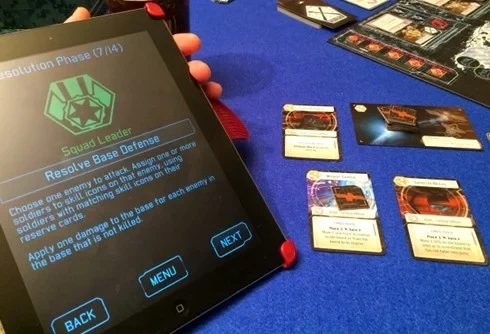
Some mechanics are actually hard to transfer into classic tabletop game design. As an example: The merciless real-time battle against an alien invasion in the computer game XCOM would become a kind of XXL mathematics assignment if it was transferred to a tabletop version without proper adaptation, since strategy games like XCOM, StarCraft, Anno, etc. base on complex attack and defense calculations. What could be a hybrid solution in this case?
This could be a kind of add-on application on a smartphone, something each one of us has nowadays. This application could take over the calculations, control random-based events during gameplay and track time per turn. All these processes can be delivered as short and concrete player actions to perform in the tabletop game (analog area). As an example, the XCOM board game requires the XCOM Companion App to be used, which takes over calculation tasks as well as some in-game events, which would otherwise take much time to be done on paper.
This shows, in an elegant way, how physical and digital interfaces can be used hand in hand in tabletop games. The digital application takes over the “cognitive load” of all calculations and complex processes, while the analog tabletop, analog game emphasizes the social interaction, strategic thinking and a human, on-site multi-player gaming experience.
Accessibility: When the Computer Just Isn’t There
From an accessibility perspective, the transition from digital to analog is quite interesting. Videogames feature often – and in ideal cases – accessibility options such as text scaling, color palettes, throttling the game speed, adapting the difficulty, etc. In tabletop games, on the other hand, the User Interface (UI) remains printed, static and on paper or other solid materials like dice or coins. Therefore, adapting parameters "on the go", like in digital games, proves either very difficult or even impossible.
When the automatization and processing tasks of a PC are not available, cognitive requirements from the player rise (remembering game rules, keeping scores, tracking previous player actions, etc.) as well as senso-motoric challenges (placing and moving figures on the game table, rolling dice, throwing coins, …). Successful adaptations – like the cooperative player approach on the Cities: Skylines tabletop game – solve this issue with good information design. Color semantics (“what does this color mean?”) is further clarified by symbol coding (color + symbol = clear meaning). Likewise, important game mechanics are condensed in clear flowcharts and icons, and game pieces are haptically different from each other to further differentiate their in-game purpose.
Startups building either hybrid or physical products can learn from Cities:Skylines how real Universal Design can function, without forcing players to enter a “Settings” menu before playing.
This Blog entry offers you three Game Design Lessons:
- Kill your Darlings: As a first step, reduce your product to its core loop, being it the one who offers the highest value and gameplay experience. All other features are optional.
- Minimize cognitive load: if users need to remind too many game statuses, numbers and next steps before playing or in order to understand the game's fundamental rules, then your UI/UX Design is not intuitive enough
- Use double coding: when focusing on your interface (play mat, cards, tokens, dice, etc.), do not rely only on colors (e.g., red for mistakes, green for success). Always complement your accessibility with text, forms and pattern elements.
Image sources:
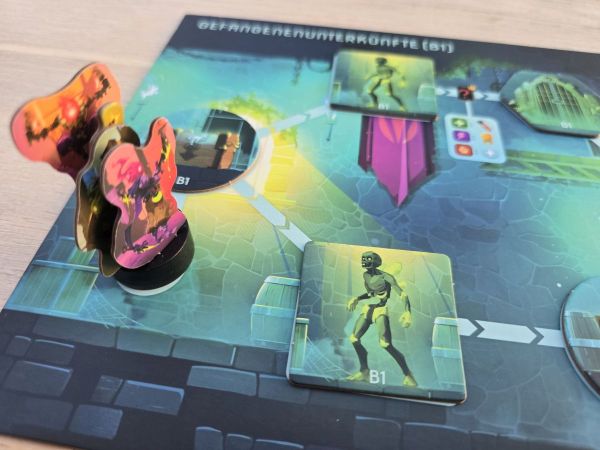
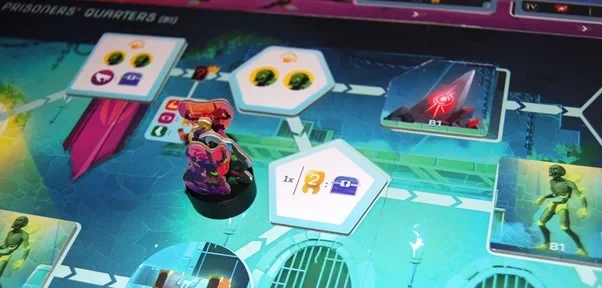
- Dead Cells: https://www.ringbote.de/fileadmin/user_upload/bilder/rezensionen/2025/bs_deadcells_05.jpg
- Stardew Valley: https://static0.thegamerimages.com/wordpress/wp-content/uploads/wm/2025/04/green-pawn-performs-the-water-the-crops-action-in-stardew-valley-board-game.jpg
- XCOM: https://encrypted-tbn0.gstatic.com/images?q=tbn:ANd9GcQiQOnwJtzzJVTrNg99CfuA2CF03w4J4lvt4VBalnZLzqs8dYwI