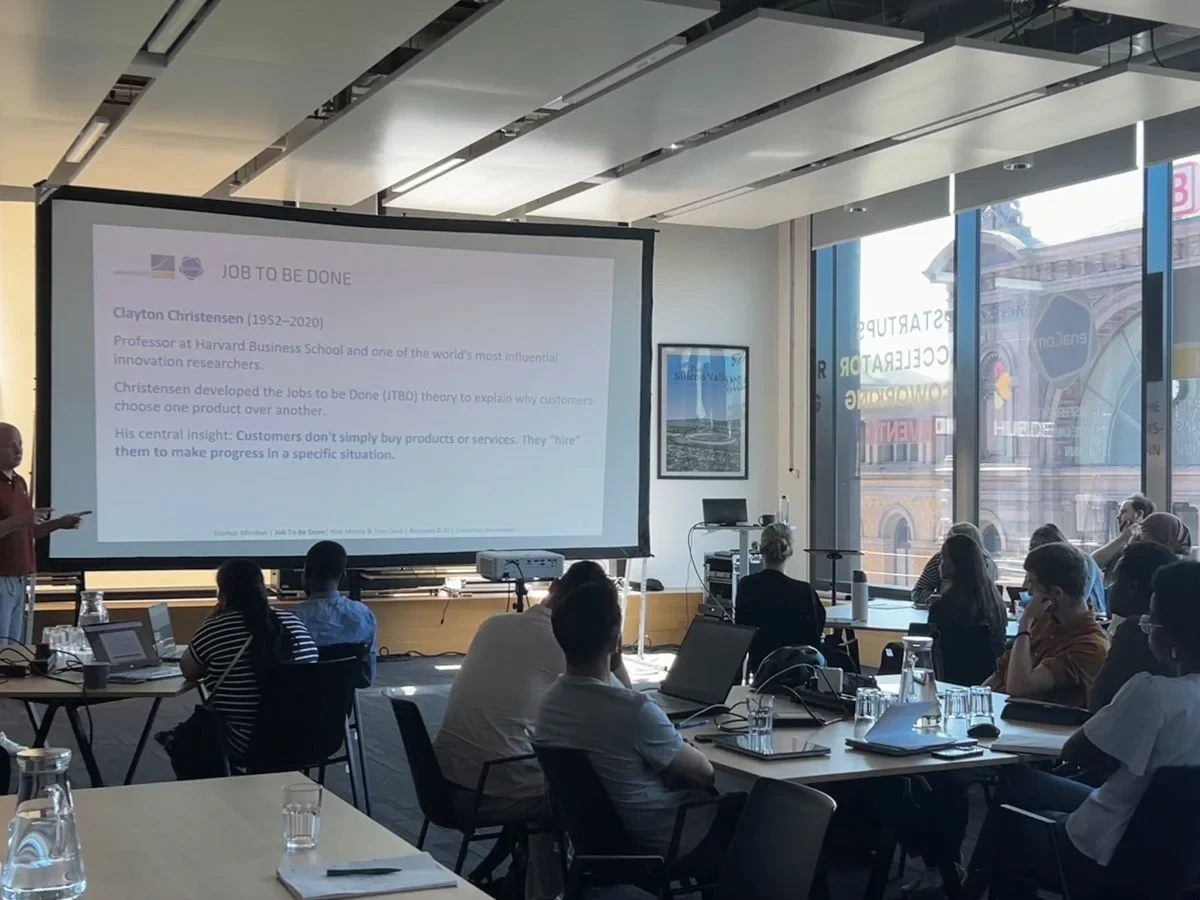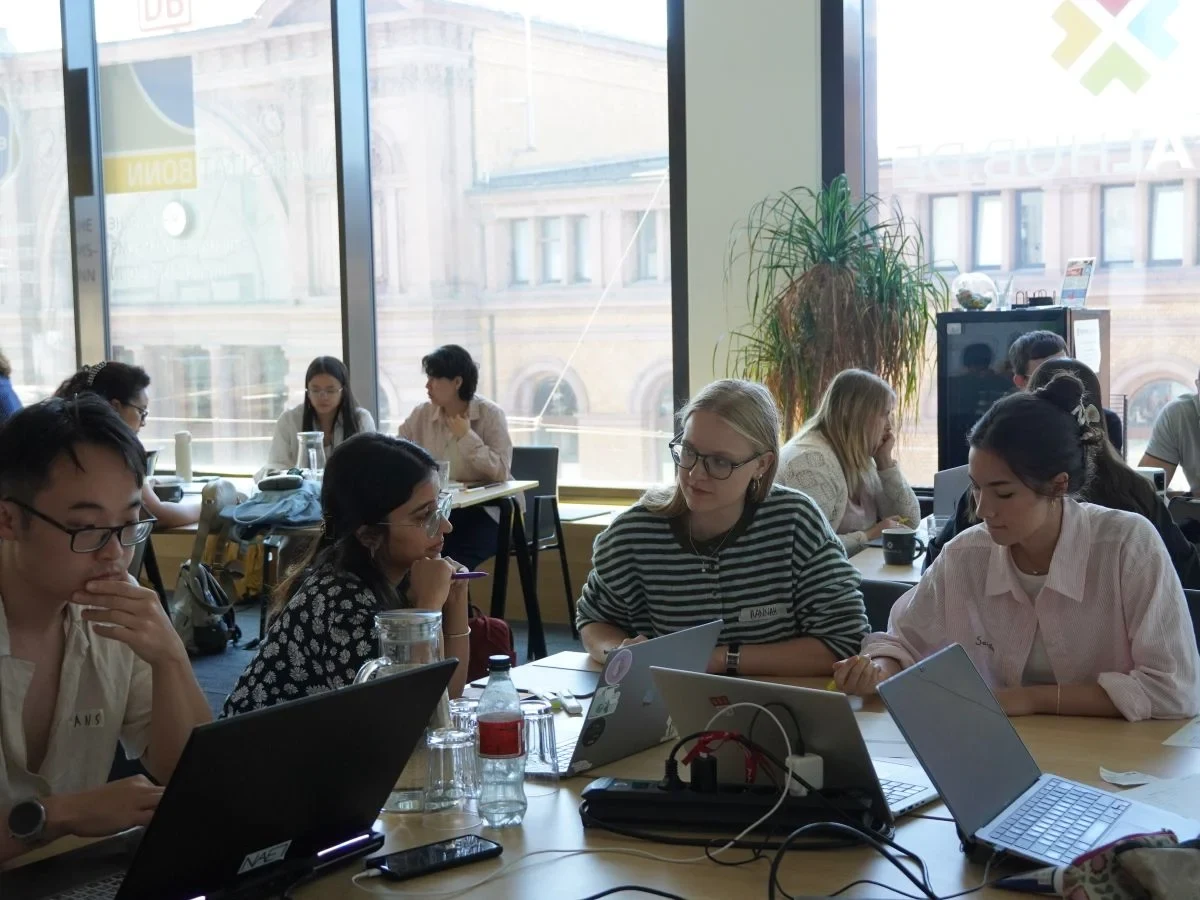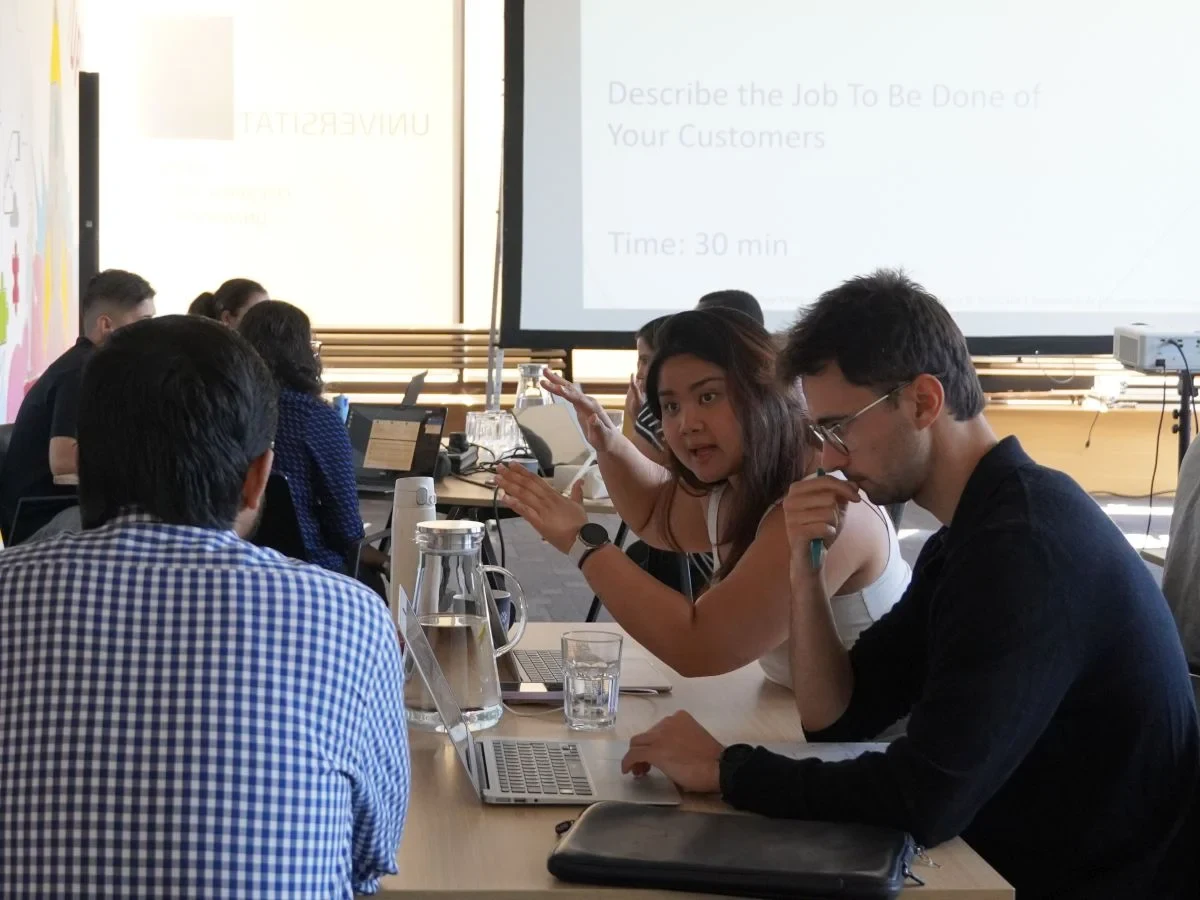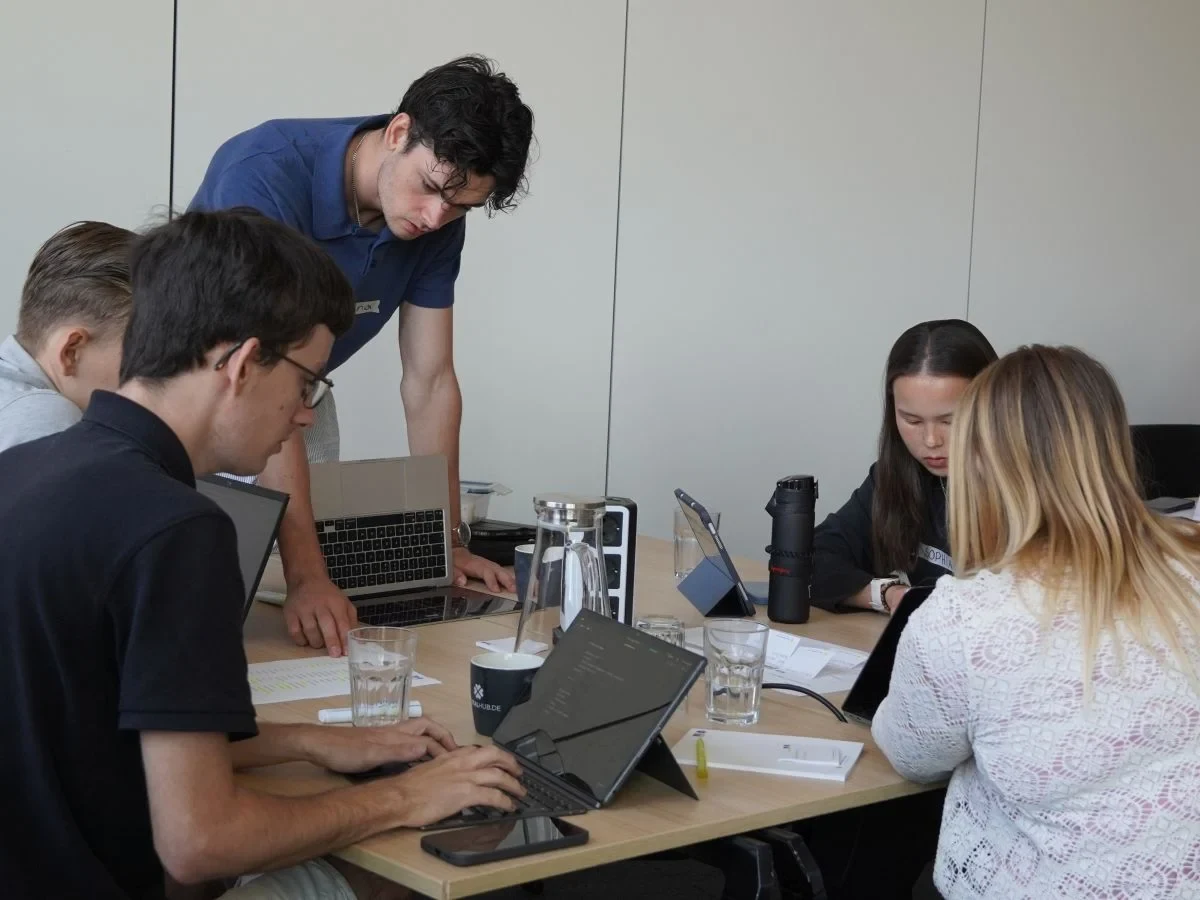


Many hands-on experiences
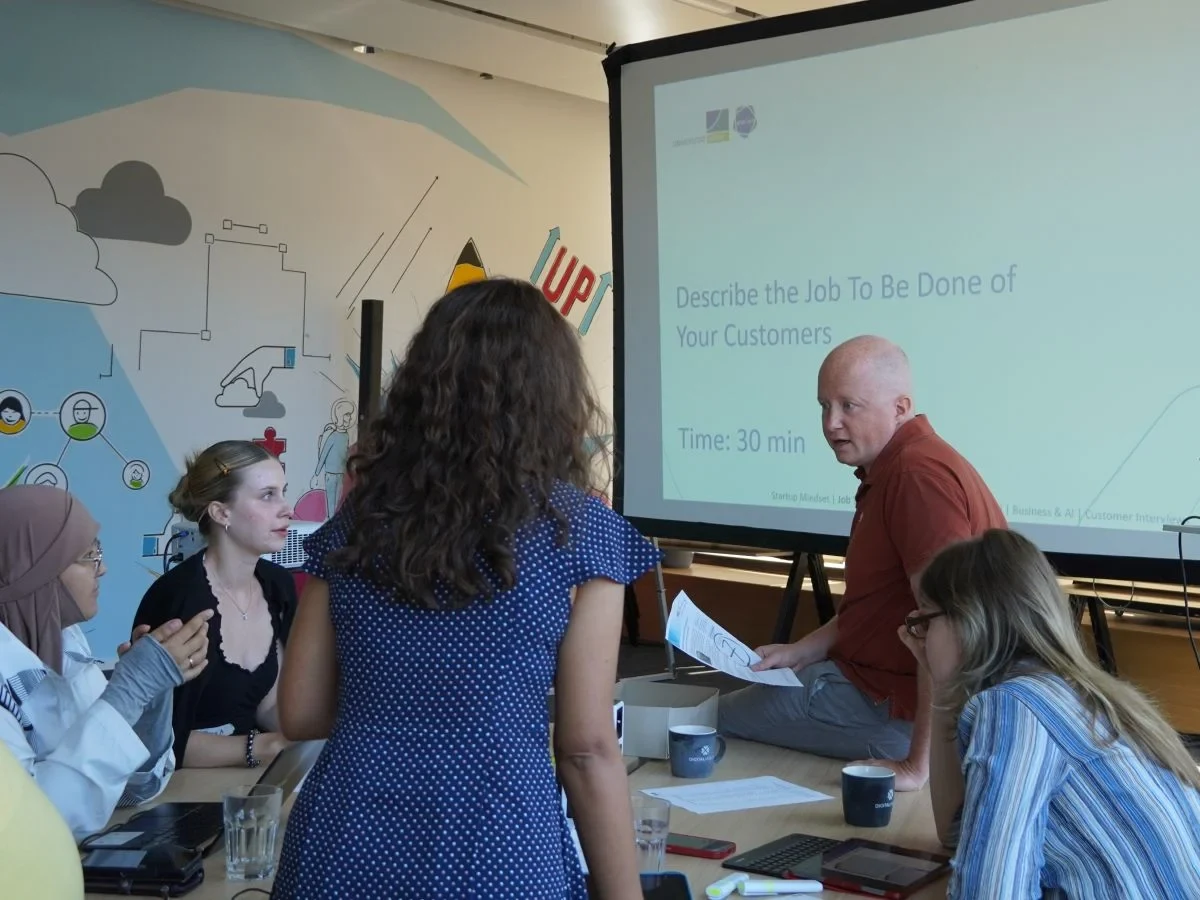
One focus this year was on finding the right customers for the potential product or service. Participants set out in mixed teams and conducted numerous interviews to test their ideas in practice. The results were often surprising, as the interviewees highlighted different or new aspects. These insights were then incorporated into the development of the respective business models. The hands-on approach was well-received by the participants: “The Summer School gives us the opportunity not only to talk about ideas, but also to actually develop them further and put them into action,” one participant emphasized.
Space for ideas and exchange
During the Role Model Talk with founders Nils Stausberg and Jan Arne Wirths from the start-ups kiresult and Previa Health, as well as during the keynote presentation by Janine Weirich from NRW.Bank, participants gained exciting insights into different paths to founding a business and financing options. In small groups, a valuable exchange took place, offering many tips on the opportunities and challenges of starting a business.
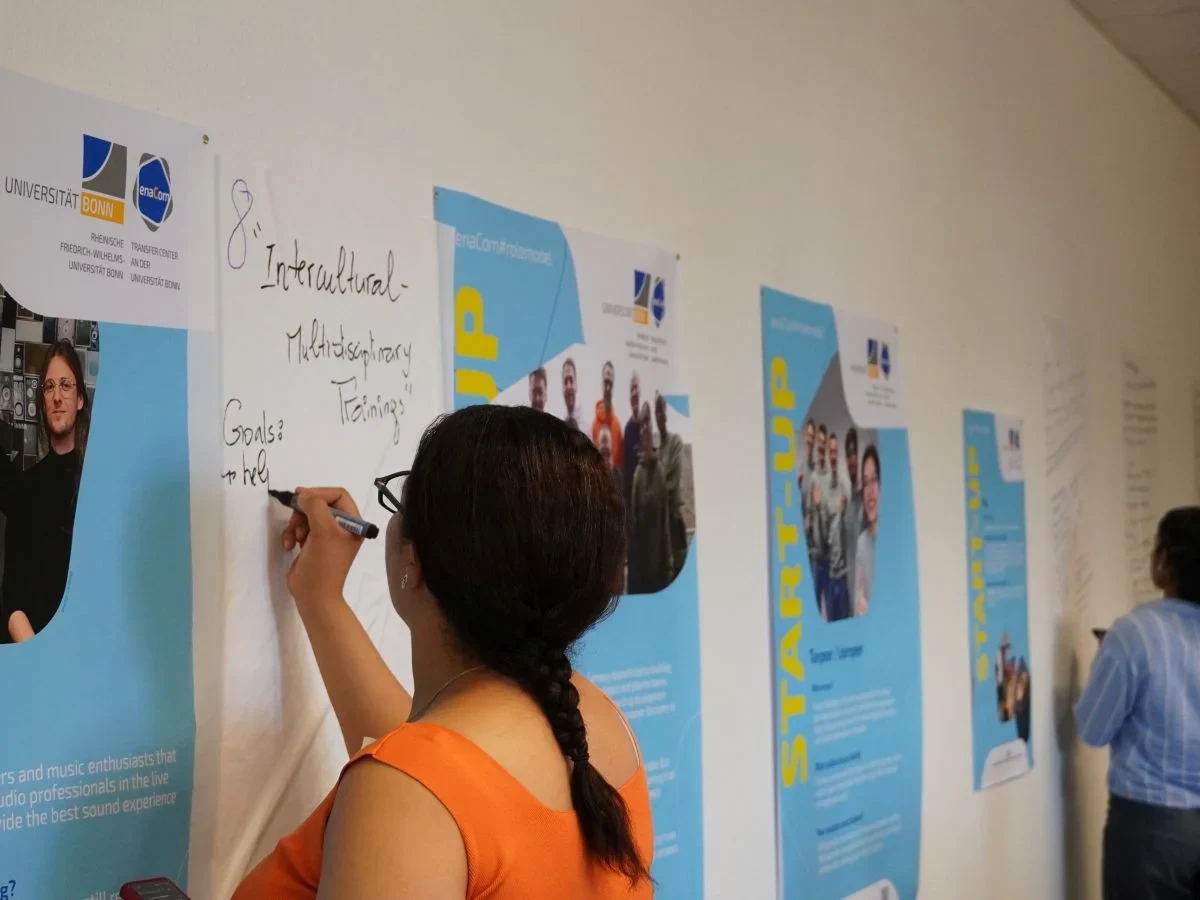
The Start-up School is open to all academic disciplines, and once again, the participants brought diverse perspectives from their respective fields: ranging from the humanities and media studies to astrophysics and law. “It’s exciting to see how varied the ideas are and what perspectives come together from the different disciplines,” said one participant.
Innovative pitches
On the last day, all teams had the opportunity to present their results in a short pitch. An expert jury consisting of start-up coaches Dr. Alexander Küsshauer, organizer of the School, and Mareike Haane, both from the Transfer Center enaCom, as well as Janine Weirich from NRW.Bank, selected the “Moduza” project as the winner from among the seven ideas; the team was awarded personalized financial coaching from NRW.Bank.
All ideas:
- Adelguard – Using AI Safely in Psychotherapy: Adelguard is developing an approach that allows psychotherapists to leverage the capabilities of AI while meeting the specific requirements for sensitive data, reliability, and responsible use.
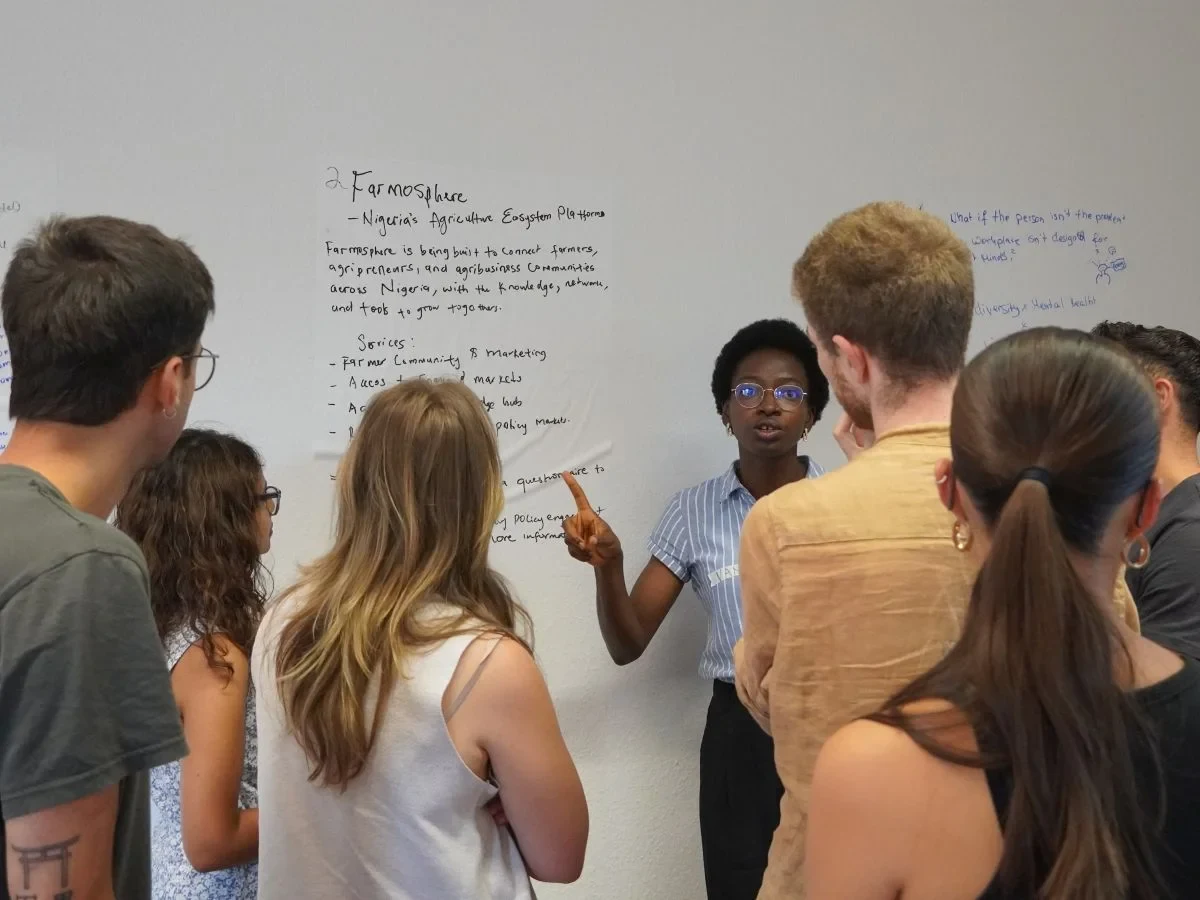
- Farmosphere – Ensuring that agricultural subsidies reach real farmers: Farmosphere verifies farmers in Nigeria and helps NGOs and public institutions target subsidies and support services specifically to farms that actually exist and are active.
- Global Fact – No more publishing fake stories: An AI-based fact, content, and image checker that helps journalists identify misinformation and manipulated content before publication.
- Miscanthus – Making sustainable insulation materials easier to produce: Based on a patent from the University of Bonn by Prof. Dr. Ralf Pude, the team investigated a bio-based approach for scalable, fire-resistant, and locally available building materials.
- Moduza – Generating additional revenue from empty court hours: Moduza helps padel facilities increase their utilization during off-peak hours by connecting players with available courts through attractive offers.
- Panel Wing – Autonomous cleaning and inspection of solar farms in dusty regions: The solution combines a mobile ground robot with a connected inspection drone to efficiently clean and monitor large solar farms.
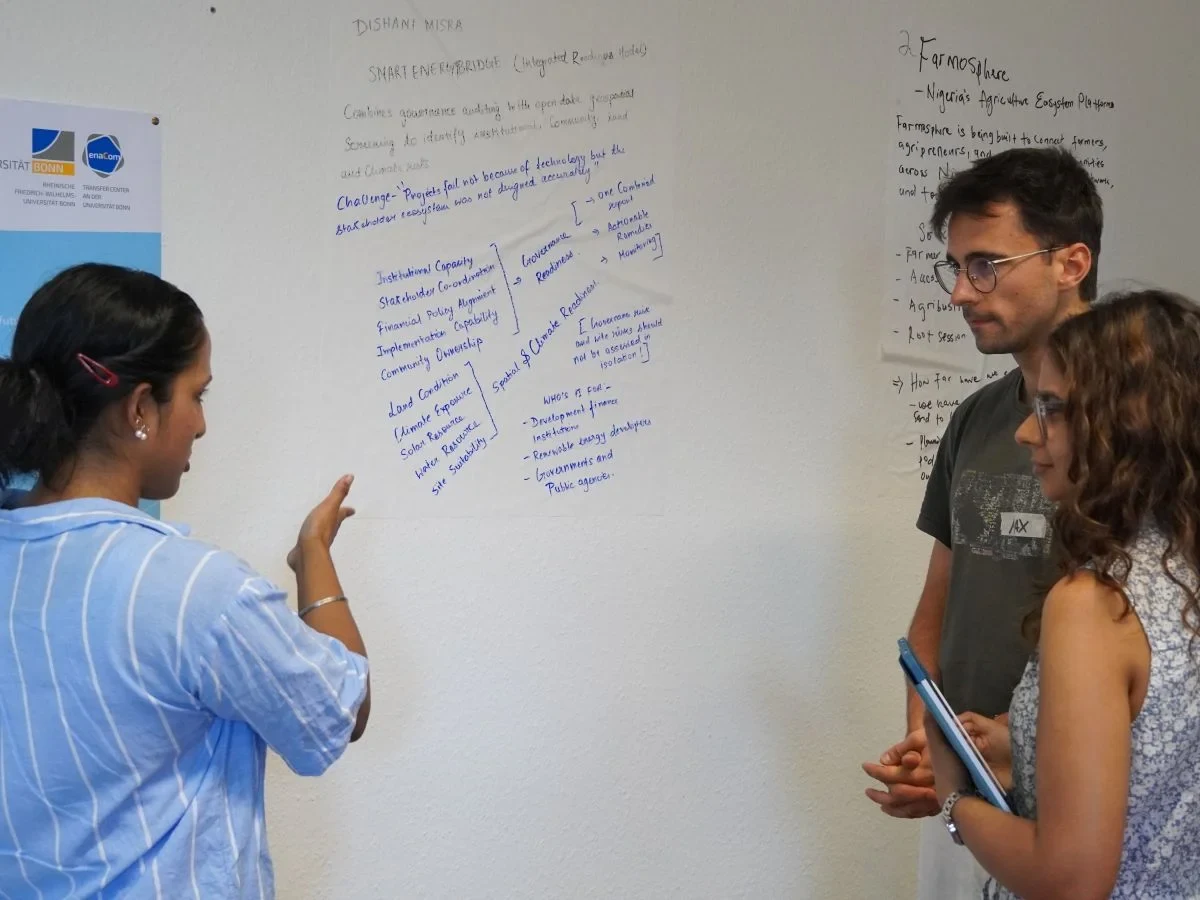
- SmartEnergy Bridge – Greater Transparency for International Solar Projects: An AI-based platform for the development, management, and tracking of solar projects that enables European investors to reliably monitor project progress and performance, even from a distance.
Regular Start-up Schools in Bonn
The Start-up Schools are offered twice a year. The next school will take place in March 2027.