


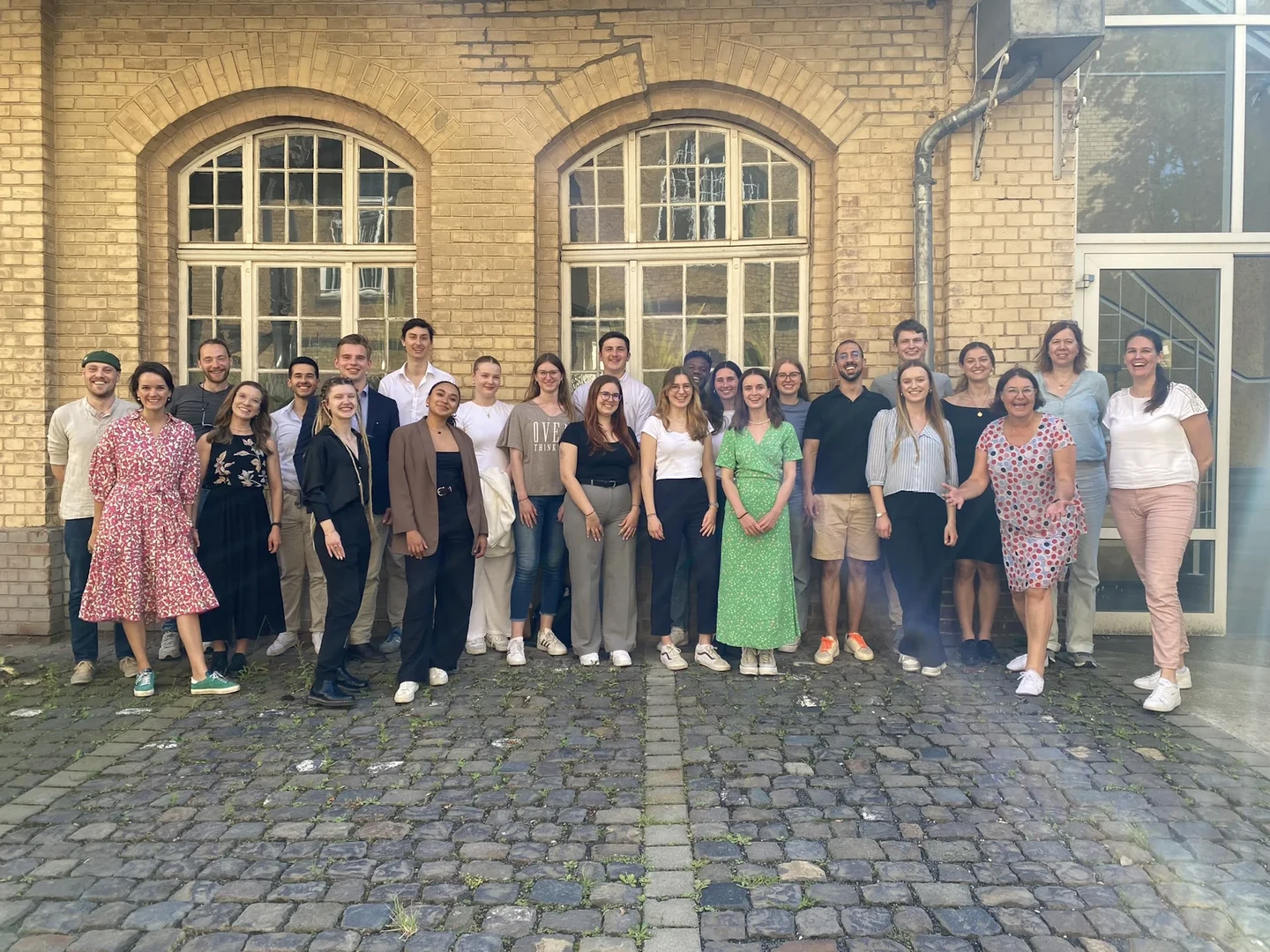
"It's always fascinating to see how students develop solutions to previously identified environmental or social problems in such a short time and turn them into promising business models. This semester, the business ideas were not only exceptionally creative, but also convincingly pitched. The students gave great presentations. It was a lot of fun to accompany the students on their little entrepreneurial journey," says Prof. Dr. Fischer-Kreer.
In the final pitch competition in front of a jury of experts, the students presented their business ideas. The “Sportaneos” team wants to make it quick and easy to find sports partners, sports facilities, and courses with an app. The “Grainful” project plans to produce a high-fiber, high-protein muesli from by-products of the food industry. The aim is to combine the reduction of food waste with healthy nutrition. “NatureSealSolutions” is developing a compostable alternative to plastic packaging by coating paper with a special process. The “RollingsBreads” team plans to create a healthy, inexpensive, and practical food option for students on campus with a food truck offering bread muffins. And at Roots&Crust, students have set themselves the goal of bringing cassava, a staple food in Africa, to the German market as an alternative to potatoes, for example in the form of frozen cassava croquettes.
"It's great to see such well-founded start-up ideas emerging from the teaching program. We are happy to continue supporting anyone who is interested in developing their specific business models through to the start-up phase. We are excited to see how these project ideas from the course will be developed further," says Anna Villwock, start-up advisor at the Transfer Center enaCom. The Transfer Center enaCom is the central advice center for start-ups and self-employment for members of the University of Bonn and supports their ideas with personal coaching and workshops.
Events on the theory and practice of entrepreneurship
In the bachelor's module “Business Start-ups in the Agricultural and Food Industry,” students first learned the theoretical basics, such as background information on entrepreneurial personality and entrepreneurial thinking and acting. On this basis, the students then developed their own initial business ideas. The fundamental question addressed in the module is how a business idea can be turned into a successful business model. This includes developing a corporate strategy and drawing up a marketing and financing plan. To do this, the theoretical knowledge acquired had to be applied directly in small groups. A particular focus was then placed on designing a pitch deck, in which the business model is presented briefly and concisely in order to attract potential investors. This then served as the basis for the pitch.
The course took place at the new Institute for Entrepreneurship at the Faculty of Agriculture. In addition to the Chair of Entrepreneurial Behavior held by Prof. Denise Fischer-Kreer, the Chair of Entrepreneurship and Innovation Management in Agribusiness held by Prof. Dr. David Antons is also located there. The courses in the field of entrepreneurship education will gradually be opened up to students from other faculties.