


How Canteens Can Motivate Customers to Eat Less Meat
Preventing health risks, protecting the climate and saving money are not mutually exclusive, as a new study shows: by serving smaller portions of meat, canteens have the potential to cut their customers’ meat consumption by up to a third. This is a more popular idea than all-vegetarian menus or higher prices—provided that people are told in advance and served larger portions if they want them.
Key results at a glance
1.
Eating too much meat is bad for our health and harmful to the environment and climate, not to mention exacerbating the world food problem and costing a lot of money. Researchers at the University of Bonn have therefore investigated two potential ways to cut meat consumption at German canteens. Both proved successful.
2.
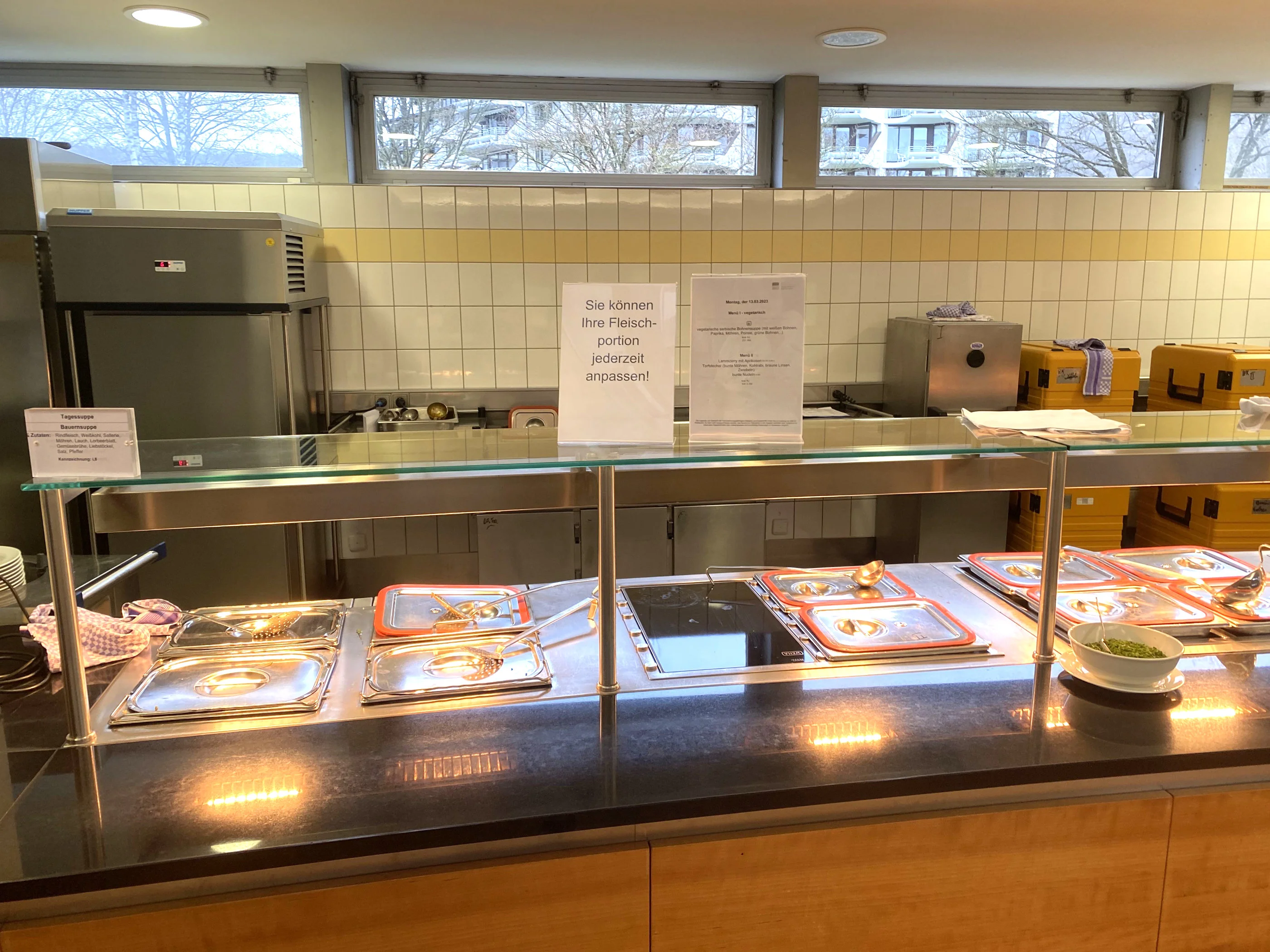
The first measure, “Active Choice,” involves canteen staff asking customers how much meat they would like when their food is dished out, giving them the freedom to choose their own portion size. For the second measure, “Default Nudge,” staff serve smaller portions of meat as standard, only increasing them if customers ask.
3.
“Active Choice” saw smaller portions of meat served in 39 percent of cases, while the figure for “Default Nudge” was as high as 90 percent. And, unlike with all-vegetarian menus or higher prices, neither measure had an adverse impact on customer satisfaction.
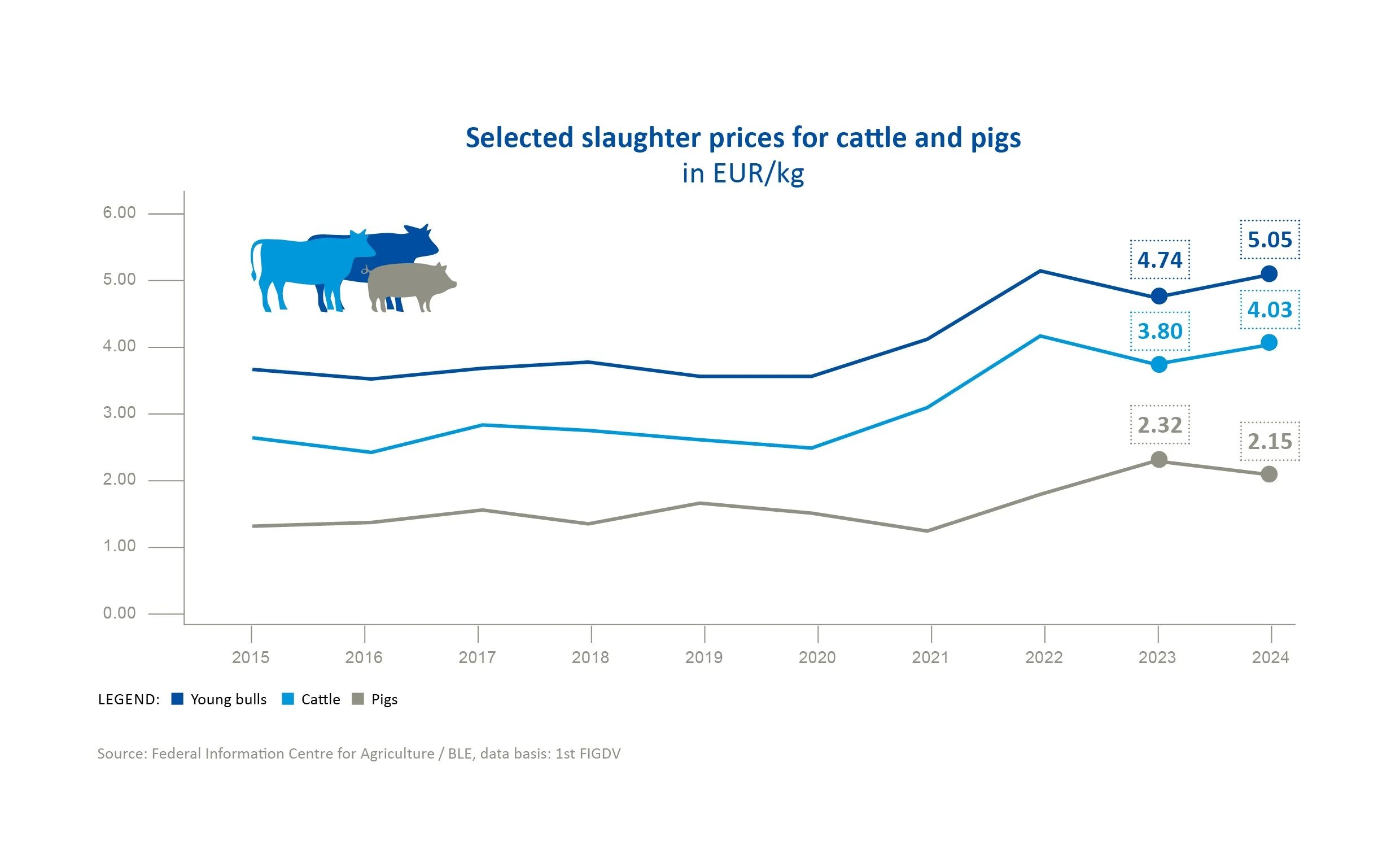
Selected slaughter prices for cattle and pigs
Recommended actions
- Public bodies, private companies and Church organizations that sponsor canteens, such as educational institutions, local authorities and hospitals, should tell the canteen firms and catering teams running them about the benefits shown by the study results and make sure that the measures are taken into account when they serve food.
- Canteen firms and catering teams should run a survey to check whether their customers would be happy with one of the two methods before they introduce it. The change should be communicated clearly, and smaller meat portions should be offset by serving extra accompaniments or side dishes.
- The German Nutrition Society (DGE) and other nutrition-focused organizations should incorporate the study’s findings into their standards and recommendations and prepare a list of recommended actions to enable sponsoring bodies and firms to make adjustments as easily as possible.
What is it about?
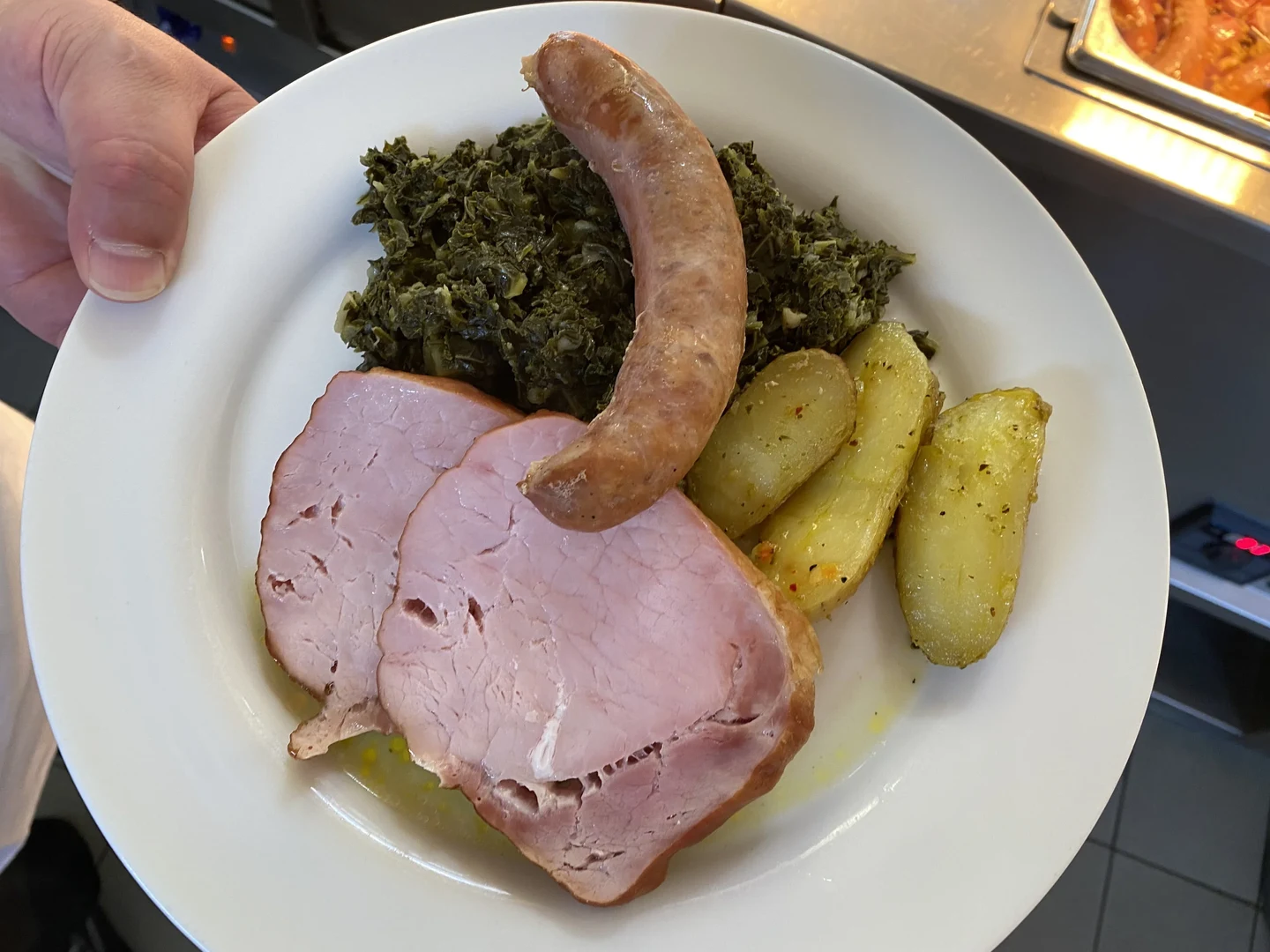
Assistant Professor Dominic Lemken, a food economist at the University of Bonn, conducted an experiment at the canteen of a rehabilitation clinic in Germany together with his team. This involved trialling two measures for reducing customers’ meat consumption. Serving smaller portions of meat and only increasing them on request (“Default Nudge”) enabled meat consumption to be reduced by 33 percent. Having staff ask customers how much meat they wanted (“Active Choice”) also led to less meat being consumed, although the impact was smaller than for the “Default Nudge” at around 13 percent. Neither measure had a negative impact on the level of customer satisfaction measured in the study.

How was the research conducted?
The study was split into three phases each lasting six weeks: one benchmarking phase and two trial phases, one each for “Active Choice” and “Default Nudge.” The researchers kept an anonymous record of meal choices and asked customers what they thought. About 6,000 purchase decisions were logged between October 2022 and May 2023. The results have been published in the journal Environment and Behavior. (DOI: 10.1177/00139165241274496).
What happens next?
The researchers believe that further investigation is required because canteens vary significantly in terms of what they serve and who their regular customers are, meaning that the methods recommended may not work equally well in every canteen. Research should also be done into whether the results can be reproduced in commercial restaurants.
Contact
Jun.-Prof. Dr. Dominic Lemken
Institute for Food and Resource Economics
University of Bonn
Phone: +49 228 73-60644
Mail: dominic.lemken@ilr.uni-bonn.de