

Heritage Week 2026
Launched in 2025, Heritage Week connects and showcases heritage research at the University of Bonn while opening it to innovative interdisciplinary exchange.
This year’s theme, Heritage Ecologies: Restitution, Repair, and Renewal, foregrounds relational approaches to heritage. It addresses pressing questions such as the legacies of war and looting and considers forms of redress, including reparation and restitution, alongside landscapes as heritage, the role of the sacred, and the future of archives.
A special highlight is the New Paths lecture by Shumon Hussain, which introduces the concept of “Deep Time Heritage” and explores how extended temporalities can reshape heritage research through interdisciplinary perspectives.
The 2026 edition is funded by the TRA Present Pasts and organized by a wide network of partners, fostering new transregional connections, particularly with colleagues from the University of Cologne.
Click on the button to register and explore fresh perspectives on heritage and opportunities for networking and collaboration.
Heritage Week 2026 is jointly organised by the Global Heritage Lab (GHL), Transdisciplinary Research Area TRA Present Pasts, the Department of Anthropology of the Americas, the BASA Museum, the Department of Empirical Cultural Studies and Cultural Anthropology, the Department of Art History, the Center for Development Research (ZEF), the Bonn Center for Reconciliation Research (ZFV), and the Center for Historical Peace Research (ZHF).
Program

Entschädigung als Leitfaktor von Friedens- und Versöhnungs-prozessen: Erscheinungsformen – Normen – Praktiken
Monday, 8 June 2026
9:00-13:00 ∙ Public Presentations in German (in person)

Ecologies of Restitution: Relational and More-than-Human Approaches to Repair
Tuesday, 9 June 2026
15:15-16:00 ∙ Networking coffee break with colleagues from the University of Cologne (in person)
16:00-17:30 ∙ Public Roundtable (in person)

Balancing the Center and the Local: Inka Landscapes of Power and Heritage in Cochabamba, Bolivia
Wednesday, 10 June 2026
14:00-17:00 ∙ Roundtable and guided tour through the exhibition Landscapes in transformation: the Cochabamba Valley beyond the Inkas (in person)

Sacred Ecologies: The Kara Ritual of the Konso – Enacting Memory, Traditions and Power through the Generations
Thursday, 11 June 2026
13:30-15:00 ∙ Public Lecture (hybrid)
15:00-15:30 ∙ Photo Exhibition opening and networking break (in person)

Cultural Heritage under Dictatorship
Thursday, 11 June 2026
15:30-17:00 ∙ Panel Discussion (hybrid)
17:00-18:00 ∙ Exhibition opening Iranian Cultural Heritage: Fantasies and Speculative Digital Art Activism (in person)
Genscherallee 3
53113 Bonn

Das Archiv des Atlas der deutschen Volkskunde (AdV) als Datenbank: Herausforderungen und Potenziale
Friday, 12 June 2026
9:00-15:00 ∙ Public Presentations in German (in person)
Poststr. 26, 1st Floor
53111 Bonn
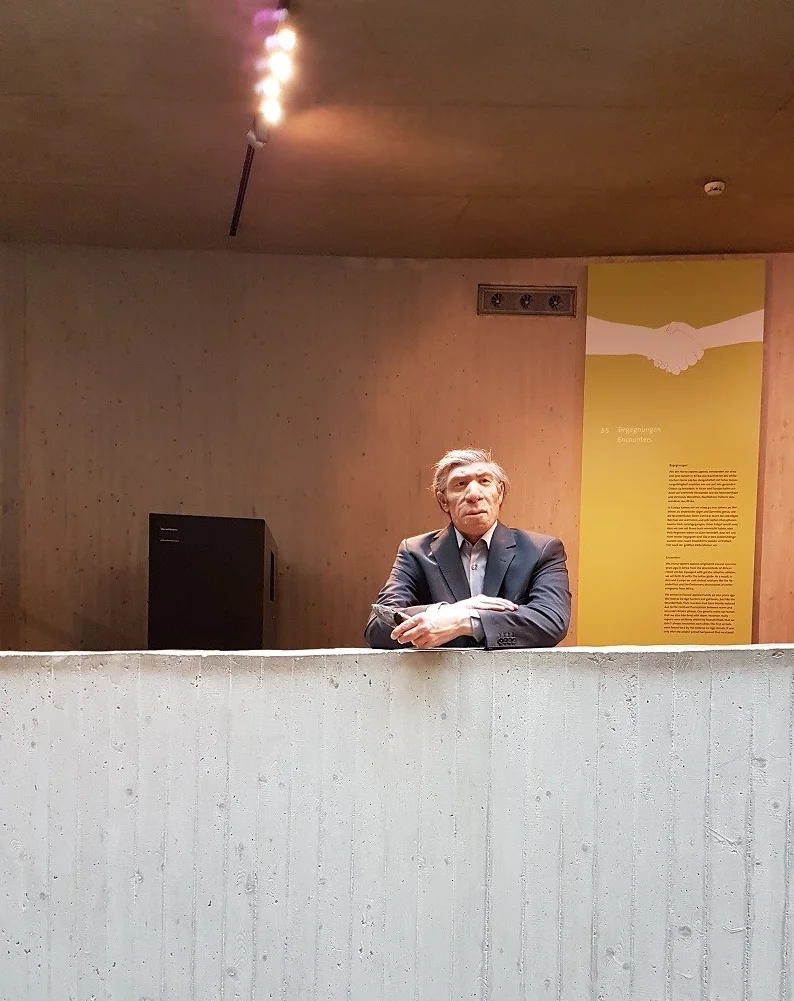
NEW PATHS: Deep Time Heritage: Signifance, Politics and Uses
Friday, 12 June 2026
15:00-17:00 ∙ Lecture and discussion with Dr. Shumon T. Hussain, University of Cologne, with reception (hybrid): https://uni-bonn.zoom-x.de/meeting/register/3Vr_-xQ7Q6eozYNcRjhIYw
Detailed Information about individual events
Program:
- Begrüßung (9:00)
- Katharina Fackler: Von „40 Acres and a Mule“ zu „Land Back“: Amerikanistische Perspektiven auf Entschädigung (09.15–09.45)
- Rosario Figari Layús: Die Bedeutung von Wiedergutmachung im Umgang mit Verbrechen gegen die Menschlichkeit: der Fall Argentinien (09.45–10.15)
- Kaffeepause (10.15–10.45)
- Julia Binter: Heilen, was nicht entschädigt werden kann. Deutsch-namibische Ansätze zur Versöhnung (10.45–11.15)
- Jan Meister: Beute, Strafe oder Tribut? Geldzahlungen in römischen Friedensverträgen (11.15–11.45)
- Michael Rohrschneider: Satisfaktion als Element der Friedensstiftung auf dem Westfälischen Friedenskongress (11.45–12.15)
- Fazit (12.15–12.30)
Monday, 8 June 2026
9:00-13:00 ∙ Public Presentations in German (in person)
Venue: Center for Historical Peace Studies, Brühler Str. 7, 53119 Bonn
Registration Fully booked; registration is no longer possible
Coordination: Jun.-Prof. Dr. Julia Binter
Abstract:
For descendants of the creators of museum collections, restitution is never simply about the return of material culture. Cultural belongings remain deeply entangled with histories of colonial dispossession, struggles for land and sovereignty, questions of belonging, and the right to narrate one’s own histories on one’s own terms. This roundtable brings together heritage studies scholars from the Universities of Cologne and Bonn to explore restitution as a relational and more-than-human process of repair.
Drawing on research across diverse regional and institutional contexts, the speakers examine how restitution intersects with broader frameworks of justice and responsibility. Rather than treating restitution solely as the transfer of material property, the discussion foregrounds concepts that emerge from different contexts of origin — including sovereignty in North America, territoriality in South America, and belonging and epistemic justice in African contexts.
By approaching restitution through its cultural, political, ecological, and ethical dimensions, the roundtable seeks to challenge Eurocentric understandings of heritage and ownership. Instead, it highlights the perspectives, practices, and futures envisioned by the communities most directly affected. In doing so, the discussion asks what forms of repair become possible when restitution is understood not as an endpoint, but as part of ongoing relationships between people, histories, lands, and more-than-human worlds.
Format: Roundtable
Confirmed participants:
Jun.-Prof. Dr. Julia Binter
Prof. Dr. Carla Jaimes Betancourt
Dr. Anna Brus
Prof. Dr. Mirjam Brusius
Jun.-Prof. Dr. Lucy Wasensteiner
Prof. Dr. Martin Zillinger
Tuesday, 9 June 2026
15:15-16:00 ∙ Networking coffee break with colleagues from the University of Cologne (in person)
16:00-17:30 ∙ Public Roundtable (in person)
Venue: Global Heritage Lab, Poststr. 26, 1st Floor, 53111 Bonn
Coordination: Prof. Dr. Karoline Noack, Prof. Dr. Carla Jaimes Betancourt, Dr. Daniel Grana-Behrens
Abstract: In the fertile valleys of Cochabamba, Bolivia, the Inka Empire reshaped the land, its people and its food systems on an extraordinary scale. This project explores how imperial strategies of resettlement, agricultural intensification and food storage transformed the landscape, and how these processes have left a lasting legacy. Cochabamba itself is the result of migration: thousands of mitimaes, relocated from across the empire, brought with them agricultural knowledge, languages, and social practices that continue to influence the region's cultural identity.
Using archaeology, ethnohistory, linguistics and environmental data, the project reconstructs the landscapes of production, movement and memory. As part of Heritage Week at the University of Bonn, project participants Olga Gabelmann, Karoline Noack, Bruna Pellegrini, and Alexis Pierrard will discuss the research in a roundtable conversation, fostering dialogue across disciplines on heritage, power, and sustainability.
The event will conclude with a guided tour of the exhibition “Landscapes in transformation: the Cochabamba Valley beyond the Inkas” / “Paisajes en transformación: el valle de Cochabamba más allá de los inkas” at the Bonner Amerika-Sammlung (BASA), where archaeological artefacts and stories breathe life into these Inka heritage landscapes, inviting visitors to experience heritage as living, layered histories embedded in land and memory, not just as objects.
Format: Roundtable
Wednesday, 10 June 2026
14:00-17:00 ∙ Roundtable and guided tour through the exhibition Landscapes in transformation: the Cochabamba Valley beyond the Inkas (in person)
Venue: BASA Museum, Oxfordstr. 15, 53111 Bonn
Coordination: Dr. Asrat Gella
Abstract: Among the Konso of Southern Ethiopia, the Kara is a ritual that takes place twice within eighteen-year intervals (every seven and eleven years). The Kara ritual is a central pillar of Konso culture and memory that connects the present generation with all of the generations that have come and gone before it. The ritual marks the coming into age and power of every generation called a Xelta, and its subsequent naming. To date, there have been 31 Kara rituals, marking the coming to age of 31 generations, spanning a period of at least 300 years. Masculinity stone steles called Dhaga Diruma are erected to mark each Kara ritual and the Xelta that erected them. Through sacred rituals, song, dance, oration, commemoration, and performance, the collective past is brought to life in the Kara. We present the Kara ritual both as an expression and performance of inter-generational memory, identity, and a form of memory culture.
Format: Public Lecture followed by photo exhibition
Thursday, 11 June 2026
13:30-15:00 ∙ Public Lecture (hybrid)
15:00-15:30 ∙ Photo Exhibition opening and networking break (in person)
Venue: Center for Development Research (ZEF), Conference Room, Ground Floor, Genscherallee 3, 53113 Bonn
Coordination: Dr. Raika Khorshidian AvH Postdoctoral Fellow
Panel Discussion: Cultural Heritage under Dictatorship
Abstract:
Moderator: Raha Khademi, PhD student at the University of Bonn and Managing Editor at the Kaarnamaa Institute of Art and Visual Culture
Speaker 1. Dr. Farnaz Arefian, Founder of Silk Cities and an honorary research fellow at The Bartlett Development Planning Unit (DPU) at University College London (UCL)
Cultural Heritage: A Double-Edged Sword in Development
There is growing attention to the role of cultural heritage in achieving the Sustainable Development Goals, including in advancing resilient cities and communities. International agencies have increasingly advocated positioning culture as a priority component of development policies and strategy. Such integration, however, raises critical questions on the interpretation, recognition, and preservation of cultural heritage. Cultural heritage also extends beyond monuments and museums. From New Year celebrations to music, religious practices, dance, and food, it forms part of communities and individuals and constitutes an interconnected web of social values, physical space, and everyday life. Tangible and intangible forms are closely connected. To unpack these interconnections, Iran offers a particularly significant case through which to examine the relationship between cities, development, and communities’ cultural heritage. As an ancient country with marked social and climatic diversity, Iran has a rich range of cultural heritage, both tangible and intangible, reflected in its historic cities, architecture, literature, folklore, dances, rituals, food, and more. Its contemporary social, urban, administrative, and governance context creates a complex setting in which cities and communities face challenges that go beyond those experienced in many other countries in relation to sustainable development and resilience. Rather than offering definitive answers, this presentation seeks to raise critical questions, offer food for thought, and shed light on challenges and potential opportunities.
Speaker 2. Dr. Raika Khorshidian, AvH Postdoctoral Fellow at the Institute of Art History at University of Bonn
FutureCrafting for Iranian Cultural Heritage under Islamic Republic
The Islamic regime in Iran, for about five decades, has isolated Iran from the world, mismanaged its cultural heritage, looted and even deliberately destroyed them. It also distorted the image of Iran in the world, causing misrepresentation and disconnection of Iran's cultural heritage from the global heritage, and sheds shadow on studies on Iran and its cultural heritage, both inside and outside the country. In response, the young artists, who live under this dictatorship or in exile, visualise another Iran. Despite the apocalyptic present, their fantasies, at the intersection of architecture, digital art, tourism, heritage management and history, encapsulate the collective dreams, hopes and visions of a suppressed society for their cultural heritage.
EXHIBITION: Iranian Cultural Heritage: Fantasies and Speculative Digital Art Activism
Fantasies serve as a seismograph, reflecting the level of collective hope within a society. Additionally, fantasies, specifically dystopic ones, mirror a society’s anxiety. Co-creating futures in the presence of dictatorship might well only be possible in the form of fantasy. Thanks to digital visualisation technologies, the exhibition explores speculative art practices in architecture for visualising threatened Iranian cultural heritage through the themes of futurism and science fiction. This will be part of the exhibition series Kannst du mich hören? (2023-), an ongoing interdisciplinary project that aims to review artworks and narratives of artists as subtle yet profound agents of social change.
Thursday, 11 June 2026
15:30-17:00 ∙ Panel Discussion (hybrid)
17:00-18:00 ∙ Photo Exhibition opening: Iranian Cultural Heritage: Fantasies and Speculative Digital Art Activism (in person)
Venue: Center for Development Research (ZEF), Conference Room, Ground Floor, Genscherallee 3, 53113 Bonn
1. Workshop des DFG-Projekts „Digitalisierung und Erschießung des Archivs Atlas der deutschen Volkskunde (AdV)“
Coordination: Simon Hirzel, Prof. Dr. Ove Sutter
Den AdV in seinen Strukturen digital nachvollziehbar machen
- Corinna Schirmer, M.A., wiss. Refeferentin, Institut für Landeskunde und Regionalgeschichte des Landschaftsverbands Rheinland (LVR)
- Prof. Dr. Lina Franken, Lehrstuhl für Digital Humanities in den Kulturwissenschaften, Universität Vechta
Bedarfsprofil eines digitalen AdV für den Anschluss an landschaftliche Repositorien aus Sicht der Digitalisierungsprojekte der Wossidlo-Forschungsstelle
- Dr. Petra Himstedt-Vaid, Leiterin Wossidlo-Forschungsstelle, Universität Rostock
- Dr. Ing. Holger Meyer, Mitarbeiter, Lehrstuhl für Datenbank- und Informationssysteme, Universität Rostock
- Dipl.-Inf. Alf-Christian Schering, assoz. Mitarbeiter, Lehrstuhl für Datenbank- und Informationssysteme, Universität Rostock
- Dr. Christoph Schmitt (i.R.), ehemal. Leiter, Wossidlo-Forschungsstelle, Universität Rostock
Regionalkulturelle Praktiken interkonnektiv
- Prof. Dr. Hanna Fischer, Lehrstuhl für Germanistische Linguistik & stv. Dir. Forschungszentrum Deutscher Sprachatlas, Universität Marburg
- Prof. Dr. Alfred Lameli, Dir. Forschungszentrum Deutscher Sprachatlas, Lehrstuhl für Germanistische Sprachwissenschaft
Input Herausforderung & Potenziale Citizen Science ILR/LVR
- Corinna Schirmer, M.A., wiss. Refeferentin, Institut für Landeskunde und Regionalgeschichte des Landschaftsverbands Rheinland (LVR) [Siehe oben]
How Local is Culture?
- Prof. Sascha O. Becker, PhD., Warwick University, UK, Xiaokai Yang Chair of Business and Economics & part time Prof., Monash University, Australien
- Dr. Andreas Link, Post Doc, Institut für Wirtschaftswissenschaft, FAU Erlangen-Nürnberg
- Prof. Dr. Hans-Joachim Voth, UBS-Foundation-Lehrstuhl für Wirtschaft, Universität Zürich
- Dr. Fabian Wahl, Assist.-Prof, Institute for Economic and Social History, WU Wien
Atlasing Folklore. Politics, Regions, Places – Ein Werkstattbericht zu einem geplanten Forschungsprojekt
- Prof. Dr. Konrad Kuhn, assoz. Prof. Empirische Kulturwissenschaft, Universität Innsbruck
- Dr. Reinhard Bodner, Postdoc-Assist., Institut für Kulturanalyse, Alpen-Adria-Universität Klagenfurt/Celovec
Kultur und Umwelt. Potenziale des Atlas der deutschen Volkskunde für kulturell-historische Anthropozänforschung
- Arne Cypionka, Mitarbeiter Lehrstuhl für Computational Humanities, Universität Passau
- Prof. Dr. Malte Rehbein, Lehrstuhl für Computational Humanities, Universität Passau
Friday, 12 June 2026
9:00-15:00 ∙ Public Presentations in German (in person)
Venue: Global Heritage Lab, Seminar Room, 1st Floor, Poststr. 26, 53111 Bonn
Coordination: Jun.-Prof. Julia Binter
A debate on “Deep Time Heritage: Talk and discussion with Shumon T. Hussain”
Dr. Shumon is PI at ECOLITHIC and ZOOGESTURES and junior research group leader at MESH (Multidisciplinary Environmental Studies in the Humanities) and the Department of Prehistoric Archaeology of the University of Cologne, Germany.
This talk introduces the field of “Deep Time Heritage” (DTH) as an often-overlooked branch of critical heritage studies. I will summarize the eponymous Elements title currently in press with the Critical Heritage Series of Cambridge University Press to illustrate that DTH requires dedicated scholarly attention. I argue that qua “keystone heritage”, which I define and explore in the talk, DTH disproportionally shapes heritage discourses and broader imaginaries about past-future relations and humanity itself, and as such fundamentally configures the space of what is considered “politically possible”. Popular themes such as Neanderthal otherness, rewilding, genetic ancestry, survivalism, and Indigeneity represent under-analyzed yet potent arenas of such future-making and their uses in the present are revealing.
Friday, 12 June 2026
15:00-17:00 ∙ Lecture and discussion with Dr. Shumon T. Hussain, University of Cologne, with reception (hybrid)
Venue: Global Heritage Lab, Seminar Room, 1st Floor, Poststr. 26, 53111 Bonn


Contact

Aline Rose Barbosa Pereira, LL.M.