


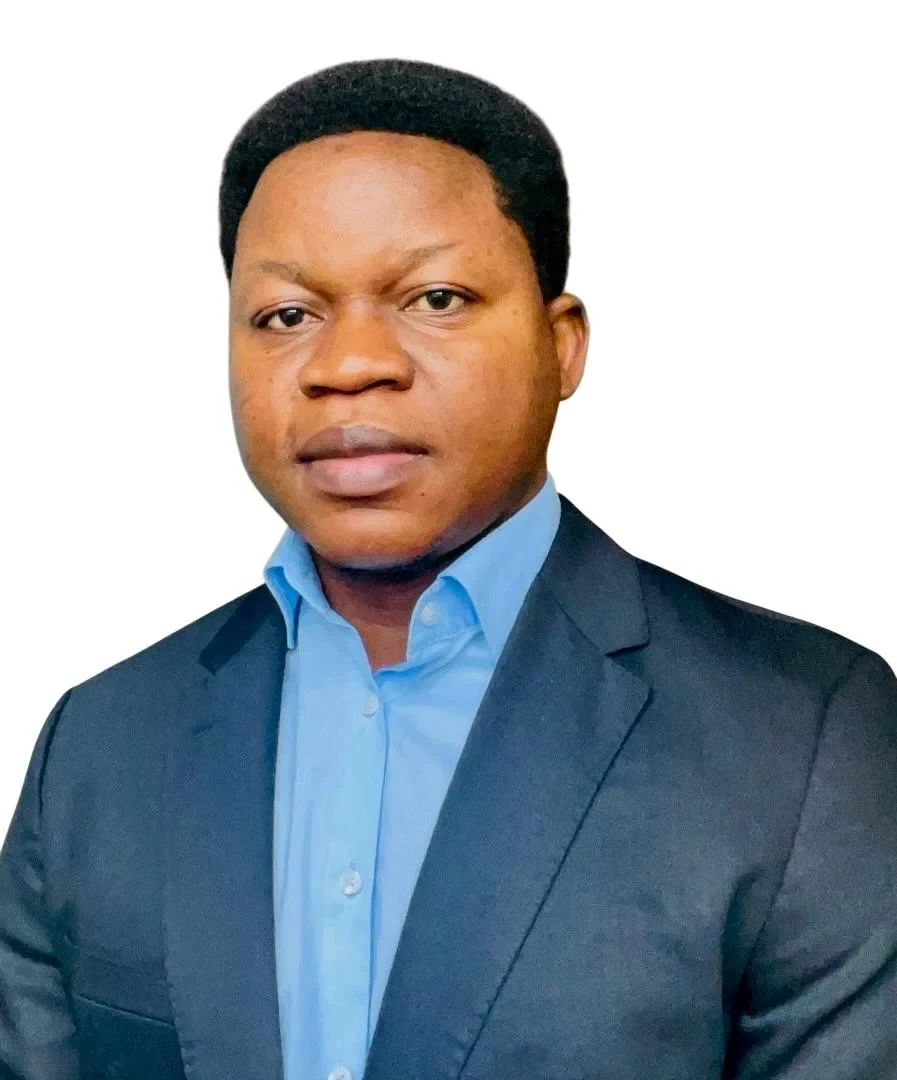
What motivated you to support Christian Kwesi Owusu’s application for a Santander Grant and enable him to spend time as a guest researcher at your institute?
International collaboration has been a key initiative of the Institute of Geography (GUIB), University of Bonn. This collaborative initiative is facilitated through the Santander Grant. I was motivated to support Christian Kwesi Owusu’s application to spend time as a guest researcher at the Institute of Geography because he was an advanced PhD researcher at the University of Cape Coast, Ghana, with an interesting research project related to the combined impact of land use and land cover change and microplastics on freshwater ecosystems in Ghana. The interdisciplinary nature of his research requires additional resources, including laboratory testing and analysis of water samples from Ghana, to support the realization of his research objectives. It was quite challenging to materialize his research project while in Ghana, due to limited access to research equipment. Additionally, there were other colleagues at the institute who work on similar research topics in the Rhein River (between Bonn and Cologne). It was a win-win situation to bring the two parties together for mutual exchange of expertise and resources.
What research project did Christian bring to your institute, and how did it develop further through the exchange on-site?
Christian Kwesi Owusu brought a critical research topic on the influence of land use on microplastic pollution in freshwater ecosystems, which was found to be important and timely in both Global North and South, especially in the West African coastal countries, where rivers discharge directly into the sea, enabling exchange between the ocean and the inland water systems. Further development from the exchange on-site is a joint research project (proposal draft in progress), which sort to further include health implications from the dependence on food systems from such polluted water resources along the coast of West Africa. This is a joint research project between GUIB, RWTH Aachen University, the University of Cape Coast in Ghana, and partner institutions in Ivory Coast and Togo.
How did you, as host, benefit from his research stay?
As a host, it provided me with opportunities to broaden my research and scientific network and international engagement as a young scientist. It has strengthened my network and international visibility in West Africa. I have received an invitation to give a guest lecture and organize training activities on hydrological modeling for students at the Department of Geography and Regional Planning at the University of Cape Coast. Additionally, I have been contacted by researchers from other Universities to enlighten them on the application process for the Santander Grant.
What advantages do you generally see for doctoral students, especially from Ghana, in spending time researching in Bonn?
There are numerous advantages, and one of them is access to well-equipped laboratories for running research samples from Ghana. They have access to the supercomputers at the University of Bonn and could develop and run models that require high computing power. It is also a huge opportunity to benefit from the expertise of senior researchers and scientists in Bonn, serving as a chance to gain new perspectives and a deeper understanding of some critical aspects of their projects. The doctoral students also engage in intercultural activities in Bonn, which serves as an opportunity to learn and appreciate other cultures.
What practical tips would you give to doctoral students who would like to come to Bonn for a research stay? What should the host institute bear in mind?
It is important for a potential doctoral student to first of all search for a host institute and a contact person in Bonn who can then provide the necessary documents to support their applications for grants. It is also crucial to look out for the specific grants of interest (e.g., Santander Grant) and important dates, including grant application openings and deadlines. The student’s motivation for the research stay must be explicit with an innovative project topic and key expectations. The potential host must have up-to-date information on the requirements of the University of Bonn for guest researchers, including early registrations at the University to obtain host agreement documents. The host should also bear in mind that the international doctoral students will need a room to stay in Bonn and must provide them with information on the available hostels and student dormitories in Bonn.