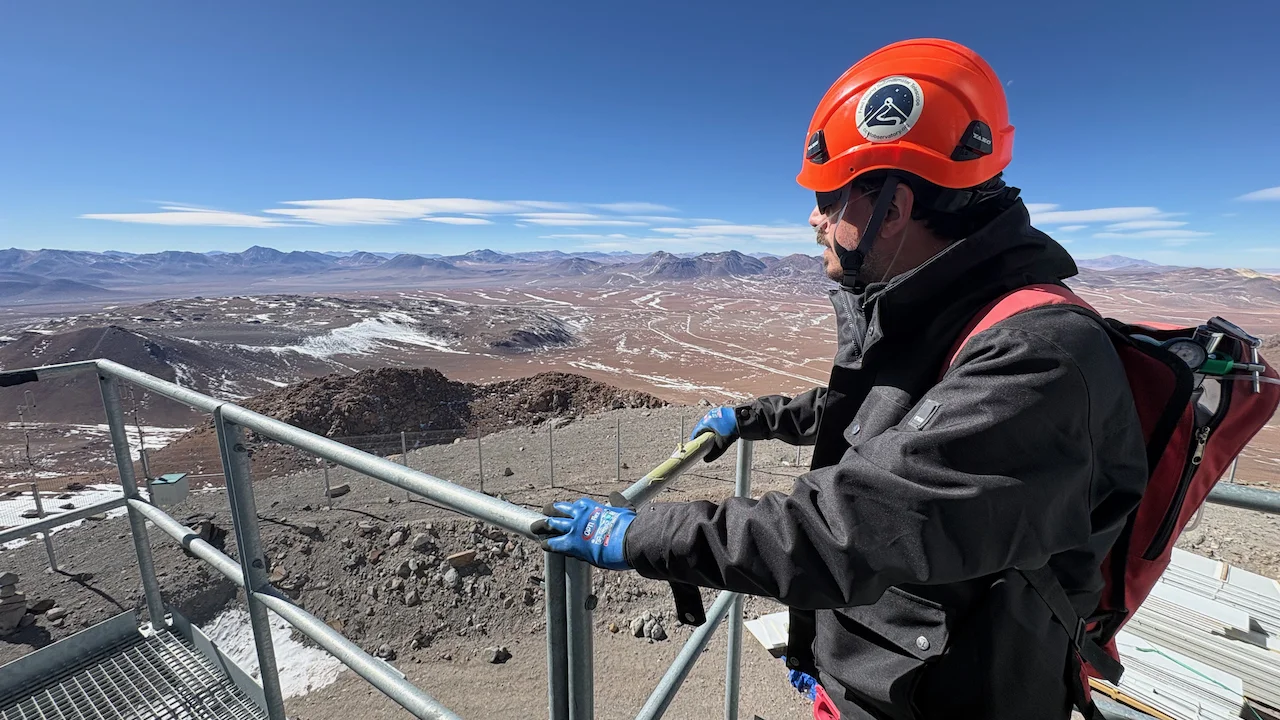


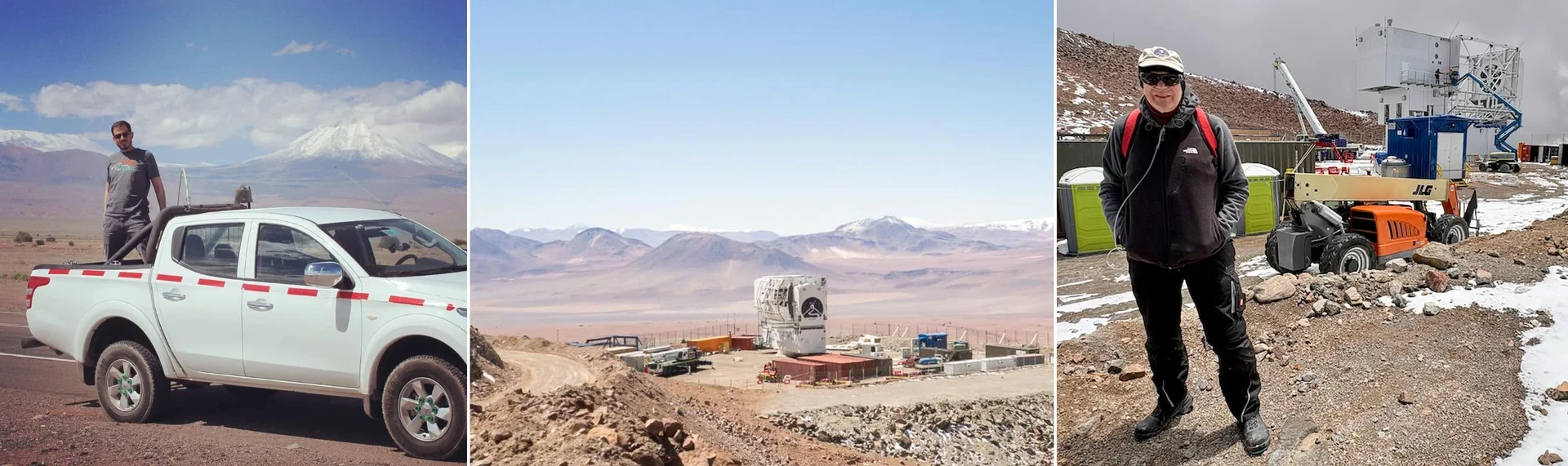
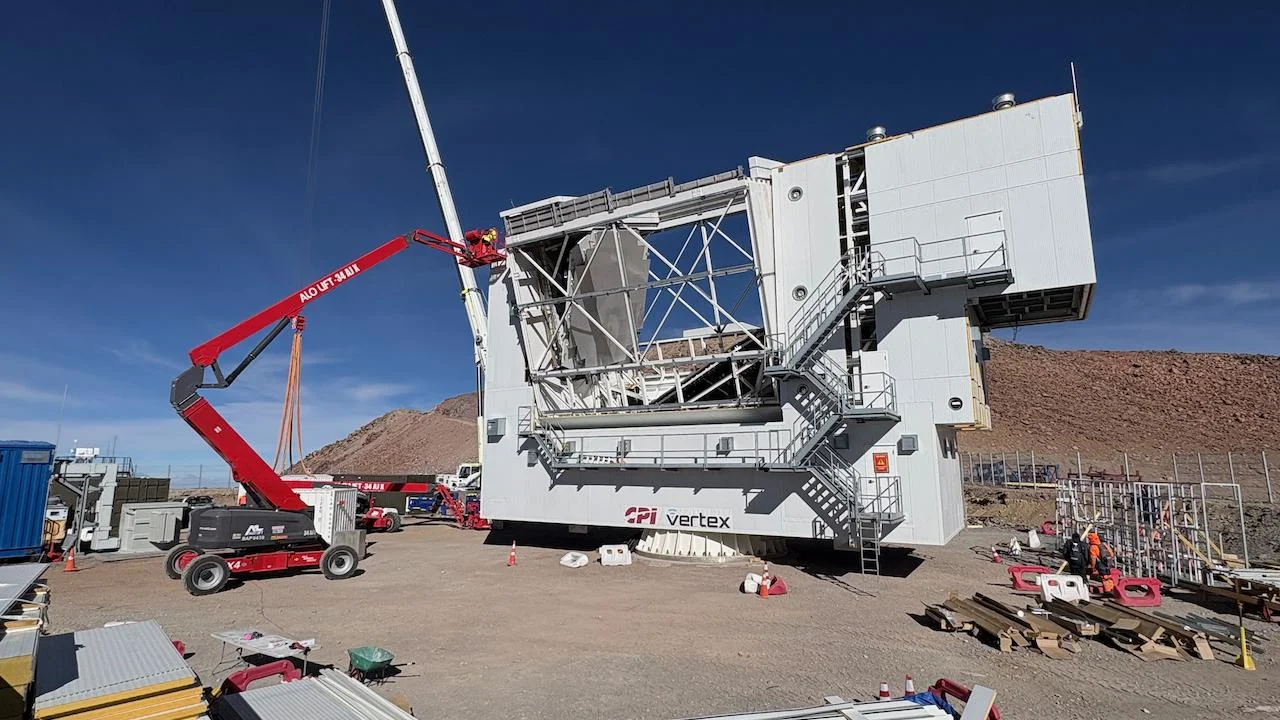
The Fred Young Submillimeter Telescope (FYST), featuring a mirror six meters in diameter and cutting-edge instrumentation, is the most powerful telescope of its kind. Using the FYST, astrophysicists hope to answer some of the biggest questions in astronomy, like: How does the universe work? What are dark energy and dark matter made of? How do galaxies form? And what happened in the first moments after the Big Bang?
Because the FYST operates in the submillimeter to millimeter wavelength range, the facility has to meet special requirements, thus its positioning at 5,640 meters above sea level. This altitude, higher than the Mount Everest base camp, is above most atmospheric layers, which prevent submillimeter waves from reaching lower ground. The extremely dry air of the Atacama Desert furthermore provides for ideal conditions, there being virtually no rising water vapor affecting the signals.
What’s on your to-do list?
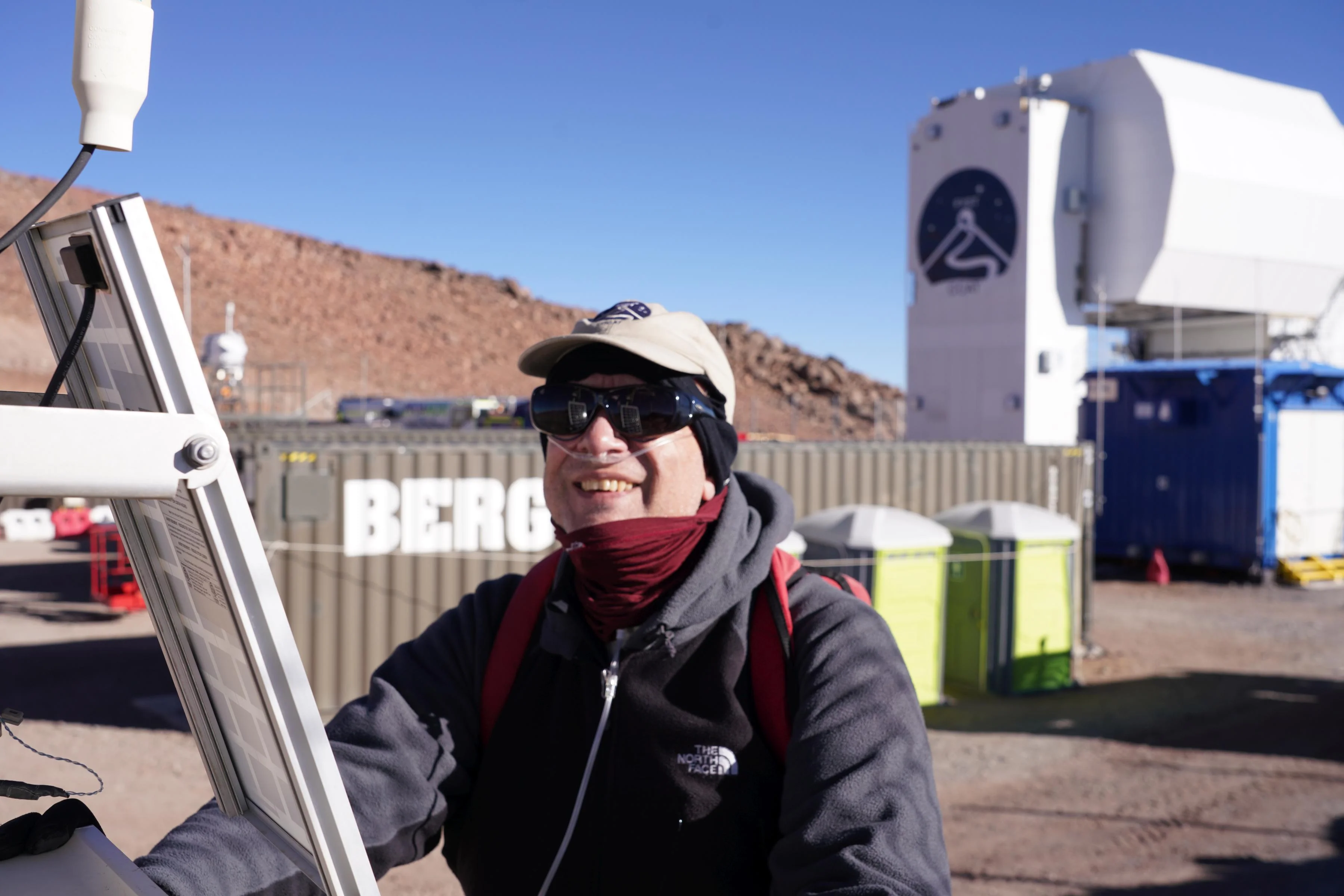
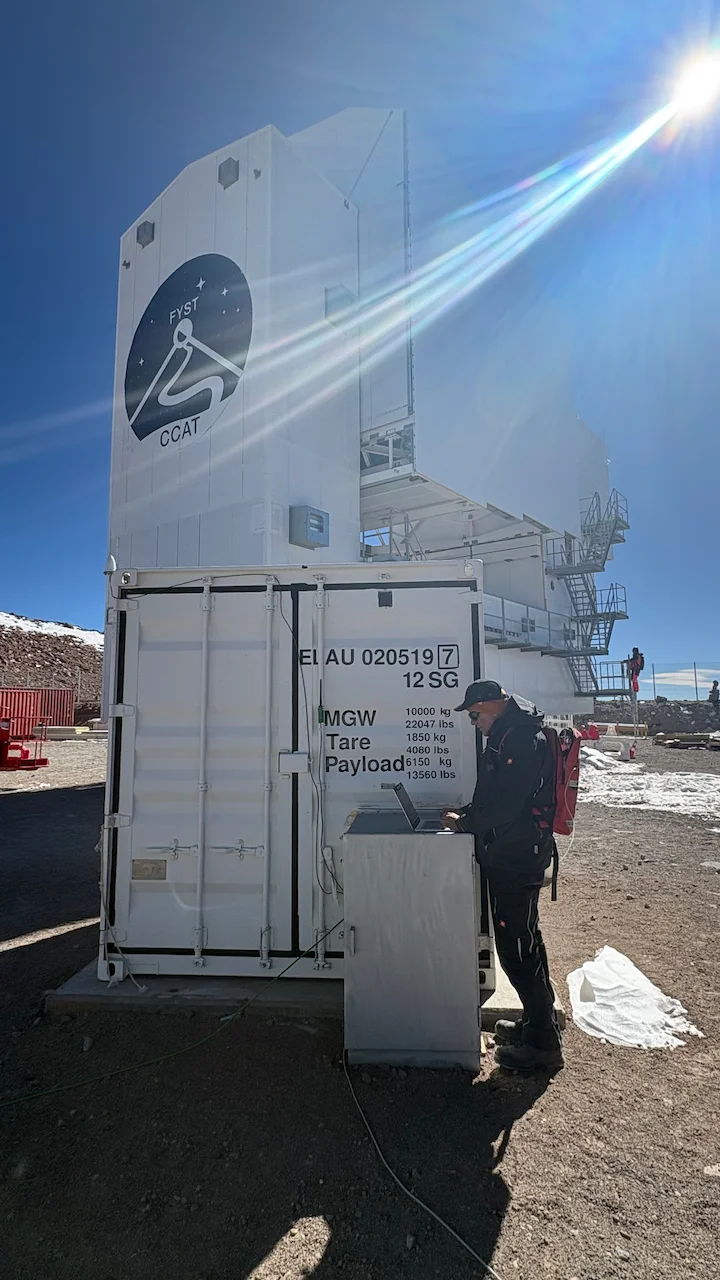
One of our tasks will be to get the water-vapor radiometer up and running together with colleagues from the University of Cologne. This will let us measure the water content of the atmosphere above our heads, which is important because water vapor attenuates, or weakens, radio signals. So we need to know how much there is in order to interpret the astronomical measurements correctly. But everything we do is heavily dependent on the local conditions. We’re almost into winter here in the Southern Hemisphere, and the weather can throw a spanner in the works anytime.
Something else we’ll be doing soon will be attaching the permanent weather station on top of a 10-meter-tall tower. Until that’s done, we’ll be looking after the temporary one.
Where do you sleep? And where do you eat at 5,600 meters above sea level?
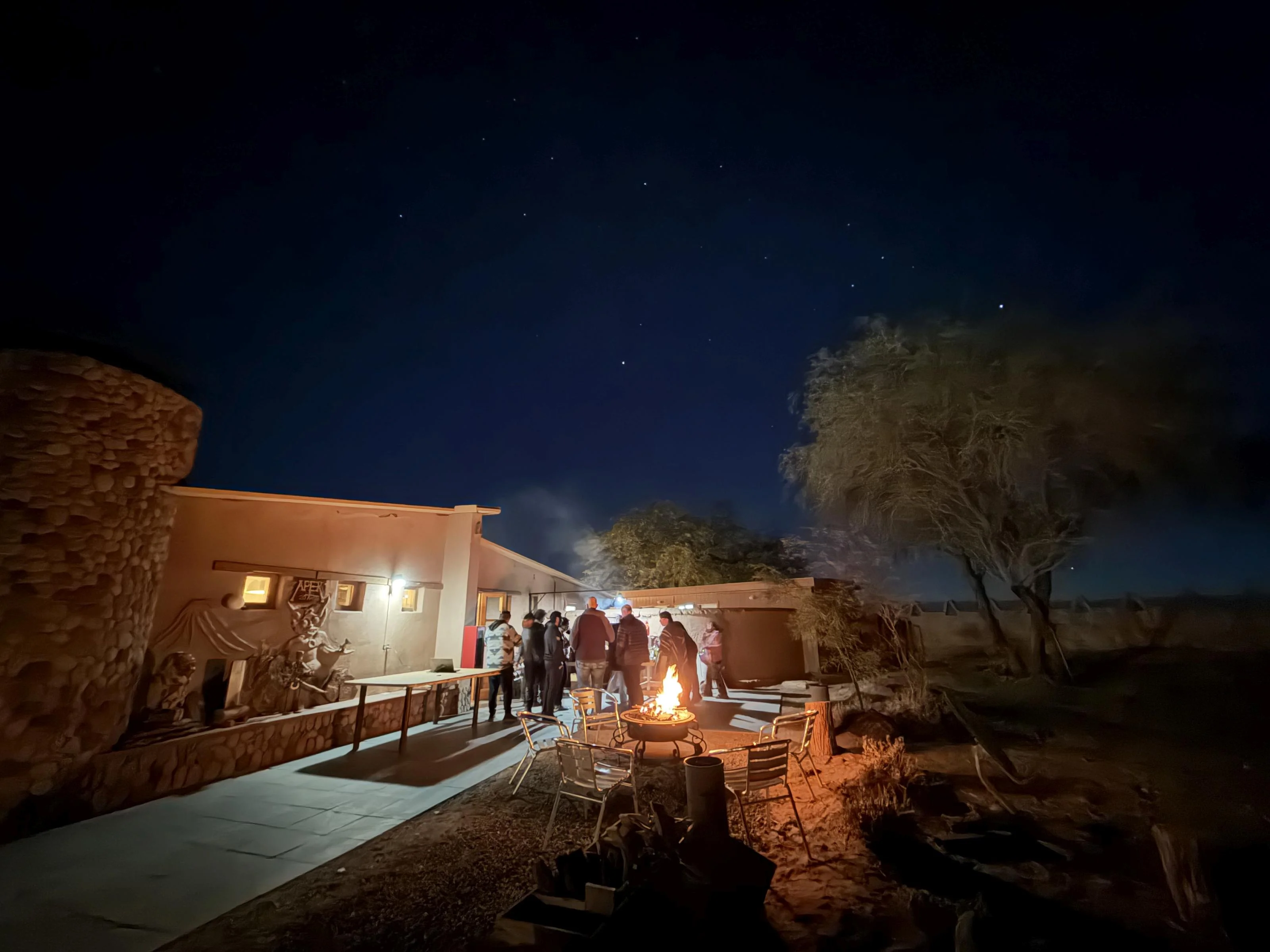
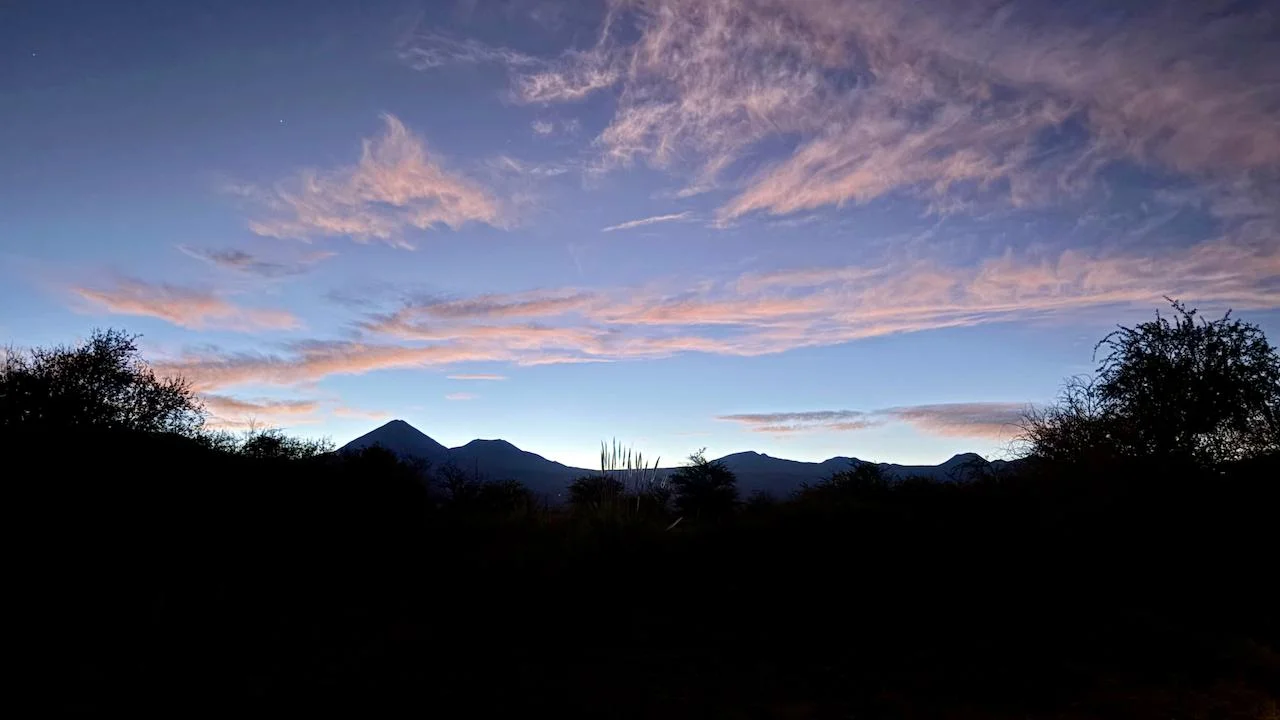
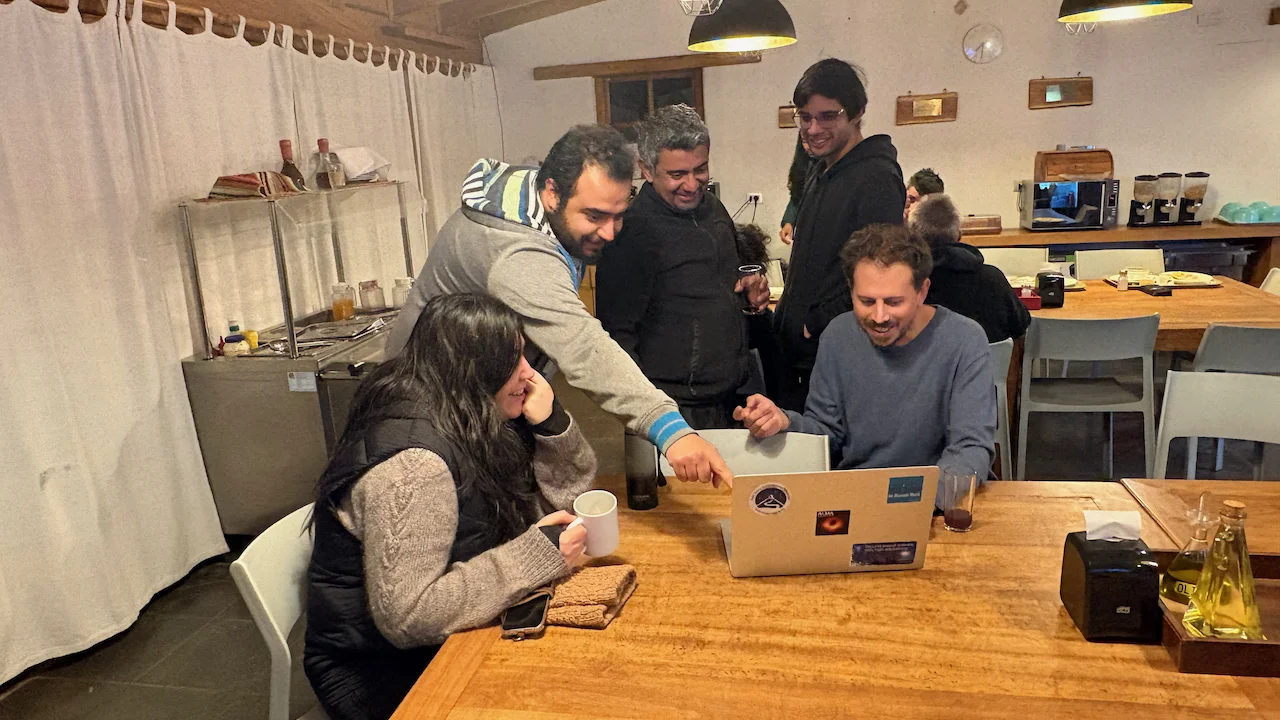
We sleep at the base camp for the APEX telescope. The camp is on the fringes of the desert, right on the edge of the tourist hotspot of San Pedro de Atacama, and is run by the Max Planck Institute for Radio Astronomy. It’s quite a rural location, and the ambiance is quiet yet professional. Some of the astronomers, engineers, operators, technicians and non-scientific staff have known one another so long that the atmosphere there is cordial, often even friendly.
The kitchen at base camp supplies us with good food. Anyone heading up the mountain is given a hearty packed lunch to pop in the microwave up there. Base camp hosts the famous barbecue party known as “APEX Assado,” or “APEX Roast,” every Saturday.
How do you get from base camp to the telescope?
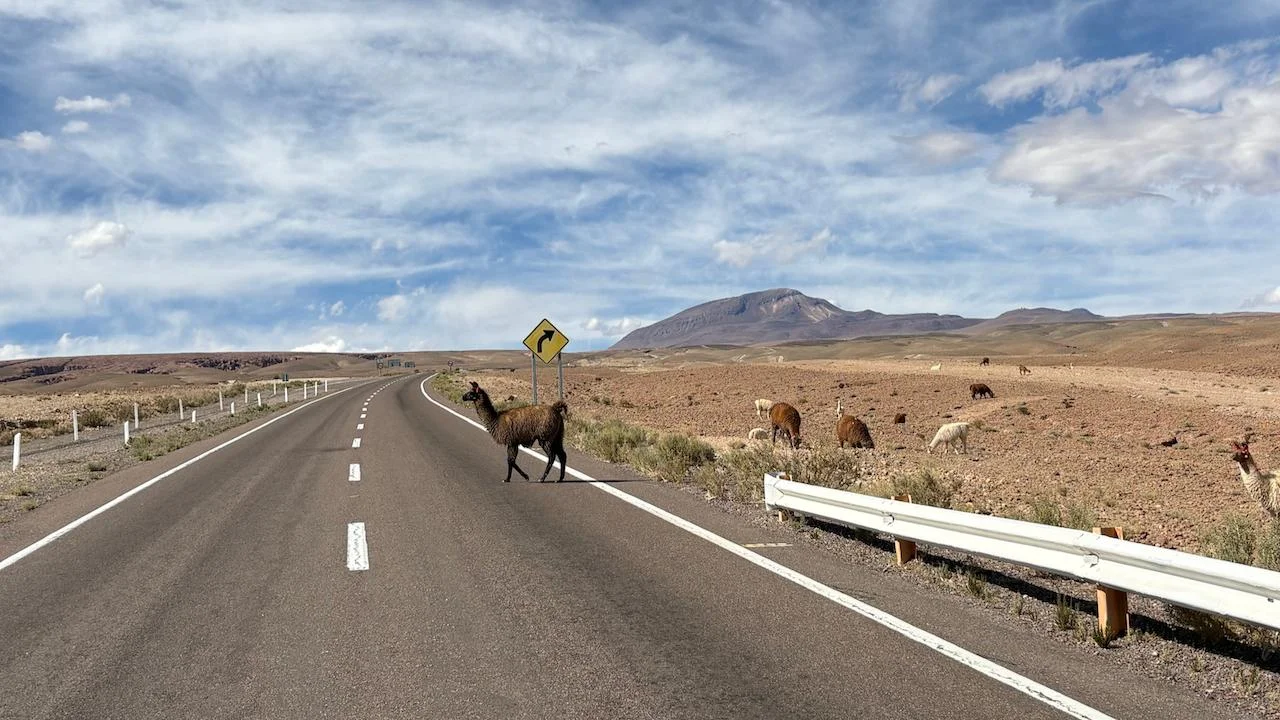
The journey in the off-roaders starts on a country road, climbing from 2,400 meters to around 5,000 meters above sea level. The road eventually crosses the Argentinian border, so you get a lot of trucks. These tend to go very slowly on the steep bits, and overtaking isn’t always all that easy. Although the road is fairly busy, at least by local standards, you’ll always see animals on or beside it: llamas, vicuñas, donkeys or goats. About an hour later, you’ll arrive at the Parque Astronómico de Atacama, which the Chilean government has put entirely at the service of astronomical research. Once there, the CCAT vehicles and those of the companies involved in building it will assemble before tackling the final stretch in single file on unpaved roads up to the telescope. At the end of the day, everyone returns the same way they came.
What does a normal day at work look like?
We start by easing ourselves into working at this altitude: On the first day, we start with four hours, then ramp up to six and finally eight hours. On top of that, there’s about three hours’ travel time, team meetings and getting things ready for the next day. That doesn’t leave us with much free time, mainly because we’re fairly worn out after a day spent working at that altitude.
What’s it like working at 5,600 meters above sea level?
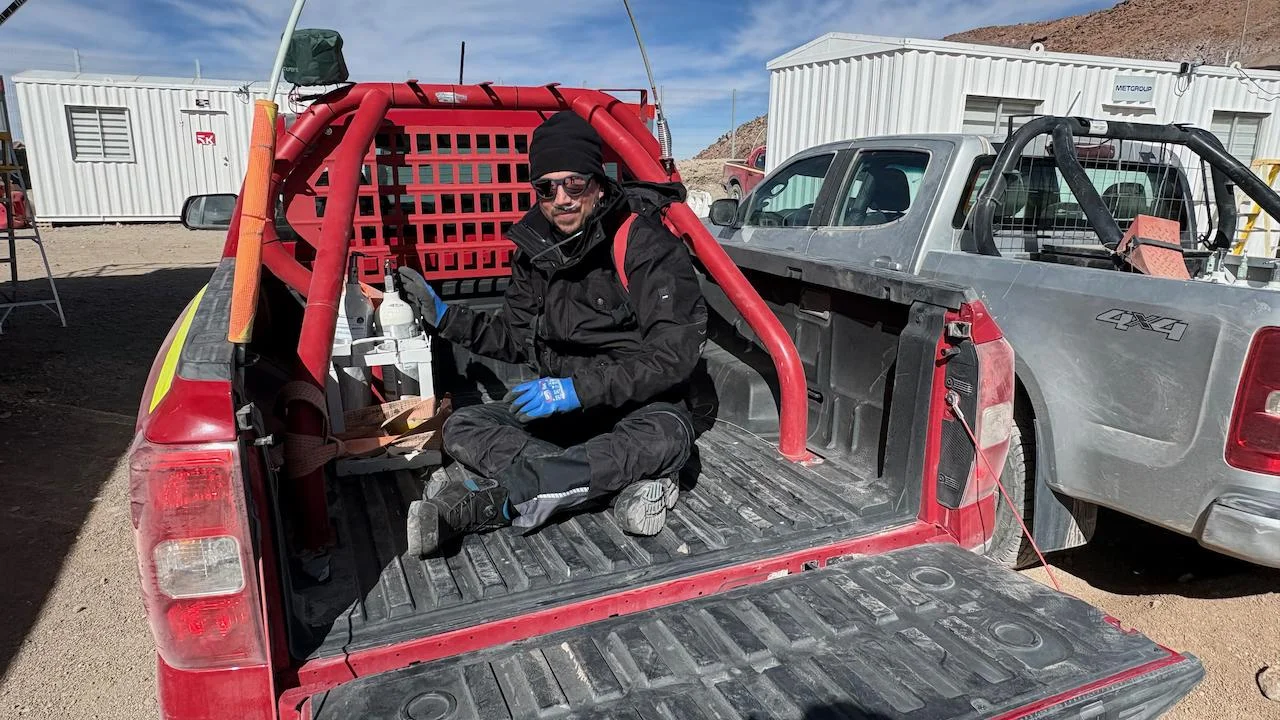
The landscape is absolutely breathtaking. It really feels like you’re on the roof of the world. You don’t have much time to enjoy the view, of course, because there’s always something to do. Being up this high means we all need to breathe oxygen from tanks via nasal cannulas, which are like little tubes. Even so, any kind of physical activity is still exhausting, and everyone’s worn out in the evenings. We have to wear personal protective equipment, including sturdy sunglasses, plus a hard hat too if need be. And safety is the number-one priority in every other respect as well: Medical staff on the ground check the blood oxygen levels of everyone on the construction site several times a day; there’s always an ambulance on standby; and at least one member of staff is given safety supervision as their sole job. We all get on really well with one another, despite speaking different languages and hailing from different professional backgrounds. Everyone enjoys being there and getting stuck in.
How do you end up with a job looking after the IT inside a supertelescope?
Reinhold Schaaf: I haven’t exactly had what you’d call a linear career. After studying physics and astronomy and working as a postdoc, I spent several years as a freelance software developer for industry. But I never lost touch with my astronomical research colleagues.
At some point, the opportunity came up to work on the observatory control software used in the APEX telescope at the Max Planck Institute for Radio Astronomy in Bonn. It didn’t take long to realize that a combination of software development and an astronomy background is extremely useful for this kind of job.
I then went on to design software for several other telescopes—and that’s how I ultimately ended up in the IT team for our CCAT supertelescope.
How do you motivate one another?
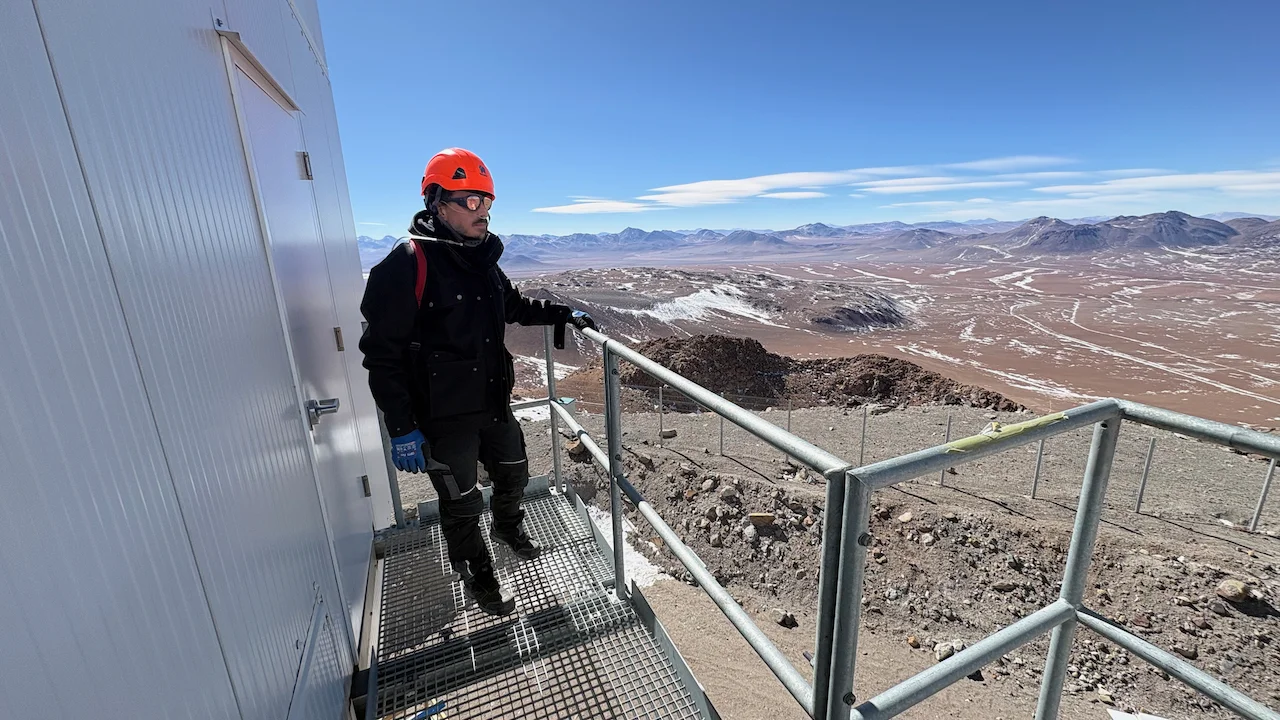
Christos Karoumpis: The surroundings provide a lot of your motivation by themselves. The landscape here is so stunning and alien that even utterly mundane tasks quickly become a mini-adventure. The cold, wind and altitude do present additional challenges occasionally, but they’re also what’s making our time here an experience that we’re not going to forget in a hurry.
What is a moment that has really moved you emotionally?
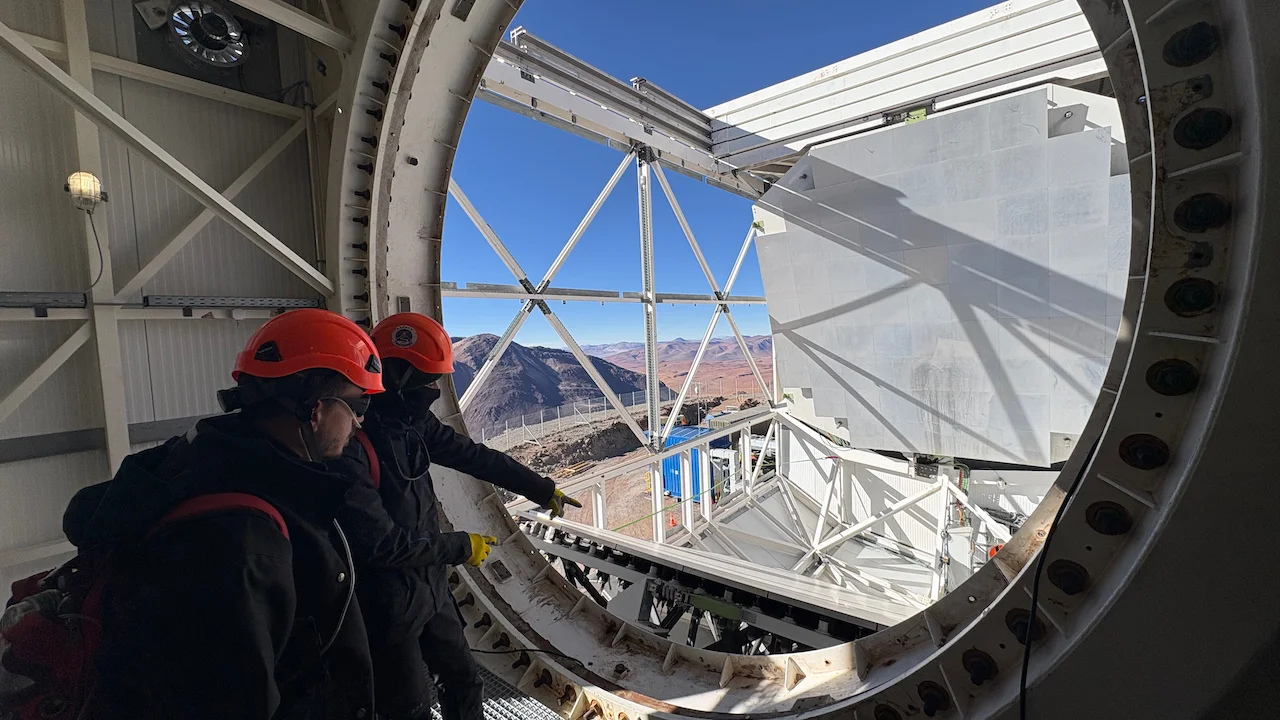
Christos Karoumpis: Der bewegendste Moment war für mich, zum ersten Mal an der Stelle zu stehen, an der später der Hauptdetektor des Teleskops installiert wird. Von dort blickt man direkt zum Sekundärspiegel – genau auf dem Weg, den die Photonen aus den fernen Galaxien nehmen werden, die wir beobachten möchten. Dabei kam mir der Gedanke, dass einige dieser Photonen wahrscheinlich gerade durch mich hindurchfliegen. Für mich sind sie völlig unsichtbar, aber das Teleskop wird sie eines Tages registrieren können. Das war ein besonderer Moment, weil die Wissenschaft plötzlich sehr greifbar wurde.
What do you find frustrating about your work on the telescope?
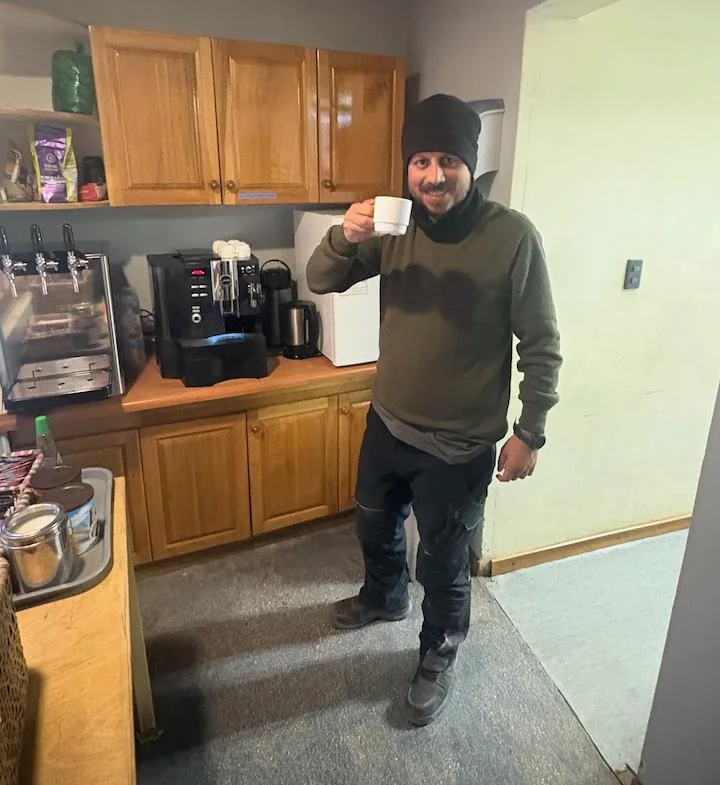
Christos Karoumpis: The biggest challenge is perhaps a surprisingly ordinary one: missing out on coffee in the mornings. At this altitude, you have your pulse checked every day, so it’s better to skip the caffeine before heading up the mountain. For someone who loves his coffee, this is sometimes tougher than the cold, wind or dust. But it makes the first cup I have after getting back from the mountain taste all the better.
How do you work together successfully in such an international team?
Christos Karoumpis: At the moment, the football World Cup is helping us to build bridges. Our team is made up of people from many different countries, but football lets you find common ground surprisingly quickly. Chats like these are an ideal way to break the ice and help us to connect with one another outside work too. Having shared interests often makes international cooperation easier than you’d initially think.
Have you achieved everything you set out to do?
Reinhold Schaaf: Once again, many things turned out differently than planned. For example, we had to postpone installing the permanent weather station on a 10-metre-high tower because there was no lightning protection. The water vapour radiometer, on the other hand, was installed as planned and is providing valuable data on the atmosphere above us. Scientists around the world are eagerly awaiting this data. Together with colleagues from Cologne, Christos installed a mount for a measuring device capable of surveying the mirrors with micrometer precision.
Otherwise, we had to improvise time and again. For example, we had to quickly cover equipment with tarpaulins to protect it from snowfall. While Europe is experiencing a heatwave, we’re enduring harsh winter conditions here, with temperatures as low as -10°C and sometimes fierce winds.
Overall, we’re satisfied with our stay here. Much has now been prepared, installed or improved, and CCAT has taken another step closer to scientific operation.