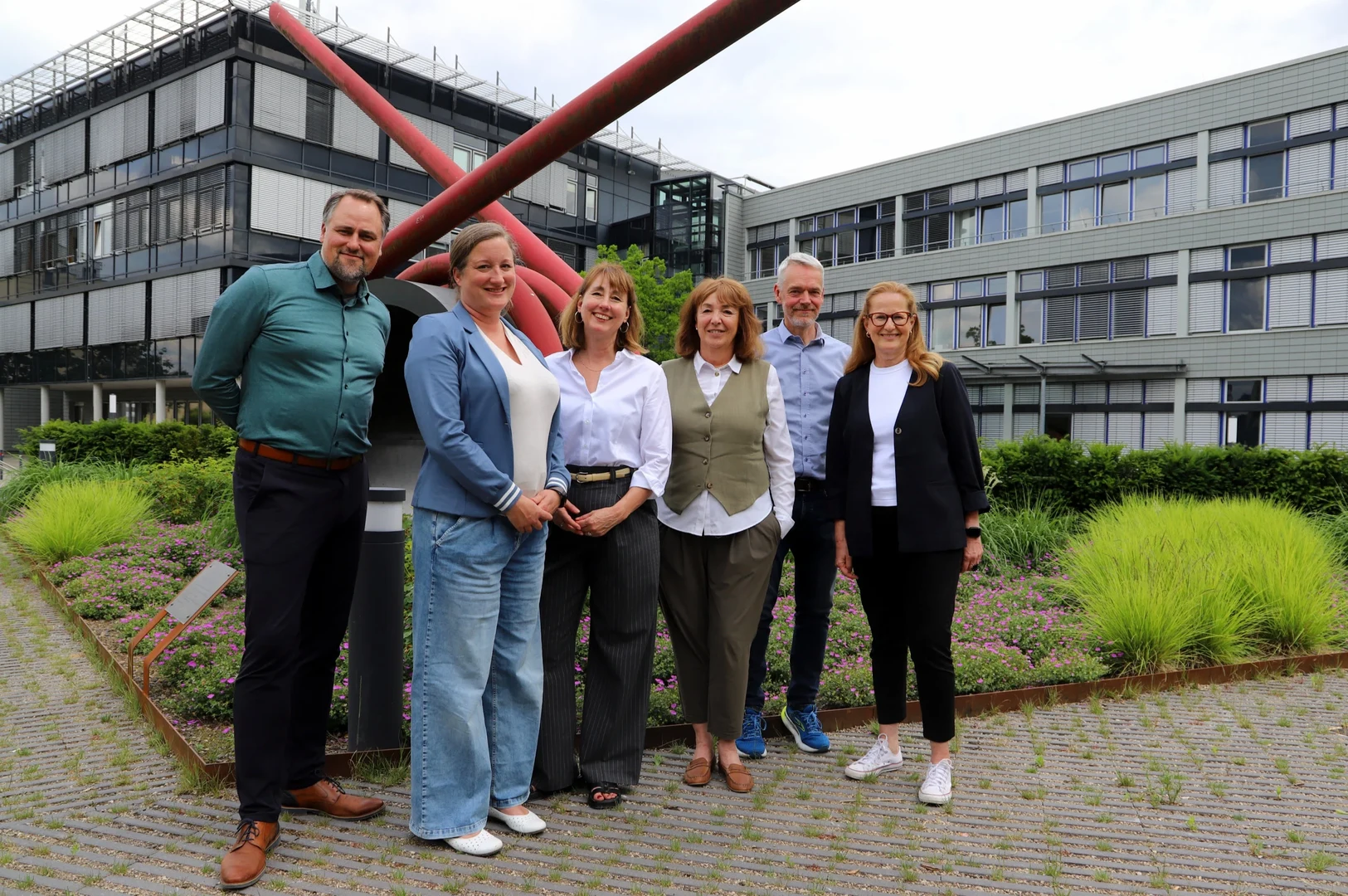


With cities becoming the predominant habitat for human beings, they are finding themselves facing a raft of increasingly complex challenges. The health of the people living in this environment is the focus of the new RTG entitled “Urban Futures – Managing Transformations for Better Health in Blue Cities.” “Blue cities” are settlements on coastlines or beside bodies of water, which are battling particular challenges not least due to climate change. From fall 2026 onward, the DFG will be providing some €5 million in funding to this research alliance, whose work will be centered around training doctoral students.
“The constant changes associated with the transformation, expansion and development of cities call for careful management in order to achieve three key objectives: sustainability, resilience and health,” says Professor Nico T. Mutters from the Institute of Hygiene and Public Health at the University Hospital Bonn, who is also a member of the Sustainable Futures Transdisciplinary Research Area at the University of Bonn. In his view, this makes processes of transformation key starting points for creating healthier and more sustainable cities that promote a fairer distribution of resources, can recover from disruption and enable humanity to thrive within natural boundaries.
Across the world, however, there is a shortage of specialists with the overarching skills required to steer such complex and uncertain transformation processes. If the scientific community is to make meaningful contributions, therefore, inter- and transdisciplinary approaches are needed that bring local actors actively on board to help shape knowledge and solutions. Thus the successful incorporation of integrated healthcare strategies such as planetary health, One Health and EcoHealth can produce cities that promote health and wellbeing while also improving sustainability and resilience. It is these aims that the new Research Training Group intends to help achieve.
Its partners are the German Institute of Development and Sustainability (IDOS) as well as H-BRS, meaning that a university of applied sciences will be involved in an RTG as a co-applicant institution for the first time ever. “Getting the ‘Urban Futures’ DFG Research Training Group approved is a landmark achievement for H-BRS,” says its Vice-President Research and Transfer Professor Johannes Steinhaus. “It shows that we’re training early-career researchers at the very highest level. When you’re dealing with challenges as complex as successful urban transformations, inter- and transdisciplinary research is crucial. And this is what we’re all about. Together with the University Hospital Bonn and the University of Bonn, we’re creating an excellent environment for research while also strengthening life sciences, health and sustainability research at H-BRS.”
Comparing reconciliation across cultures
The other new RTG, “Reconciliation and its Equivalents in a Transcultural Comparison,“ is to examine an equally hot topic given the current state of the world. Adopting an interdisciplinary angle that takes in comparisons across cultures, it will be studying concepts, strategies and practices of conflict transformation. The researchers involved are taking as their starting point the hypothesis that reconciliation and its equivalents in various European and non-European cultures constitute a set of responses and strategies that can be employed to defuse conflicts and, in an ideal scenario, resolve them entirely.
“I’m incredibly happy that we’ve secured funding,” says the new RTG’s speaker, Professor Christine G. Krüger from the Department of History at the University of Bonn, who is also a member of its Present Pasts and Individuals and Societies Transdisciplinary Research Areas. The DFG will be funding the group to the tune of nearly €5 million over the next five years. “I’m also very much looking forward to working closely with the researchers at earlier stages of their careers, who have the time and resources to home in on a particular case study,” Krüger adds.
The RTG will focus on reconciliation concepts, strategies and practices from ancient times through to the present day, covering all manner of different cultures—from Africa and Asia to Latin America and from Judaism, Islam and Christianity. To this end, the researchers will be comparing the situation across cultures and viewing them as open and mutable. One of their main priorities will be to engage constantly in collective critical reflection on how they themselves are tied to their own local context. Doctoral students from an extremely wide range of backgrounds will contribute their own questions and knowledge to the RTG and are also lined up to spend several months abroad in order to experience international dialogue.
The new RTG will cover numerous disciplines: ancient history, English studies, didactics of history, early modern history, local history of the Rhineland region, historical peace research, Islamic studies, Jewish studies/religious studies, modern and contemporary history, art history, political sociology/reconciliation studies, law, philosophy of religion, and social and cultural anthropology/critical museum and heritage studies.