




“When I was looking to enroll at the University of Bonn, I needed my birth certificate. This meant I first had to fly to Iraq to get myself one issued there. I spent 10 days waiting there for it.” These are Haydar Sahib’s words describing the biggest obstacle that he had to overcome in his quest to enroll. And his is not a unique case, because young people with a refugee or migration background often face particular challenges if they want to study in Germany. These challenges can take all manner of different forms: a mountain of red tape that often seems impenetrable, not knowing enough about the country’s education system, language barriers, a lack of academic role models among one’s friends and family and tight finances are just some of the typical examples. No wonder, therefore, that this group is underrepresented at German universities.
Greater diversity and educational justice
To help reverse this trend, the University of Bonn created Pathways to Research, which forms part of the Excellence Initiative. Since 2023, the program has been supporting students and doctoral candidates with a refugee or migration background by providing funding and organizing events tailored specifically to them. “We’re doing this because we want to help them through their degree program or doctorate,” explains the program’s coordinator Daina Hues from the Equal Opportunity and Diversity Unit. “Pathways to Research is improving diversity and educational justice at our University.” Thirty-nine students and five doctoral candidates have so far been given funding of €300 and €1,500 a month respectively. Students can receive their scholarship over up to two years and doctoral candidates over up to three. The University of Bonn is thus one of only a handful in Germany to have set up a grant program specifically for this target group.
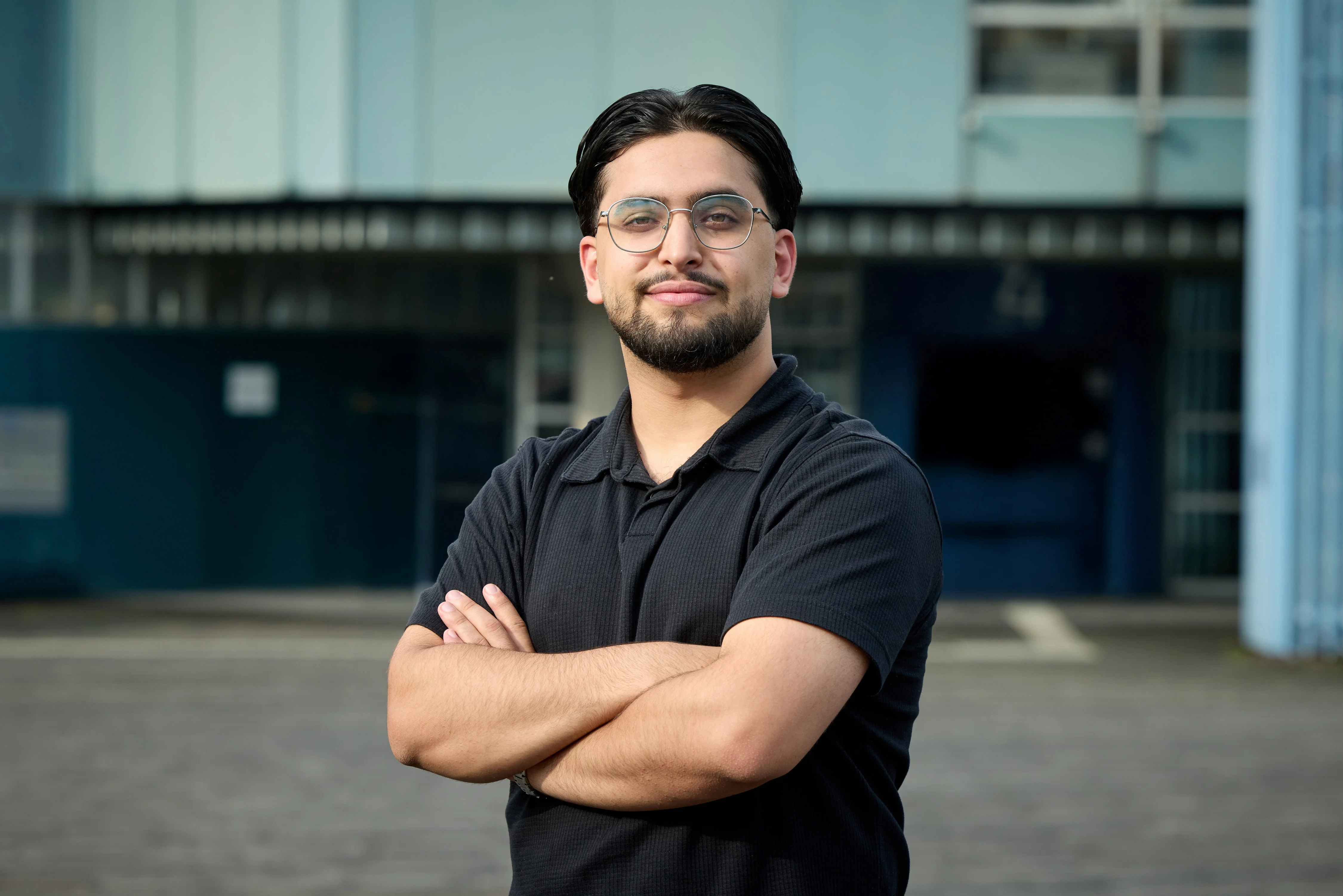
Just a child when his family fled Iraq for Germany, Haydar Sahib grew up in Bergheim to the west of Cologne. He has been studying pharmacy at the University of Bonn since the 2022 summer semester. He found out about Pathways to Research from one of his friends, a fellow student. “As it happened, I was in the process of looking for a scholarship at the time. Then I heard that the University of Bonn offered one specifically for students with a refugee or migration background. It’s nice that people are thinking of us too!”
A scholarship that relieves both the financial and mental burden
Sahib greatly appreciates the financial support, which allows him to focus more on his studies. For instance, it means that he can afford specialist books, which in the field of pharmacy often cost between €50 and €100. However, the funding provides much more than just an opportunity to buy study materials, as another recipient of a Pathways to Research scholarship, Alexandra Alumyan, confirms. Her family moved to Germany from Russia before she was born. She grew up bilingual and is now studying law at the University of Bonn—making her the first person from her family to enter higher education in Germany. When she received her scholarship, she was already busy preparing for her examinations—a challenging time where students are expected to revise everything they have learned on their law degree program. “It’s a heavy load that takes it out of a lot of students, both physically and mentally,” Alumyan explains. The scholarship is proving an immense support in this regard: “I’ve been able to quit both my part-time jobs and now have enough breathing space alongside my time-consuming exam preparations to do some sport and eat healthily.” In other words, she explains, the financial support is also alleviating the physical and mental burden on her.
Yet Pathways to Research has much more to offer than just money: “We’ve created a genuine support structure for the people we’re funding,” Daina Hues says. For instance, she regularly organizes events where participants can get to know other scholarship recipients and build up their networks. And a meeting with members of the selection committee has already been held as well. Also on the agenda is continual professional development, including careers and CV coaching and voice and speech training. “You arrive in an environment where you’re understood, because everyone has a refugee or migration background,” says Haydar Sahib, describing the unique spirit of these events. Alexandra Alumyan is also a fan of the events, one particular highlight of which has been her encounter with a professor on the selection committee who is originally from Iran: “We had a very frank conversation, and she gave me some valuable ideas for my academic career.”
And what are the pair’s plans for after university? Haydar Sahib and Alexandra Alumyan have set themselves the lofty ambition of a career as a pharmacist and judge respectively. And Pathways to Research will be supporting them on one stage of their journey toward that goal.