


A landmark in the treatment of macular degeneration
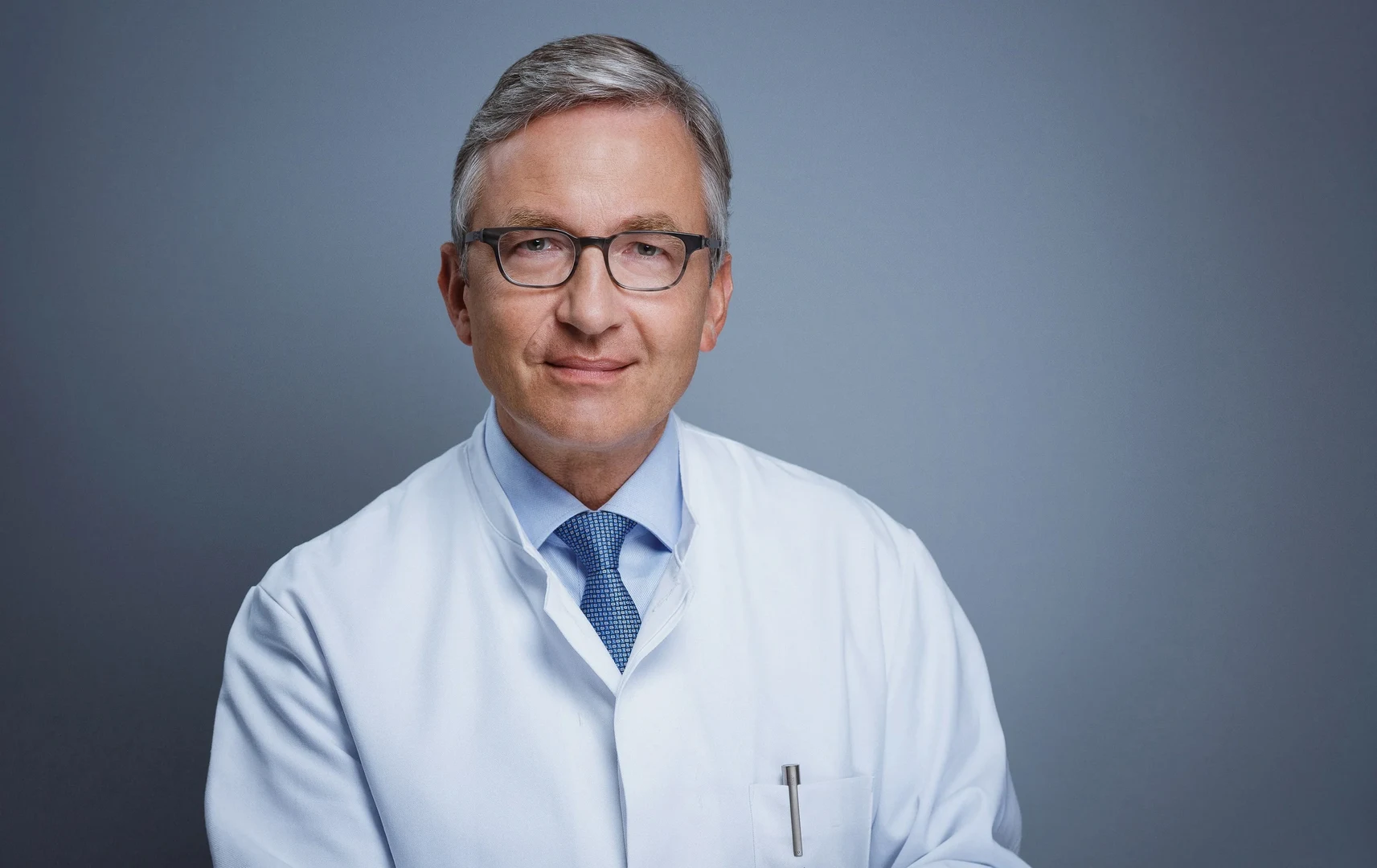
Holz, who is also a member of the ImmunoSensation3 Cluster of Excellence at the University of Bonn, has been nominated for his pioneering work on restoring central visual acuity in patients with advanced age-related macular degeneration (AMD). In an international clinical trial led by the Ophthalmology Clinic at the University Hospital Bonn, patients with geographic atrophy—a severe, late-stage form of AMD—had a degree of their central visual acuity restored for the first time thanks to a subretinal microchip implant measuring just two millimeters square. Inserted underneath the central retina using microsurgery, it acts in place of degenerated, non-functional photoreceptors and converts infrared light entering the eye into electrical signals with the help of special glasses equipped with a camera. Over 80 percent of participants showed marked improvements in their visual acuity, with more than 84 percent able to recognize letters, numbers or words after receiving their implant. The findings were published in the well-known “New England Journal of Medicine.”
“That our work is now being recognized on the international stage and counted among the world’s most outstanding scientific breakthroughs of the year is a fantastic endorsement of the whole interdisciplinary team that contributed to this project,” Holz says. “This technology offers genuine new hope for many people with AMD. The fact that basic research and clinical innovation are dovetailing so closely here and forging a path from the idea to the actual patients is driving us onward and demonstrating how much potential there is in translational research.”
Technological innovations born out of research
The nomination underlines just how important the translation of scientific findings into tangible technical innovations is at the University of Bonn and its University Hospital. For instance, both the Transfer Center enaCom at the University of Bonn and the Transfer team in its Faculty of Medicine help research projects to get their findings ready to put into practice. In the field of medicine in particular, developing innovative treatment methods with the aid of excellent basic research can benefit patients directly.
“In terms of its scientific quality, Professor Holz’s work is as outstanding as it is innovative,” explains Professor Bernd Weber, Dean of the Faculty of Medicine. “Being shortlisted for the ‘Science Breakthrough of the Year’ is fantastic recognition of this approach, for which Professor Holz and his whole team deserve my heartfelt congratulations.”
The award is presented each year by the Falling Walls Foundation, whose backers include the Federal Ministry of Research, Technology and Space. It brings together figures from research, business, industry, politics, the arts and society in order to shape the future sustainably through ideas with impact.