09. December 2025

Physician Gives University of Bonn Over 20,000 Sea Urchins Physician Gives University of Bonn Over 20,000 Sea Urchins

Dr. Hans-Volker Thiel has spent the past five decades collecting the spiny creatures from all four corners of the globe. 

If you have ever met a sea urchin while paddling barefoot in the sea, you are unlikely to forget your encounter in a hurry. However, these ubiquitous creatures—known as echinoderms—also have their aesthetic sides, offering up a breathtakingly beautiful variety of sizes, shapes and colors. The donation will enable the University of Bonn to study and showcase these riches even more effectively in future. Dr. Hans-Volker Thiel, a retired orthopedic specialist who studied geology and paleontology in Bonn as an adult learner, has presented the over 20,000 sea urchins in his collection to the University of Bonn. Anyone interested in viewing these splendid spiny specimens from the comfort of their sofa can do so thanks to a photobook that has recently been published. 

Download all images in original size The impression in connection with the service is free, while the image specified author is mentioned.
Please fill out this field using the example format provided in the placeholder.
The phone number will be handled in accordance with GDPR.

Most of the sea urchins are still on display in several rooms of Thiel’s Düsseldorf home, although some have already been boxed up at the University’s Department of Paleontology. More will make the journey from Düsseldorf to Bonn as soon as space can be found for them. That the 86-year-old physician should have chosen the University of Bonn to receive his donation is no coincidence: “I’ve worked closely with the paleontologists led by Professor Jes Rust over the past few years,” Thiel reveals. This has seen a number of research papers published in specialist journals in collaboration with fellow researchers. “I’m now going to hand the collection over to the University of Bonn free of charge, thus making it permanently available to research.”

Back in 2019, 500 of Thiel’s echinoderms caused quite a stir as part of the “Seeigel – Stachelige Schönheiten” (“Sea Urchins—Spiny Beauties”) exhibition in the University’s Goldfuß Museum. “Hans-Volker Thiel’s collection has already made a major contribution to paleontology teaching and research in Bonn,” says Professor Emeritus Jes Rust from the Bonn Institute for Organismic Biology. “It’s a fantastic and highly valuable gift, because, of course, there were other museums and universities that we were up against.”

Thiel has now signed a donation contract with the University of Bonn. Luis Pauly, who co-authored the book on sea urchins, has been tasked with arranging the big move for the collection and will also be using it to study the animal’s early evolution in a project funded by the German Research Foundation (Deutsche Forschungsgemeinschaft, DFG). Although the extensive collection is likely to take some time to index, the photobook Seeigel – stachelige Schönheiten—featuring photos by Georg Oleschinski—is already permitting some awe-inspiring insights into the aesthetics of echinoderms. Thiel’s collection forms the basis for this popular-science publication from September 2025.
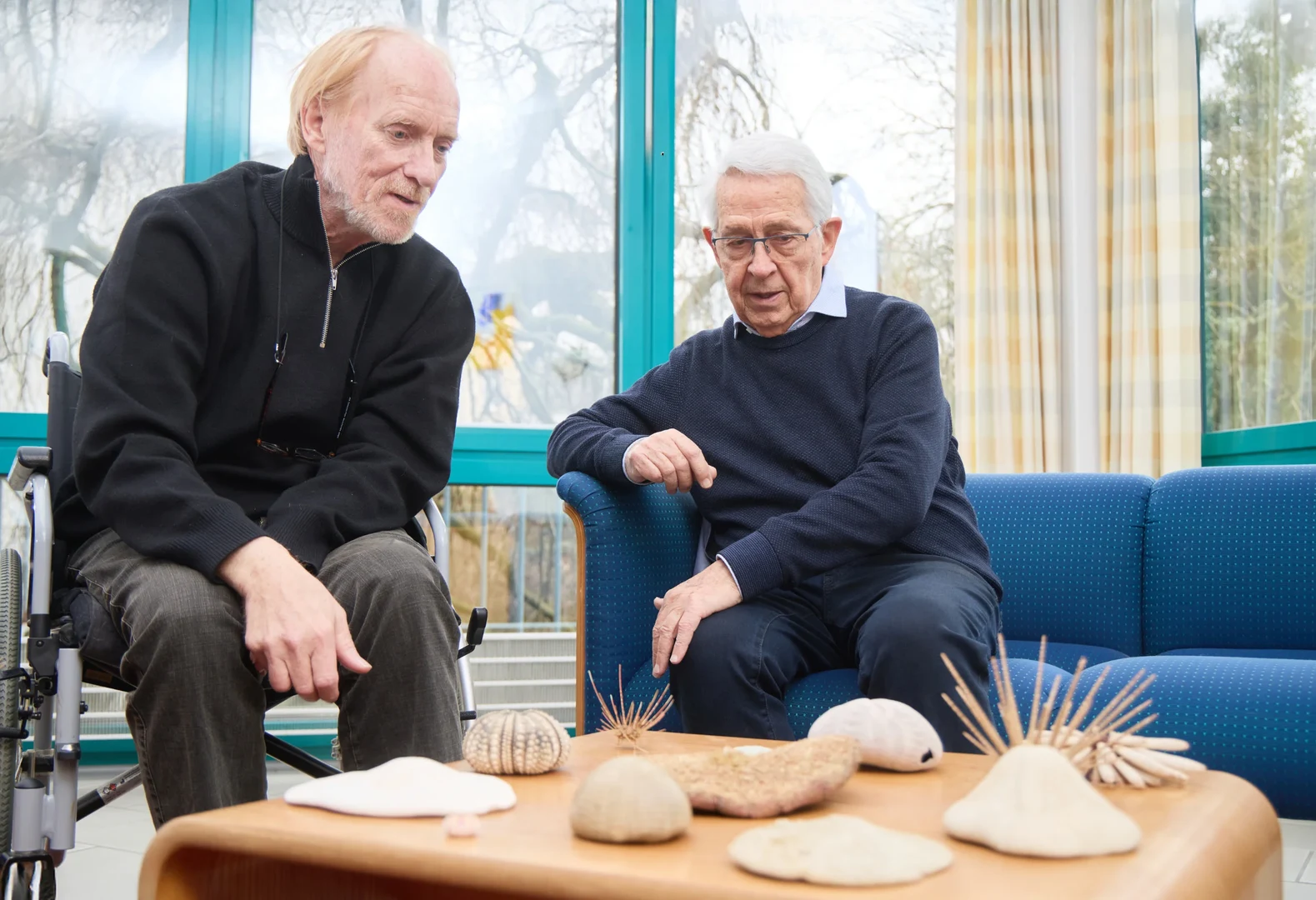
Professor Emeritus Jes Rust (left) and Dr. Hans-Volker Thiel (right) with some of the sea urchin collection.
Professor Emeritus Jes Rust (left) and Dr. Hans-Volker Thiel (right) with some of the sea urchin collection. © Foto: Volker Lannert/Uni Bonn
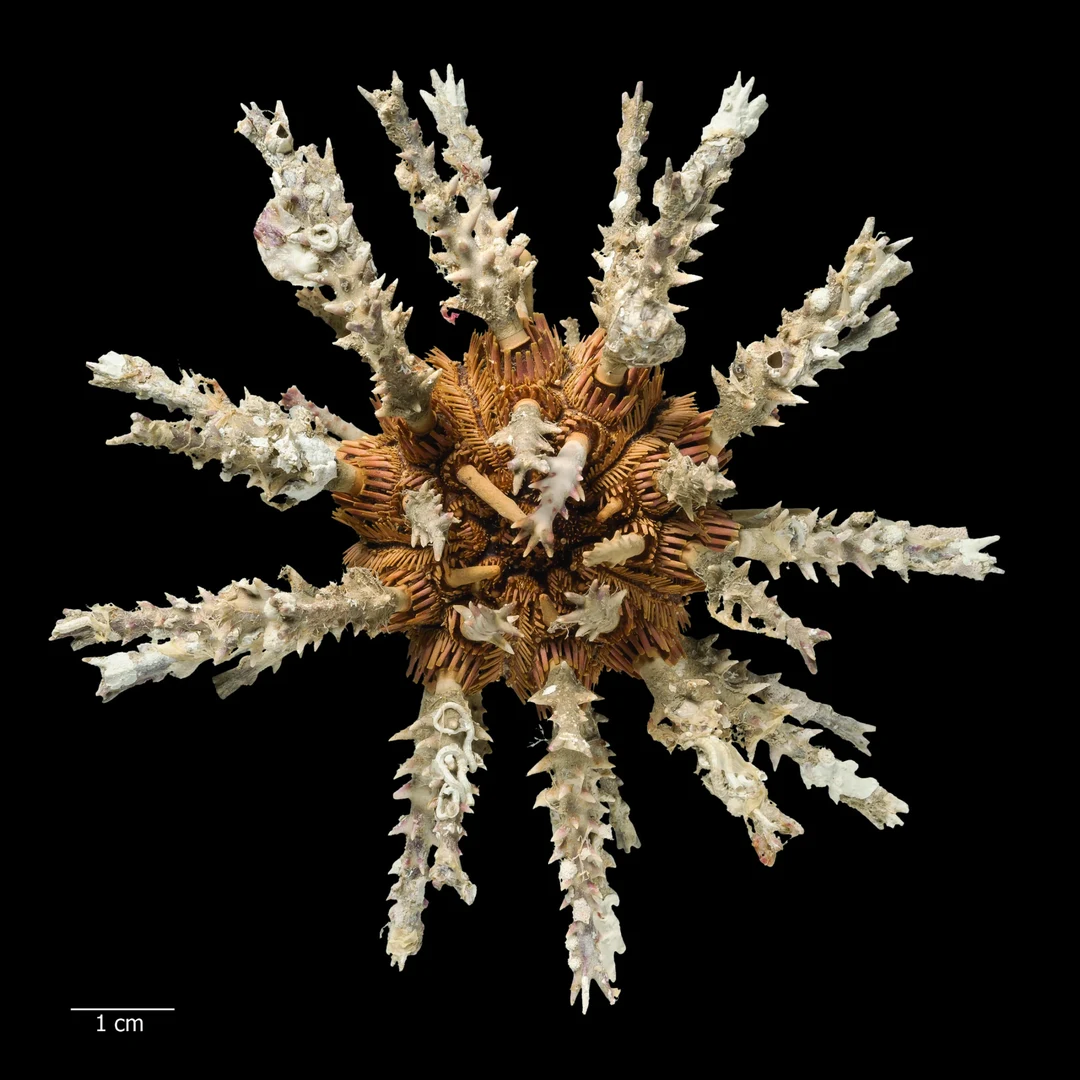
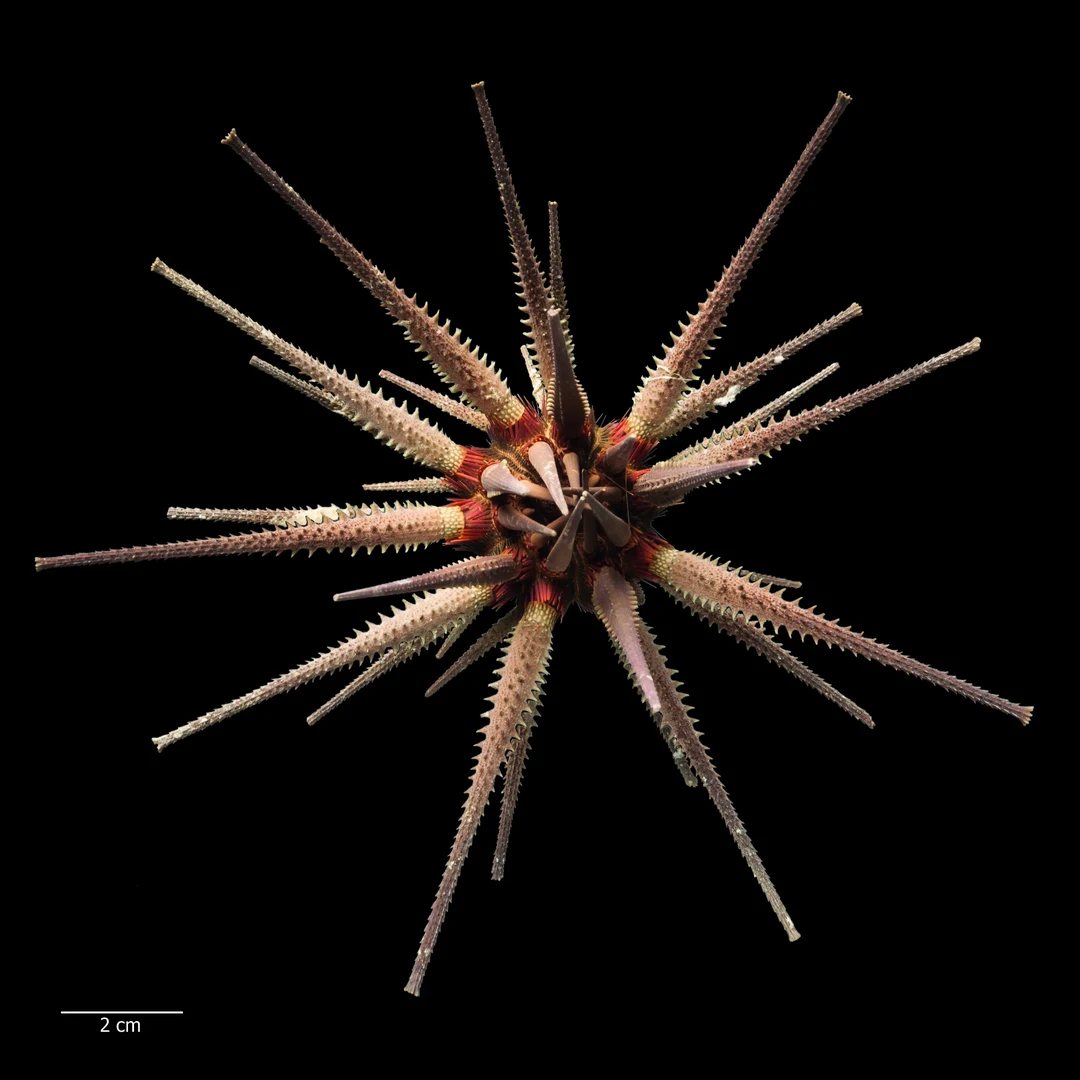
Prionocidaris callista:
Prionocidaris callista: - Photo is out of the book by Hans-Volker Thiel, Luis Pauly, Georg Oleschinski and Jes Rust: Seeigel – stachelige Schönheiten, Günding: Verlag Dr. Friedrich Pfeil, 184 pp., €68.00 © Photo: Georg Oleschinski
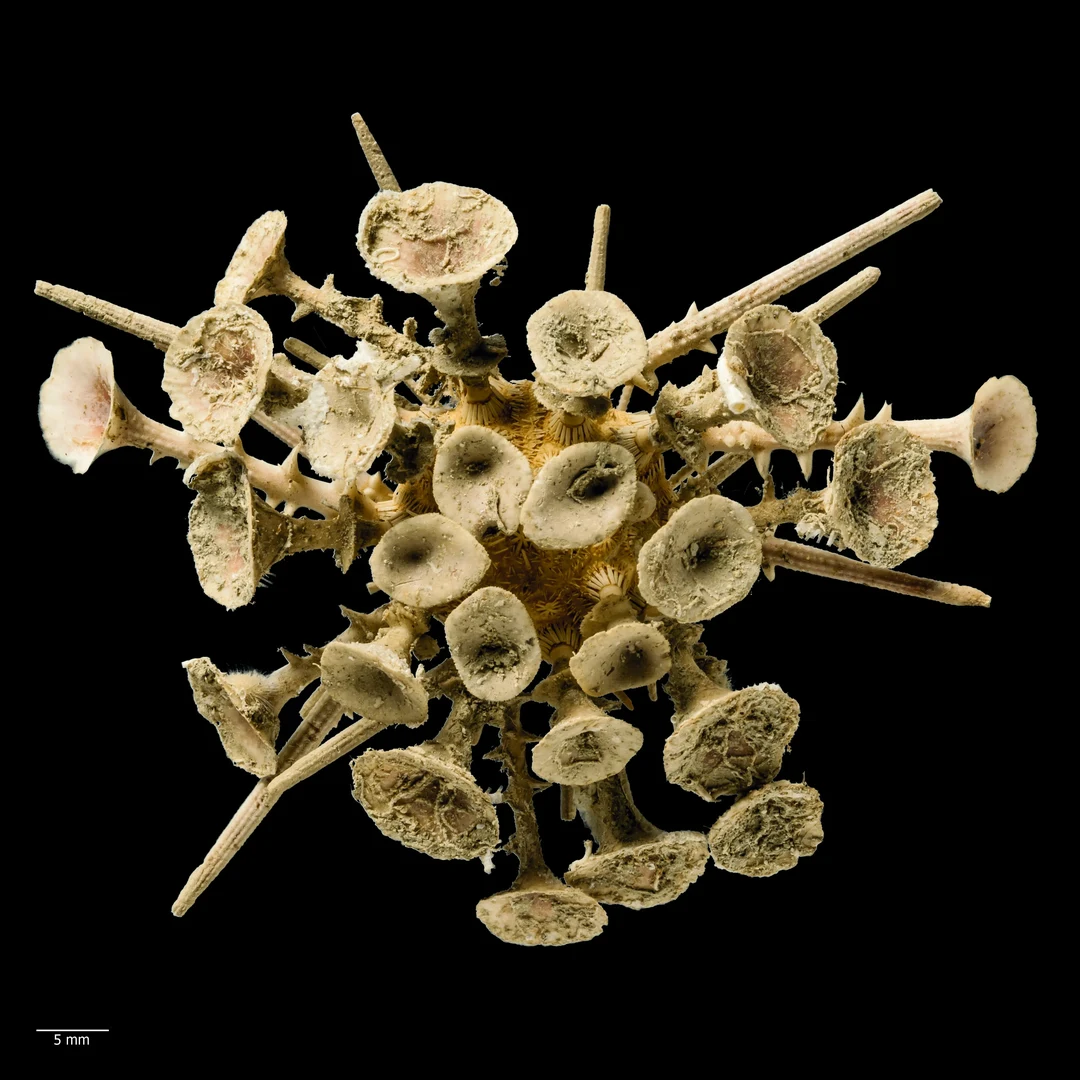
Goniocidaris tubaria:
Goniocidaris tubaria: - Photo is out of the book by Hans-Volker Thiel, Luis Pauly, Georg Oleschinski and Jes Rust: Seeigel – stachelige Schönheiten, Günding: Verlag Dr. Friedrich Pfeil, 184 pp., €68.00 © Photo: Georg Oleschinski
Goniocidaris (Aspidocidaris) clypeata:
Goniocidaris (Aspidocidaris) clypeata: - Photo is out of the book by Hans-Volker Thiel, Luis Pauly, Georg Oleschinski and Jes Rust: Seeigel – stachelige Schönheiten, Günding: Verlag Dr. Friedrich Pfeil, 184 pp., €68.00 © Photo: Georg Oleschinski
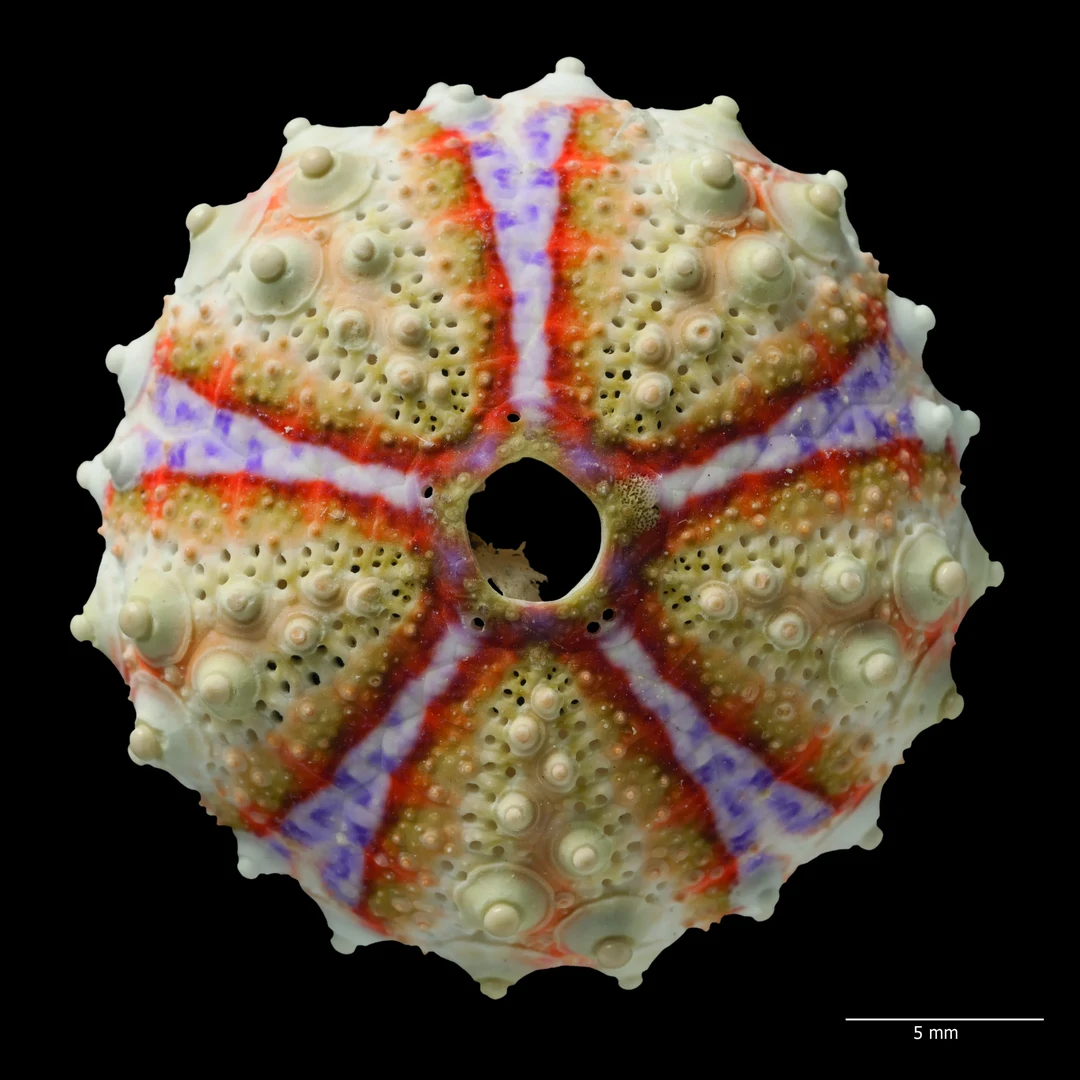
Coelopleurus exquisitus:
Coelopleurus exquisitus: - Photo is out of the book by Hans-Volker Thiel, Luis Pauly, Georg Oleschinski and Jes Rust: Seeigel – stachelige Schönheiten, Günding: Verlag Dr. Friedrich Pfeil, 184 pp., €68.00 © Photo: Georg Oleschinski
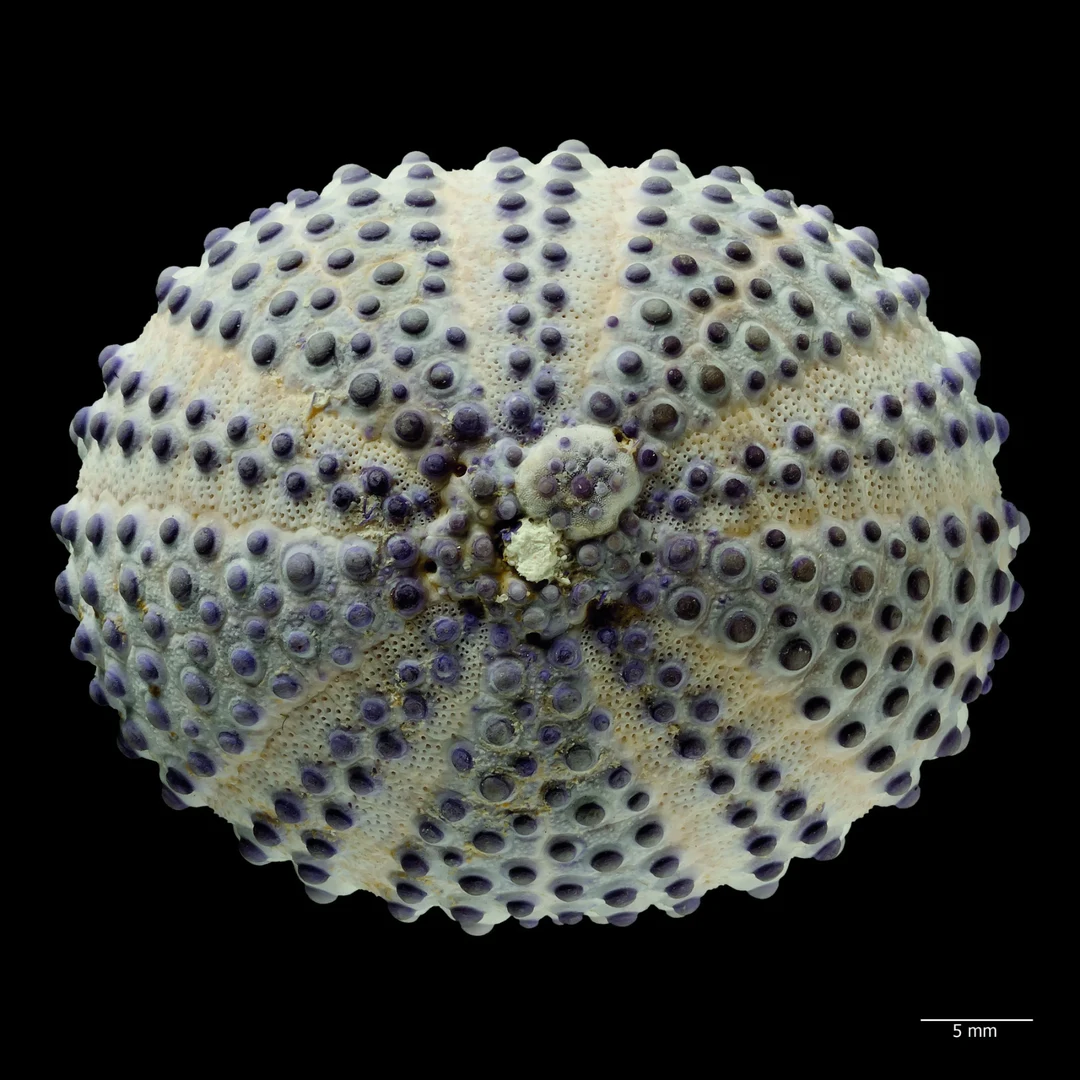
Colobocentrotus (Podophora) atratus:
Colobocentrotus (Podophora) atratus: - Photo is out of the book by Hans-Volker Thiel, Luis Pauly, Georg Oleschinski and Jes Rust: Seeigel – stachelige Schönheiten, Günding: Verlag Dr. Friedrich Pfeil, 184 pp., €68.00 © Photo: Georg Oleschinski

Dr. Hans-Volker Thiel had his own clinic in Düsseldorf when he worked as an orthopedic specialist, before retirement launched his new life as a researcher. He studied geology and paleontology at the University of Bonn and has since been working with Professor Emeritus Jes Rust from the Department of Paleontology. Together with Luis Pauly and Georg Oleschinski, the pair have produced a visually striking book on the fascinating sea urchin. The 86-year-old is also donating his collection to the University of Bonn. We talked to him about his passion for these spiny invertebrates.

You’ve been collecting sea urchins from all over the world for about half a century. How did you put together this impressive collection of 20,000 of them?
I’ve picked up sea urchins from all five continents over time, most notably from the countries of Western Europe and Anatolia. When I was in Ecuador, I saw for the first time how environmental damage—in this case petrochemicals—is presently inflicting huge harm on living sea urchins. 

Did you simply set off somewhere and scoop up some sea urchins when you got there? 
It’s not as easy as that, sadly. I’ll already have scoped out the area I’d be collecting from by studying the literature, consulting geological maps and talking with local collectors and museums. My early collecting days would often find me in France, where I’d ask the local farmers if I could gather fossils from their fields that had already been harvested. “It’ll make the fields cleaner,” I told them. That cheered the farmers up, and there were hardly ever any problems back then. It’s much harder these days, because there are too many collectors out there, some of whom don’t stick to the rules.

Whereabouts in your home in Düsseldorf have you been keeping your many sea urchins?
The collection does fit in our house in Düsseldorf, but it’s had to be spread across several rooms for structural stability reasons. 

How did you come to switch from orthopedics to paleontology?
In 2003, after I’d finished as an orthopedic specialist I enrolled straight away on a Geology and Paleontology degree program at the University of Bonn, which had been a dream of mine for ages. I worked freelance for Professor Jes Rust both during and after my studies, doing research into living and fossil sea urchins. 

Now you’re donating your collection to the University of Bonn. Why is that?
I’ve decided to pass my extensive collection on to the University of Bonn because nobody in my family is following in my footsteps. I have strong ties to Bonn, because my grandparents used to live in the city and I myself started my medical studies here. The collection is going to be preserved for future generations, and with it the knowledge we possess about these fascinating creatures. Sea urchin research has to continue.

Where at the University is your collection going to live?
A small part of the sea urchin collection is already in the Department of Paleontology. More specimens will make the journey from Düsseldorf to Bonn as soon as space can be found for them at the University.

You’ve co-authored a book packed with fascinating images of sea urchins. Who’s the target audience?
It’s mainly intended for interested laypeople, on account of the really beautiful pictures taken by the photographer Georg Oleschinski. Because some of the specimens are very rare, however, researchers will also find the book useful.

Hans-Volker Thiel, Luis Pauly, Georg Oleschinski & Jes Rust: Seeigel – stachelige Schönheiten, Verlag Dr. Friedrich Pfeil – Günding, 184 S., 68,00 Euro

Dr. Hans-Volker Thiel
E-Mail: hv-thiel@gmx.de

Wird geladen