10. December 2025

Quantum sensors: Highly precise measurements in moving brains Quantum sensors: Highly precise measurements in moving brains

Prof. Dominik Bach is setting up cutting-edge research infrastructure at the University of Bonn with funding of almost four million euros

What is happening in the brain during an epileptic seizure? How do nerve cells function after a stroke-induced paralysis? What happens in the heads of those suffering from Parkinson’s disease? Investigating these types of questions has been difficult up to now because patients had to keep still. However, Optical Pumped Magnetoencephalography (OPMEG) is making it possible to also scan the brain while the patient is moving. Prof. Dr. Dominik Bach, Hertz Chair for Artificial Intelligence and Neuroscience at the University of Bonn, is currently setting up this type of research infrastructure on the campus of the University Hospital Bonn (UKB) and will receive funding of almost four million euros over the next three years from the EFRE/JTF program run by the European Union and the state government of North Rhine-Westphalia.

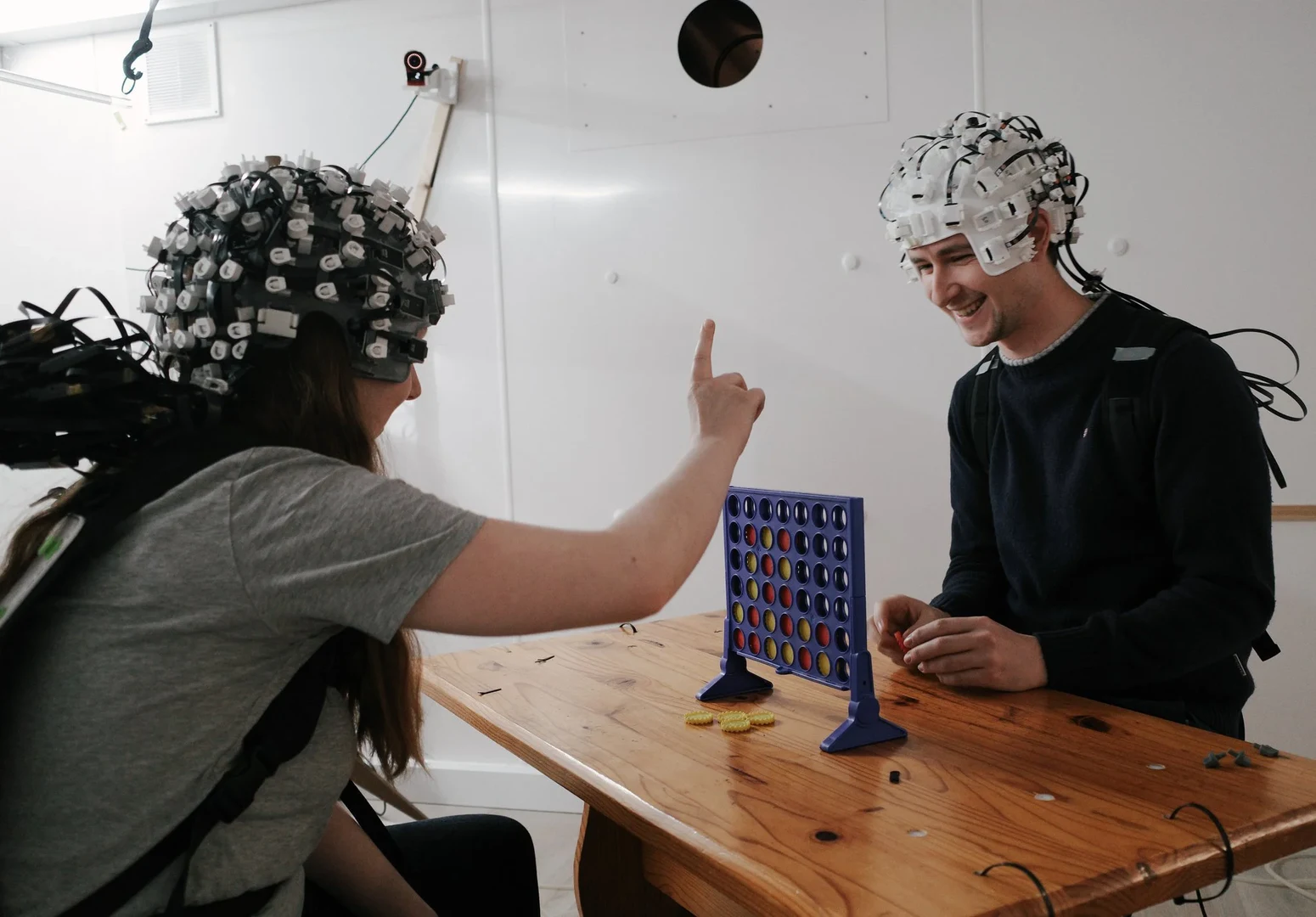
The photo shows two test subjects in a study
The photo shows two test subjects in a study - at the Wellcome Centre for Human Neuroimaging am University College London (UCL) during an OPMEG scan. © Photo: Robert Seymour
Download all images in original size The impression in connection with the service is free, while the image specified author is mentioned.
Please fill out this field using the example format provided in the placeholder.
The phone number will be handled in accordance with GDPR.

The novel and cutting-edge OPMEG research infrastructure will be built in the basement of the Life & Brain building on the campus of the University Hospital Bonn. Active brain cells produce tiny electrical currents that form magnetic fields. A helmet equipped with sensors is used to measure these magnetic fields. The brain scan is carried out in a shielded booth measuring several square meters to ensure that the measurement results are not falsified by external influences such as the Earth's magnetic field.

“In contrast to conventional imaging methods such as magnetic resonance imaging or traditional magnetoencephalography, the patient can move during the scan,” says Prof. Dr. Dominik Bach to explain the benefits of this method. “It also delivers much more precise measurements compared to EEG.”

Measurements in virtual reality

OPMEG can measure the brain waves of the person being examined while they are moving. It can thus handle the involuntary movements of people with illnesses such as epilepsy or Parkinson’s disease. The researchers use the images to look for characteristic rhythms of the brain. They can also scan the brain waves of healthy people while they are carrying out intentional movements such as spatial navigation tasks or when trying to escape in simulations of dangerous situations. Prof. Bach and his team have just developed OPMEG-compatible VR glasses that are able to simulate real environments in virtual reality.

This type of brain scan lasts up to one and a half hours on average. The test subject wears an imaging helmet and at the same time is hooked up to various other sensors – such as a heart rate monitor or motion sensor – depending on the study. The person than enters the booth and is given several game-based tasks to complete in order to stimulate certain areas of the brain. The test person can move around freely in the magnetically shielded booth and importantly is also able to sit down and relax to take a break. A member of the project team in an anteroom equipped with several screens monitors the data collected during the scan, which is later evaluated by computer.

Sensors use quantum effects

“OPMEG allows us to combine brain imaging with behavioral and motion studies,” says Bach. “This was either not previously possible or only possible with a far lower data quality.” Other applications for this technology include examining mild traumatic brain injuries or strokes and developing brain-computer interfaces. The centerpiece of this infrastructure are around 100 sensors that can measure tiny magnetic fields in the human brain – which are around one thousand times weaker than the Earth’s magnetic field – with the aid of quantum effects. 
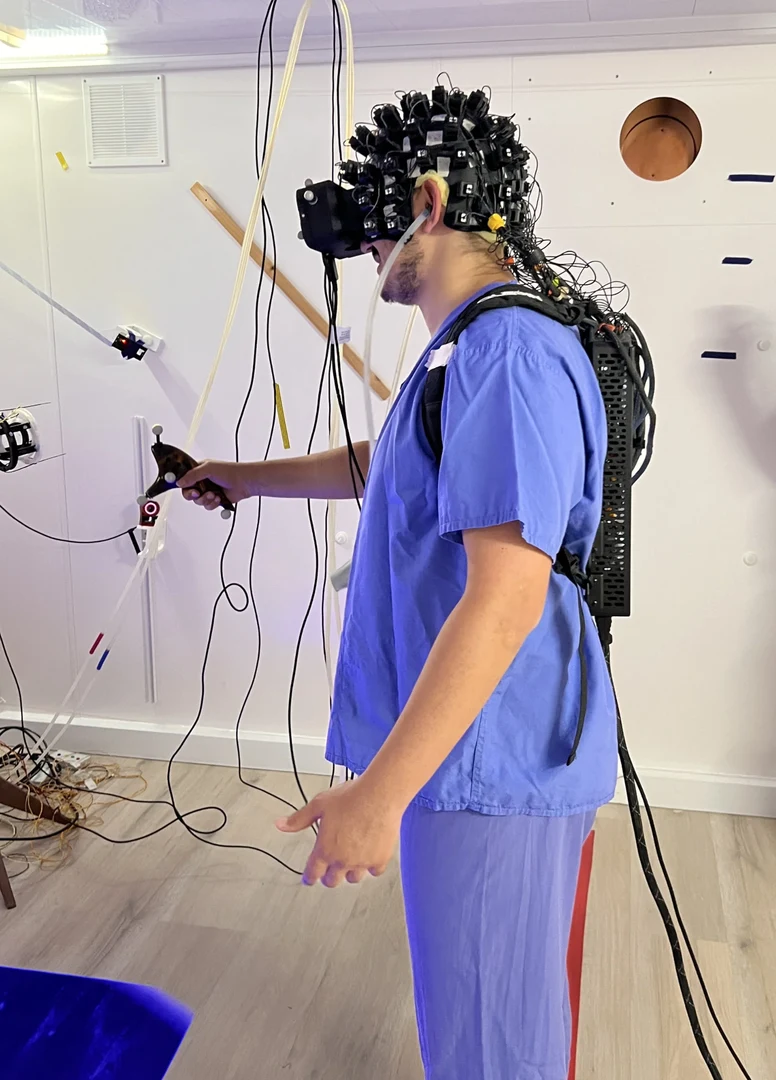
This image shows one of the assistants
This image shows one of the assistants - from Prof. Dominik Bach’s team at the University College London wearing an imaging helmet and the prototype of the new OPMEG-compatible VR glasses. © Photo: Steven Lieu/University of Bonn
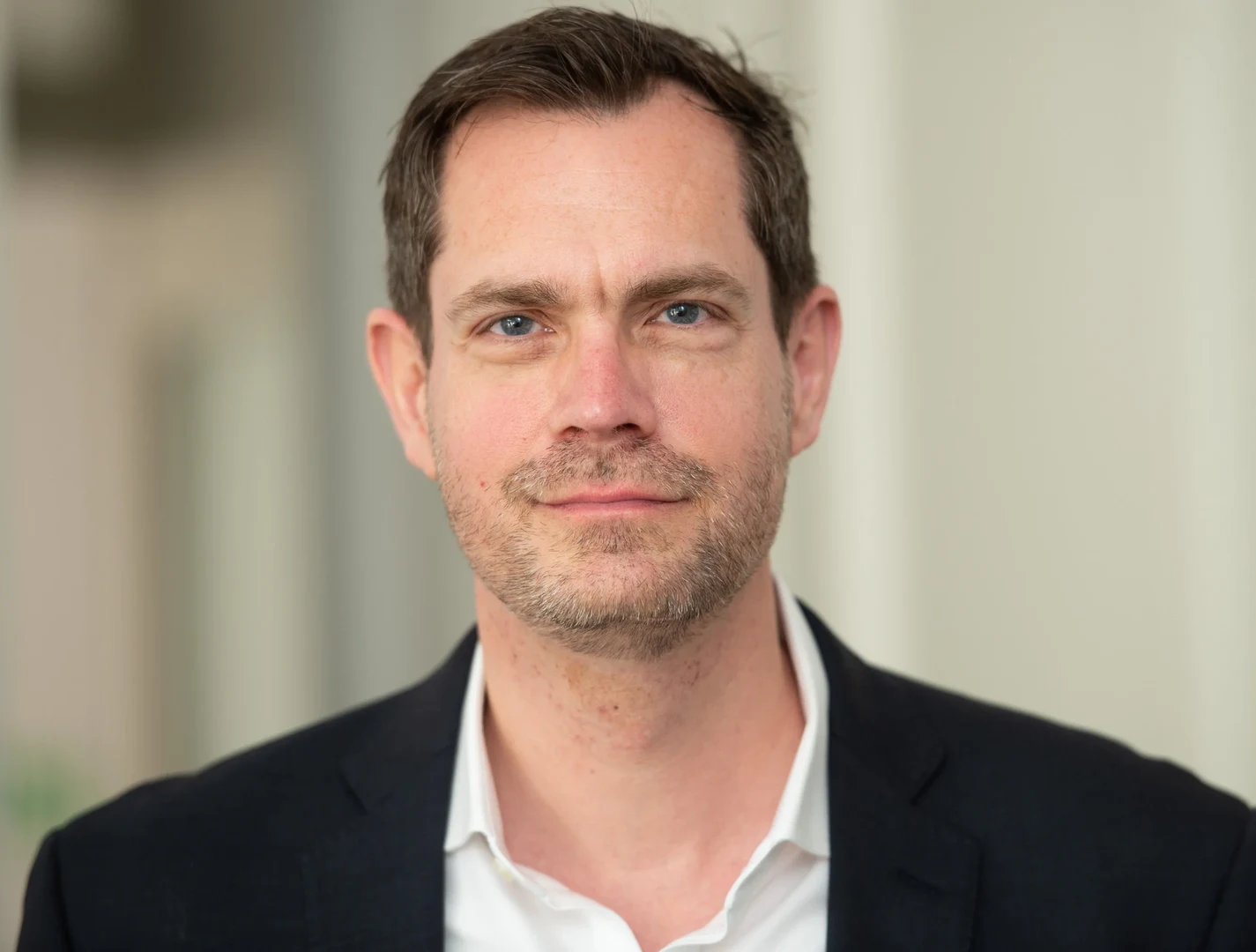
Prof. Bach is a member
Prof. Bach is a member - of the transdisciplinary research area “Life and Health” as the Hertz Chair and is responsible for research at the interface between neuroscience, psychiatry and computer science. © Photo: Barbara Frommann/University of Bonn

The University of Bonn secured the funding for Prof. Bach’s work as the project coordinator. The research infrastructure and its quantum sensors will be operated by the Medical Faculty to ensure that it is in close proximity to the patients at the University Hospital Bonn (UKB). The Hertz Chair for Artificial Intelligence and Neuroscience is part of the transdisciplinary research area (TRA) “Life and Health” at the University of Bonn, where Prof. Bach is responsible for research at the interface between neuroscience, psychiatry and computer science. He is a member of the steering committee for the TRA “Life & Health” and also a member of the TRA “Modelling.” Alongside his work at the university, Bach is a senior physician at the UKB's Clinic for Psychiatry and Psychotherapy, where he offers an anxiety outpatient service for people with anxiety disorders and depression.

The funding of almost four million euros is structural funding from the EFRE/JTF program NRW 2021–2027. This program is run by the state government of North-Rhine Westphalia and the European Union and supports projects and ideas that aim to help people open up new potential, create sustainable jobs and actively shape the digital and green transformation.

Prof. Dr. Dominik Bach
Centre for Artificial Intelligence and Neuroscience (caian)
University of Bonn
E-mail: d.bach@uni-bonn.de

Wird geladen