
01. August 2020

New Modeling Methods for Biological Cell Tissues New Modeling Methods for Biological Cell Tissues

Productive collaborations between the modeling groups at the University of Bonn and the experimental groups at the UKB

Jan Hasenauer: "The amount of biomedical data is rapidly increasing. To exploit this source of information for research, prevention and treatment, we need individuals familiar with advanced computational and mathematical approaches as well as Biology and Medicine."

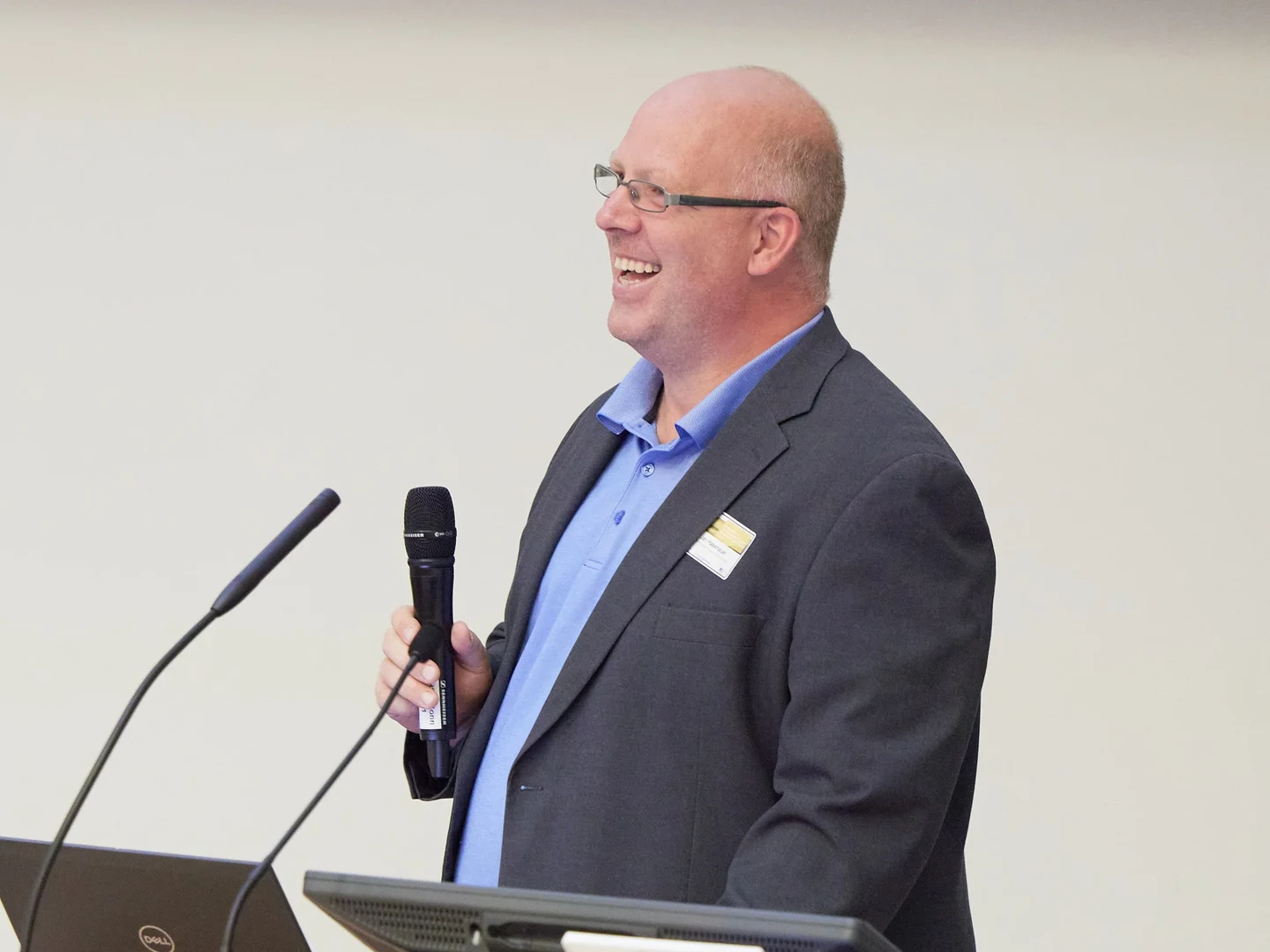
Prof. Jan Hasenauer, Group leader at IRU Mathematics and Life Sciences
Prof. Jan Hasenauer, Group leader at IRU Mathematics and Life Sciences © Volker Lannert / Uni Bonn
Download all images in original size The impression in connection with the service is free, while the image specified author is mentioned.
Please fill out this field using the example format provided in the placeholder.
The phone number will be handled in accordance with GDPR.

The TRA Modelling continuously supported emerging research topics at the University of Bonn. One of the most important developments was the establishment of the IRU Mathematics and Life Sciences (MLS). In 2019, Prof. Jan Hasenauer started as the first recruit in this area as an Associate Professor (W2) with tenure track. Prof. Hasenauer is an expert in data-driven computational biology, image-based modeling, computational data analysis, and software development, making his research profile an excellent fit for TRA Modelling. One of the first applications for TRA seed funding was initiated by Prof. Hasenauer in collaboration with Prof. Dr. Marieta Toma and Prof. Dr. Michael Hölzel of the University Hospital Bonn (UKB). These clinical partners contributed tissue samples, imaging data, and expertise in experimental pathology and oncology. 

Starting in September 2020, TRA Modelling funded their joint project, which focused on establishing novel computational methods for spatially resolved deep profiling of biological tissues. The 12-month TRA funding was instrumental in strengthening the IRU MLS as well as fostering productive collaborations between the modeling groups at the University of Bonn and the experimental groups at the UKB. This successful project was pivotal in consolidating the Hasenauer Group for Computational Life Sciences at the IRU MLS. It also contributed to the subsequent acquisition of an ERC Consolidator Grant and a BMBF grant, as well as the appointment of Prof. Hasenauer as Schlegel Professor of the Faculty of Mathematics and Natural Sciences in 2022.

"Computational Biology" at the IRU MLS

Our research field encompasses a variety of topics including, but not limited to, statistical inference for dynamical systems, multi-scale models, metabolic models, statistical analysis, and scientific machine learning. We aim to provide insights into biological processes and make predictions through analyses, while also considering the complexities of the underlying mechanisms.

Bonn Center for Mathematical Life Sciences (BCML)

BCML is dedicated to advancing interdisciplinary research at the intersection of mathematics and the life sciences. Mathematical modeling and data analysis are crucial for addressing complex problems in biology, medicine, and epidemiology. The integration of these fields offers significant potential for both fundamental research and medical applications. The mission of the BCML is to strengthen this interface, fostering collaborative efforts that combine expertise in mathematics with cutting-edge life sciences research. The primary focus is on the development of models and analytical techniques to understand biological processes, with the ultimate goal of enhancing the diagnosis, prevention, and treatment of diseases.

Prof. Jan Hasenauer 

Schlegel Chair for Computational Biology 

Bonn Center for Mathematical Life Sciences (BCML), LIMES Institute, Clusters of Excellence HCM and ImmunoSensation³

jan.hasenauer@uni-bonn.de

Wird geladen