


Global Universities for Societal Impact (GUSI)
The Global Universities for Societal Impact (GUSI) network brings together five leading universities from four continents. Working collaboratively, they address urgent global challenges—from artificial intelligence to climate action—linking academic excellence with a strong sense of societal responsibility.
About the Network
The University of Bonn is a founding member of the Global Universities for Societal Impact (GUSI) network, established in 2023. The alliance includes five leading research universities: University of Bonn (Germany), Emory University (USA), Hebrew University of Jerusalem (Israel), University of St Andrews (Scotland, UK), Waseda University (Japan).
Mission and Focus Areas
GUSI links academic excellence and innovative teaching with societal responsibility. The partners share a common approach to internationalization and collaborate both bilaterally and multilaterally on projects that strengthen the global impact of higher education.
The network’s work is built on three pillars: education, research, and leadership and innovation. This structure allows GUSI to combine long-term strategies with the flexibility to address current global issues, including climate change, food security, global health, and the ethical governance of new technologies.
Artificial Intelligence as an Initial Focus
The first major thematic area is Artificial Intelligence (AI). GUSI explores how AI is transforming research, teaching, and university governance—assessing opportunities, addressing ethical questions, and identifying new structural needs. In 2026, the University of Bonn will host an international GUSI workshop dedicated to this topic.
Universities




University of Bonn
The University of Bonn is one of eleven German Universities of Excellence and leads with six Clusters of Excellence. In recent decades, it has produced more Nobel laureates and Fields Medal winners than any other German university. Renowned for top-level research and science, it has shaped knowledge for over 200 years.
With around 30,000 students, 6,000 doctoral candidates and 750 professors, Bonn is among Germany’s largest and most research-intensive universities. Its seven faculties offer a wide range of subjects, many of which rank highly internationally. Six transdisciplinary research areas foster innovation in response to major societal and scientific challenges. Notable researchers include Nobel laureates Wolfgang Paul and Reinhard Selten, as well as Fields Medalists Gerd Faltings and Peter Scholze. The university drives progress through strong knowledge transfer, science communication and cooperation with industry. This ranges from joint professorships to contract research, establishing the university as a hub for social and technological development.


Emory University
Emory University is a leading research university in Atlanta, Georgia, and was founded in 1836. It is recognized internationally for its outstanding liberal arts colleges, top-ranked graduate and professional schools, and one of the largest and most comprehensive academic health care systems in the United States. With two academic campuses, over 9 colleges and schools, 80+ undergraduate majors, and 100+ countries represented, Emory is committed to opening disciplinary boundaries, and supporting interdisciplinary research and teaching from a global perspective. From longstanding partnerships with the CDC and the Carter Center, to Nobel Peace Prize and Pulitzer Prize winning faculty members, Emory is dedicated to advancing knowledge in the service of humanity.
Hebrew University of Jerusalem
A global top-100 institution and Israel’s leading academic and research university, the Hebrew University of Jerusalem (HUJI) was founded by visionaries including Albert Einstein and Sigmund Freud. With six campuses and over 100 research centers, HUJI hosts nearly 4,000 active research projects across fields ranging from mathematics (ranked 22nd globally), medicine, and agriculture to brain sciences, law, and the humanities.
Our researchers are internationally recognized, with accolades including nine Nobel Prizes, the Fields Medal, Turing Award, and Wolf Prize. HUJI is a hub of innovation and entrepreneurship, home to Yissum - its renowned tech transfer company—and a growing number of global partnerships.
Through its outstanding international programs and a student body representing over 90 countries, HUJI fosters a dynamic and diverse academic community rooted in Jerusalem—one of the world’s most historic and inspiring cities.


University of St Andrews
Founded in 1413, the University of St Andrews is the third oldest university in the English-speaking world. Renowned for both its historic legacy and innovative approach to research and teaching, St Andrews is a leading Scottish institution with a strong global outlook. It combines the academic strength and international reach of a world-class university with the intimate, community-driven atmosphere of a small coastal town. With students, staff, and academics from over 135 countries, the University fosters a vibrant, inclusive environment that supports excellence in education, research, and innovation. Its compact size and flexible structure—spanning four Faculties (Arts, Divinity, Science, and Medicine) and twenty Academic Schools—promote curiosity-led research and interdisciplinary collaboration for the benefit of society and culture worldwide.
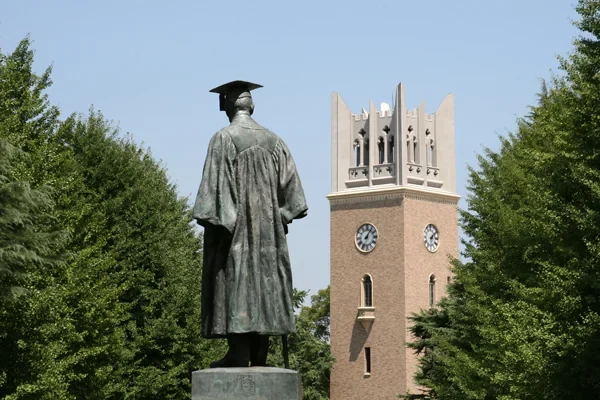
Waseda University
Waseda University, founded in 1882, is renowned for its academic excellence. Located in central Tokyo, it hosts 50,000 students across 13 undergraduate and 21 postgraduate schools. Its three core principles are: the independence of scholarship, the practical application of scholarship, and the fostering of good citizens. These principles emphasize freedom in research, the pursuit of knowledge for societal progress, and the cultivation of individuals who contribute positively to the global community.
In recent years, Waseda has focused on internationalization through its Vision 150 strategic plan. This initiative aims to prepare students for global leadership by promoting study abroad programs and increasing partnerships with top universities worldwide. By fostering global citizens, Waseda University enhances its students’ international perspectives and capabilities, ensuring they thrive in a diversifying global society.
Waseda University continues to provide a stimulating academic environment, welcoming students from around the world to engage in innovative research and education.
Contact

Prof. Dr. Birgit Ulrike Münch
Dechenstraße 3-11
53115 Bonn

Dr. Katharina Fuchs-Bodde
Poppelsdorfer Allee 53
53115 Bonn (Germany)