

The researchers will be giving lectures suitable for a general audience on 13 archaeological projects at the Universities of Bonn and Cologne and the office responsible for the conservation of archaeological monuments in the Rhineland, which is part of Landschaftsverband Rheinland (LVR). Among other things, the talks will focus on the archaeological and scientific methods being employed: Dr. Leo Klinke from the LVR’s office for archaeological monument conservation will present a number of geophysical “prospections,” the technical term for exploring and recording archaeological sites. These allow archaeologists to document archaeological monuments and finds without doing any excavating or destroying anything that is there. Bones, meanwhile, provide useful information about how people lived in the past, as the University of Bonn’s own Leonie Pathé will discuss using the example of the Rhineland in the Middle Ages. Julia Becker from the University of Cologne will explain how researchers are using isotope analyses of lead objects to reconstruct trade relationships of late antiquity.
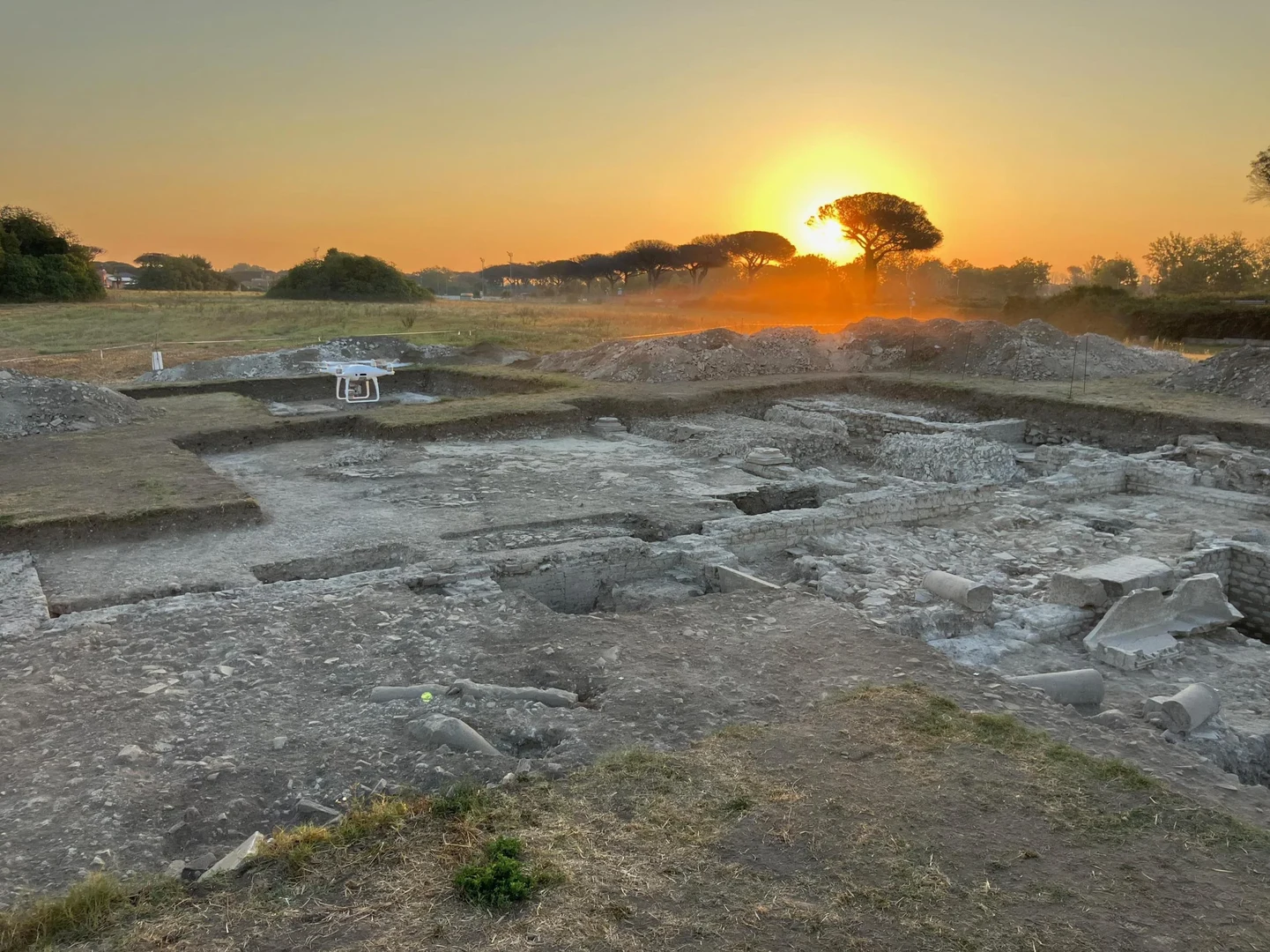
The event will also take a close look at the cities and religions of past societies, with lectures covering everything from research in Northern Africa and Italy to closer to home in the Rhineland. In Ostia, the port city of ancient Rome, archaeologists from Bonn and Cologne are studying one of the earliest Christian churches, which dates from the early 4th century CE. In the Rhineland, the spotlight is on a hitherto largely unexplored potters’ quarter near Vettweiß-Soller and the vast complex of baths at Colonia Claudia Ara Agrippinensium, present-day Cologne. Other lectures will look at the MiQua. LVR-Jewish Museum in Cologne’s Archaeological Quarter and the University of Cologne’s large-scale HESCOR project, which is helping to improve our understanding of the complex relationship between cultural evolution and ecosystems.
Anyone wanting to know more details or ask a question about archaeology that they have always had stuck in their head will have the chance to chat with the archaeologists from the Universities of Bonn and Cologne during the breaks. The lectures are free to attend, with no registration required.
Using VR goggles to explore the crypt under St. Mark’s Basilica
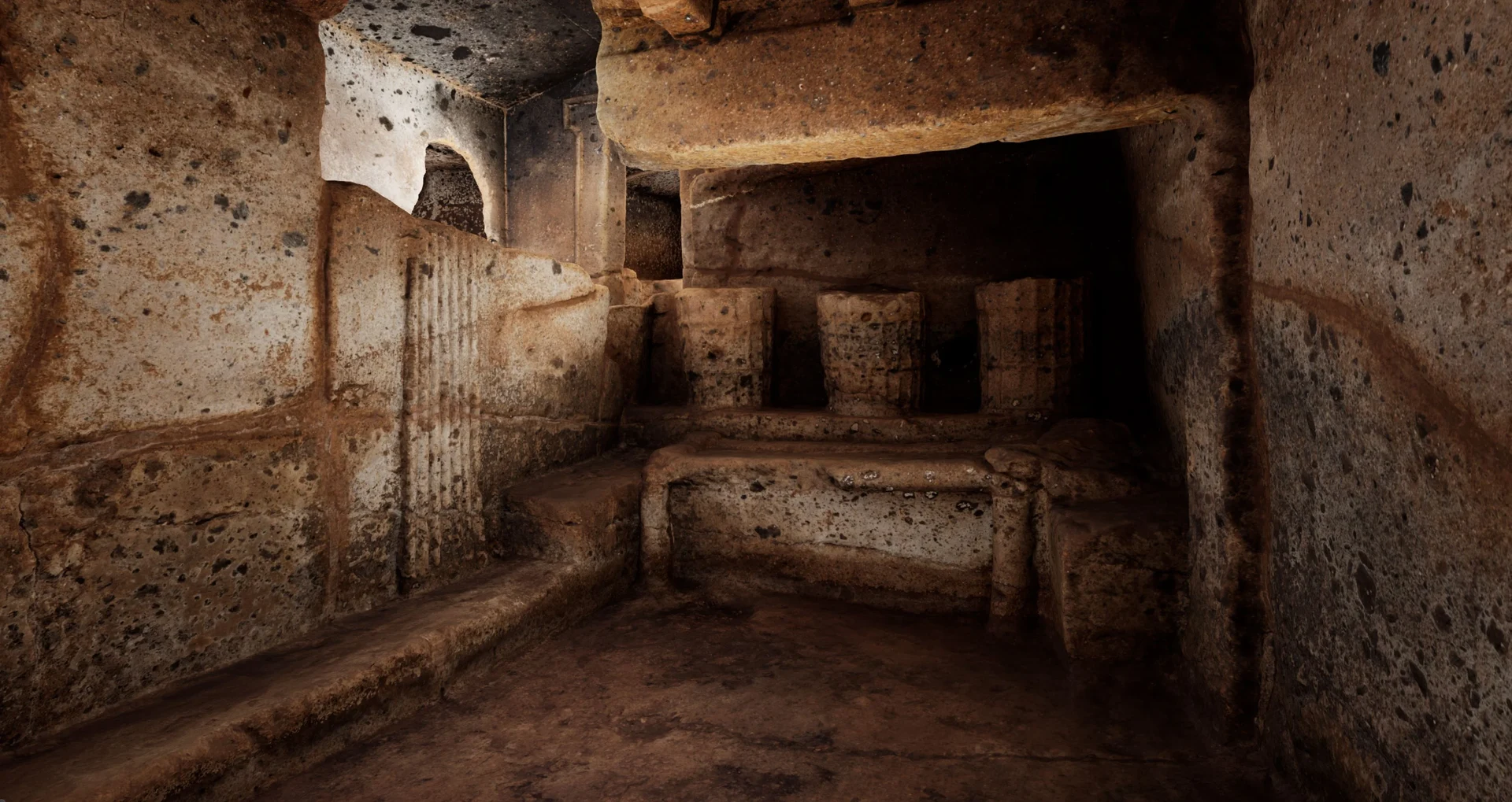
Usually, visitors have only limited opportunity to enter the crypt underneath St. Mark’s Basilica in Venice and the Etruscan tombs at Cerveteri. Not so during the Day of Archeology, however, when they will be able to explore these sites of great historico-cultural importance virtually with the aid of digital representations. VR goggles will also unlock access to a virtual museum where visitors will be able to pick up and examine digital twins of drinking vessels and bowls from Ancient Greece of the 7th- to 4th-century BCE. These virtual worlds have been developed by archaeologists from the University of Bonn in partnership with the Bonn Center for Digital Humanities (BCDH) as part of two projects, ViCo and Virtual Worlds in Teaching Archaeology. “Although we do employ these virtual digital representations in our research, we also make particular use of them for teaching our students,” explains Professor Stefan Feuser from the Institute for Archaeology and Cultural Anthropology, who is also a member of the Present Pasts Transdisciplinary Research Area.
A multi-institution partnership
The Day of Archaeology is being organized by the University of Bonn together with VarI. Formed in 2008, this alliance is geared toward expanding cooperation between the archaeological institutions with a presence in the Cologne/Bonn region, injecting fresh momentum into it through interdisciplinary dialogue and generating synergy effects for research and teaching by strengthening existing structural links.
Media contact:
Prof. Dr. Stefan Feuser
Heisenberg Professor for Classical Archaeology
Institute for Archaeology and Cultural Anthropology
University of Bonn
Phone: +49 228 73-9590
Email: sfeuser@uni-bonn.de