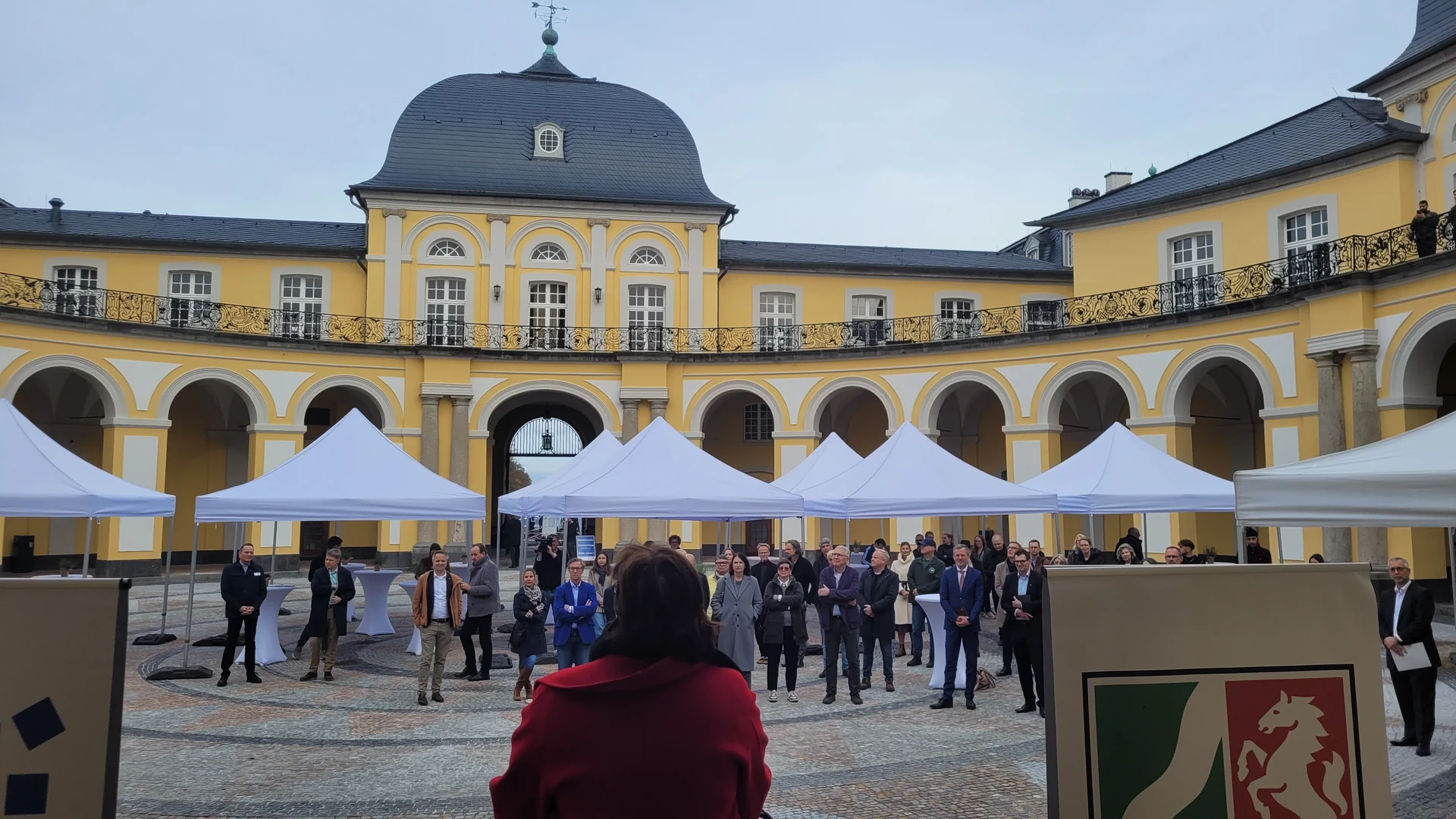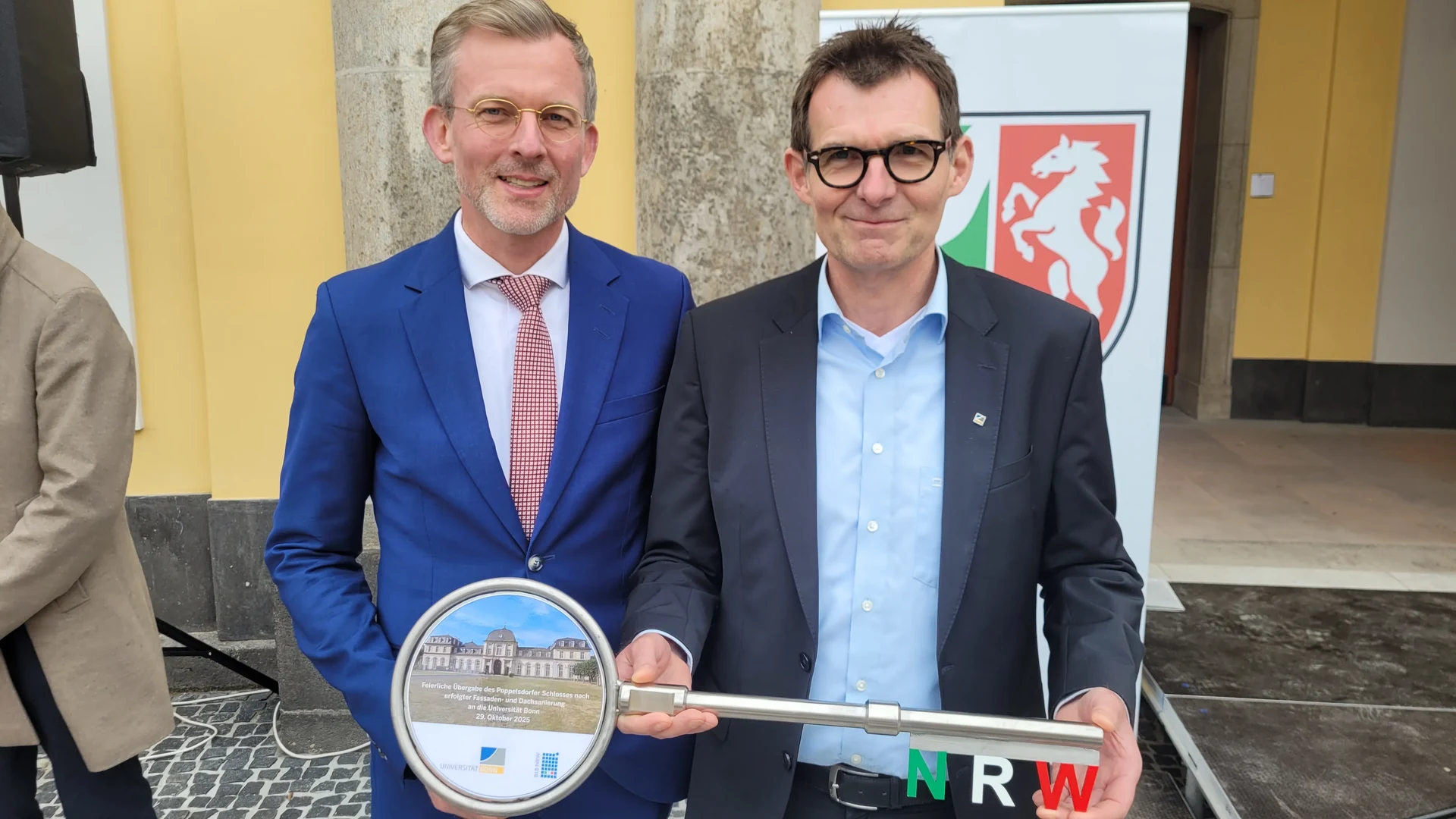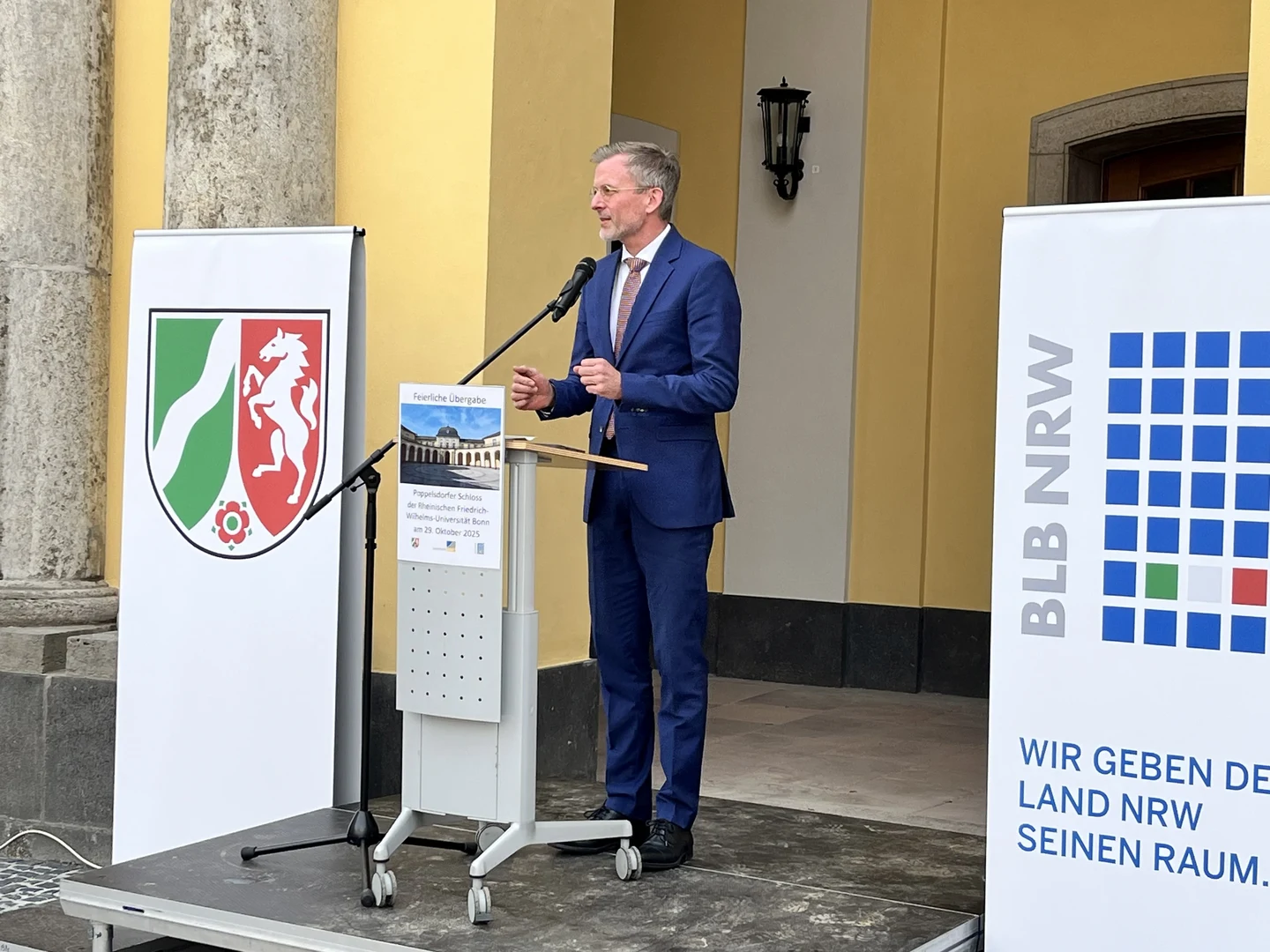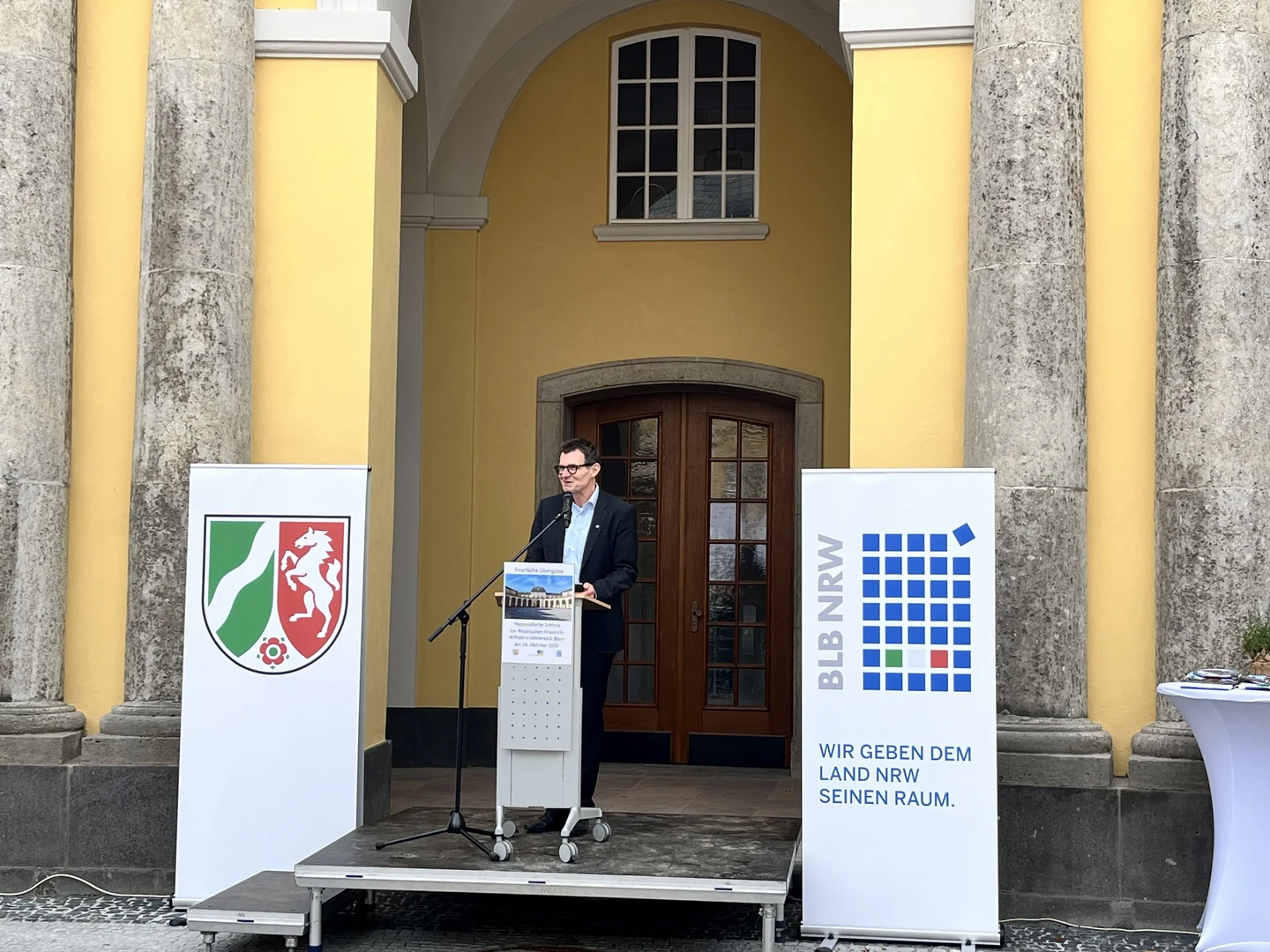


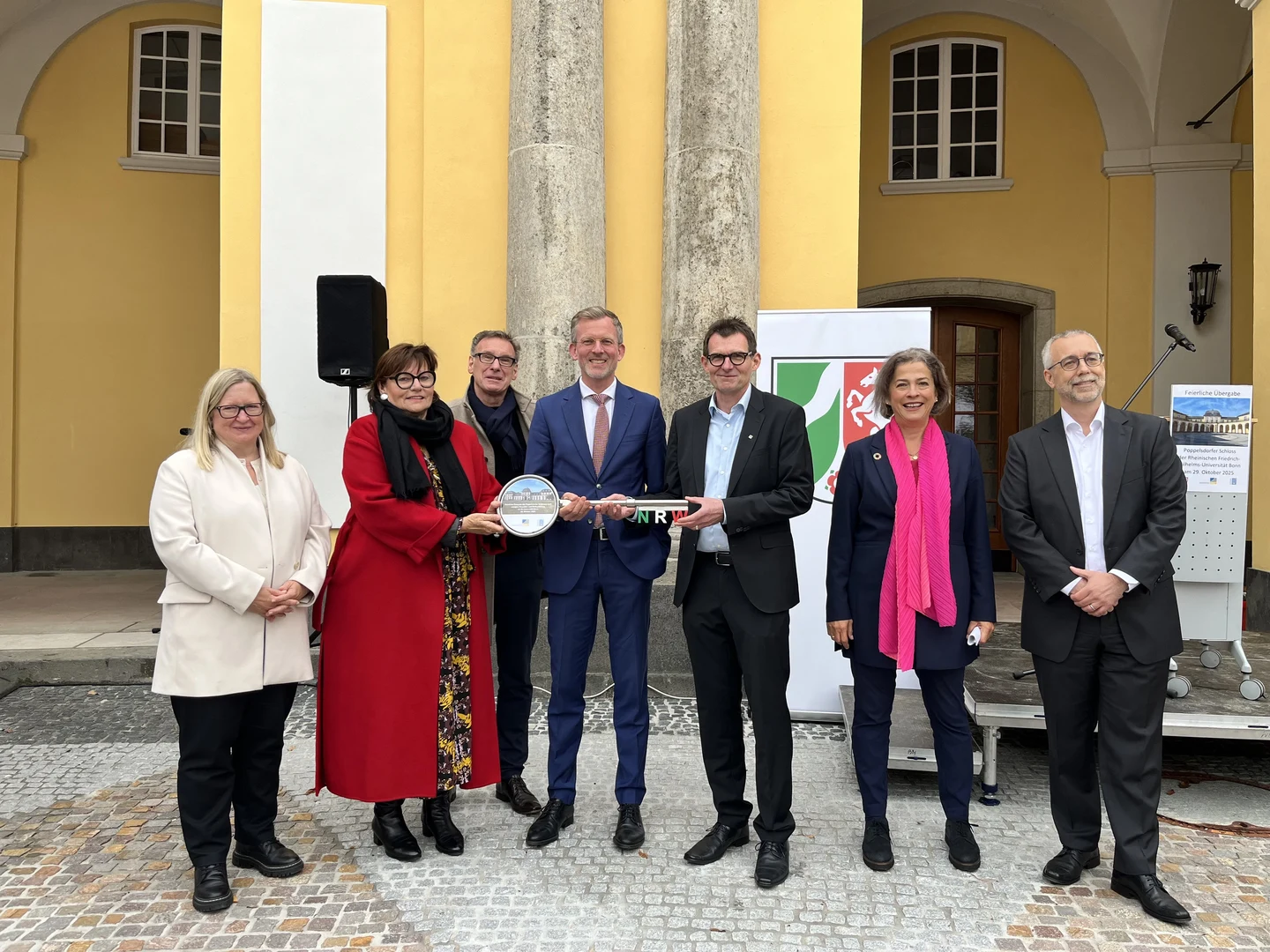
It was attended by numerous high-caliber representatives from the worlds of academia, politics and administration, including: Holger Gottschalk, Provost of the University of Bonn; Dr. Dirk Günnewig, State Secretary in the Ministry of Finance of the state of North Rhine-Westphalia; Gabriele Willems, CEO of BLB NRW; and Dr. Ursula Sautter, Mayor of Bonn.
State Secretary Günnewig said: “With the restoration of Poppelsdorf Palace, we’re investing not only in preserving a building of historical importance but also in future-proofing research and education in North Rhine-Westphalia. It’s great to see live and up close how responsible financial policy is conserving our cultural heritage while creating space for scientific innovation.”
Comprehensive two-stage restoration
Poppelsdorf Palace, an architecturally and historically significant landmark for the city of Bonn, has been the subject of extensive renovation in recent years in a bid to conserve the historical fabric of the building and ensure that it remains both safe and functional over the long term. The restoration work involved laying new natural-slate tiles on all the roofs and fitting new roof boards, while parts of the truss had to be replaced on account of their age. The facades also underwent significant restoration: besides plastering, stucco and painting work, the historical wooden windows were carefully refurbished and parts of the natural-stone frames on the facade were restored. The railings in the inner courtyard and alongside the steps in the Botanic Garden next door were also replaced.
“It’s great to see Poppelsdorf Palace looking so radiant again thanks to the excellent teamwork between BLB NRW, Central Administration and the departments involved,” said Provost Holger Gottschalk. “I’d like to thank everyone who helped to plan, coordinate and deliver the project with such care and dedication, as we’d never have reached this milestone without their efforts.”
All the work was carried out without interrupting day-to-day operations. Despite the logistical and organizational challenges that this posed for all parties, the Botanic Garden and the University departments, institutes and museums based in the palace were able to remain open while the restoration was ongoing.
“With the restoration work now complete, the listed Poppelsdorf Palace will not only be structurally safe for the foreseeable future but will also remain a vibrant place for research, teaching and the general public,” added BLB NRW CEO Gabriele Willems.