


The “SuperWave” quantum optics project involves researchers studying the interactions between individual photons and individual atoms. “One area of research that’s highly relevant at the moment is how to take these systems, which are as small as they could possibly be, and gradually assemble them into larger materials,” says Professor Sebastian Hofferberth from the Institute of Applied Physics at the University of Bonn. What is important here, he says, is that the fundamental quantum mechanics is preserved while the process is scaled up.
As a research field, optics has experienced something of a split over the past 50 years: whilst quantum optics involves investigating the underlying processes, nonlinear optics—plus the vast field that is optical engineering—is all about studying phenomena and applications in “real-life” materials. “Uniting these two branches is a big dream,” Hofferberth says. It is something that a great many groups are working toward with a very wide range of approaches. “In ‘SuperWave,’ we’re proposing a new path that will hopefully get us to this ambitious goal,” says the researcher, who is a member of the Matter Transdisciplinary Research Area (TRA) and works in the ML4Q Cluster of Excellence at the University of Bonn.
Even though 100 quantum systems connected to a light source sounds a manageable number, a system that large would lie outside the bounds of all current theory and could not be calculated using existing methods. “So our experiments are designed to furnish new insights for quantum theory as well as lay the foundations for potential applications in optical quantum technology,” Hofferberth says. Professor Arno Rauschenbeutel from Humboldt-Universität zu Berlin, Professor Sebastian Hofferberth from the University of Bonn and Professor Thomas Pohl from Aarhus University in Denmark are collaborating on the project. Of the more than €8 million in funding available under the Synergy Grant, the team in Bonn will be receiving some €2.8 million.
Horses as elements of power
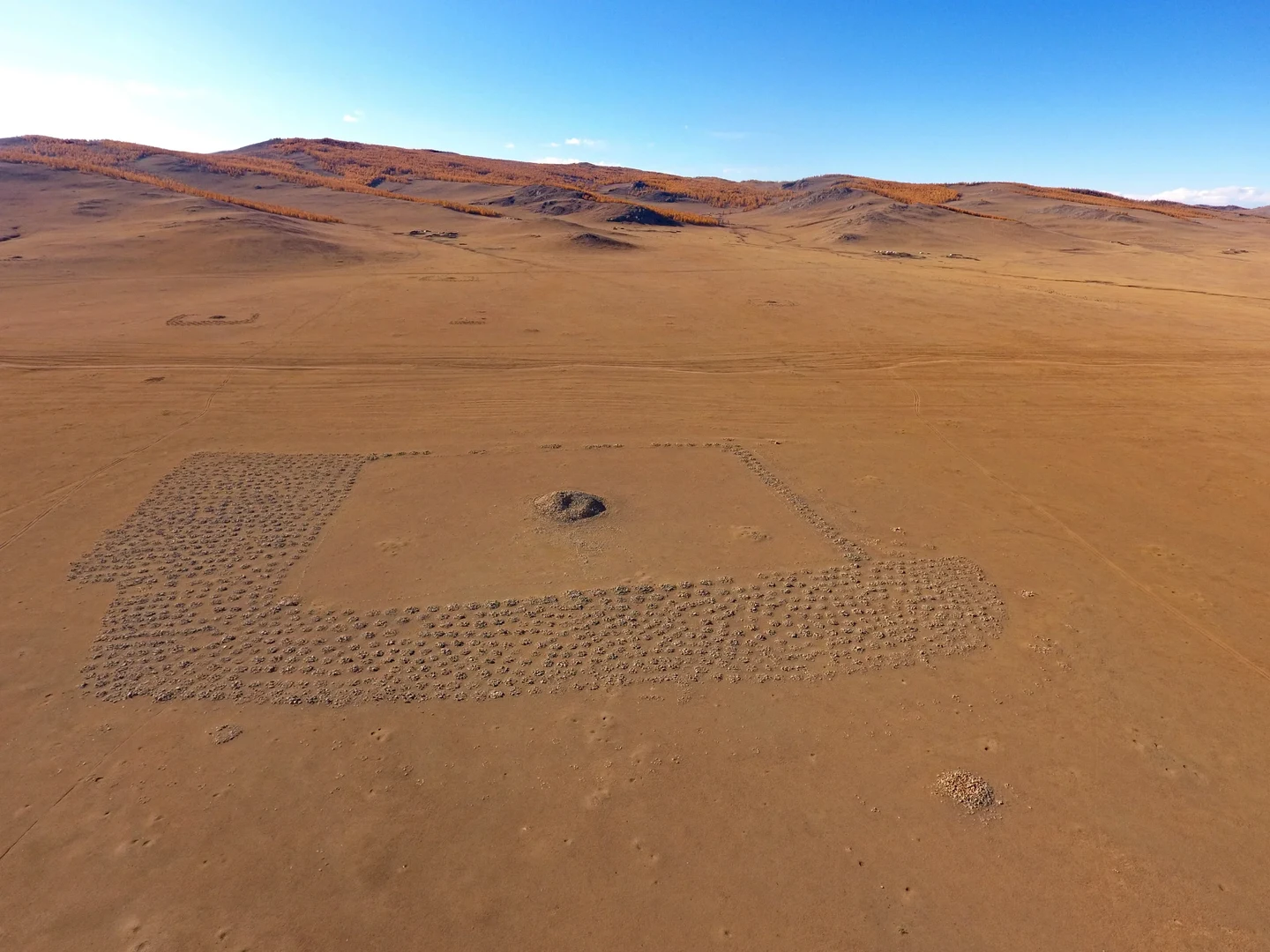
Dr. Ursula Brosseder, a Privatdozentin (unsalaried university lecturer remunerated directly by students’ fees) from the Department of Prehistoric and Early-Historic Archaeology at the University of Bonn is excited by the prospect of shedding light on the archaeology of the eastern Eurasian steppes with the help of the “Horsepower” ERC Synergy Grant project. “Our project is studying two very different cultural systems and their interdependencies in a unique way and will show just how vital these were for our understanding of state formation,” the researcher explains.
The “Horsepower” project is made up of an international team of researchers from the University of Oxford (Professor Chris Gosden, Archaeology), CNRS Toulouse (Professor Ludovic Orlando, Equine Genetics), the British Museum (Dr. Ruiliang Liu, Metallurgy) and the University of Bonn (team led by Ursula Brosseder). The researchers are investigating the interdependencies between cattle herders from the eastern steppes of Eurasia and sedentary societies in China.
They are aiming to produce the first comprehensive picture of the material foundations of two vast empires, that of the Xiongnu in Mongolia and the Qin in China. The Xiongnu came to prominence in 209 BCE, founding the first in a long line of steppe empires that ended with the rise of the Mongols 1,400 years later. The Qin dynasty conquered China in 221 BCE and provided the model for the bureaucratic Chinese state that exists to this day. Both powers evolved with the aid of local historical forces but also in interaction with each other. The core hypothesis is that horses were taken from the steppe to China, where they were exchanged for bronze. As well as being crucially important as an element of military might, horses also played a central role in rites and rituals.
Together with partners from the National University of Mongolia and the First Emperor Mausoleum Museum in China, the “Horsepower” team is researching the history of the sacrificial economy between 1500 BCE and 0 CE with the help of targeted excavations in both countries, including at the mausoleum complex of the first emperor of China. The team is using genetics to study the management of horse herds and the exchange of horses, metallurgy to gain insights into the production, recycling and exchange of bronzes, and archaeology to investigate burial grounds that will tell them more about cosmology and the ritual system.
Dr. Ursula Brosseder from the University of Bonn is leading the digs and the appraisal of finds together with her team and Professor Tsagaan Turbat from the National University of Mongolia. Her team is also studying the role played by various northern Chinese groups in the exchange that went on between China and the steppes. Of the more than €10 million in funding provided, the researchers from Bonn will be receiving €2.6 million.