


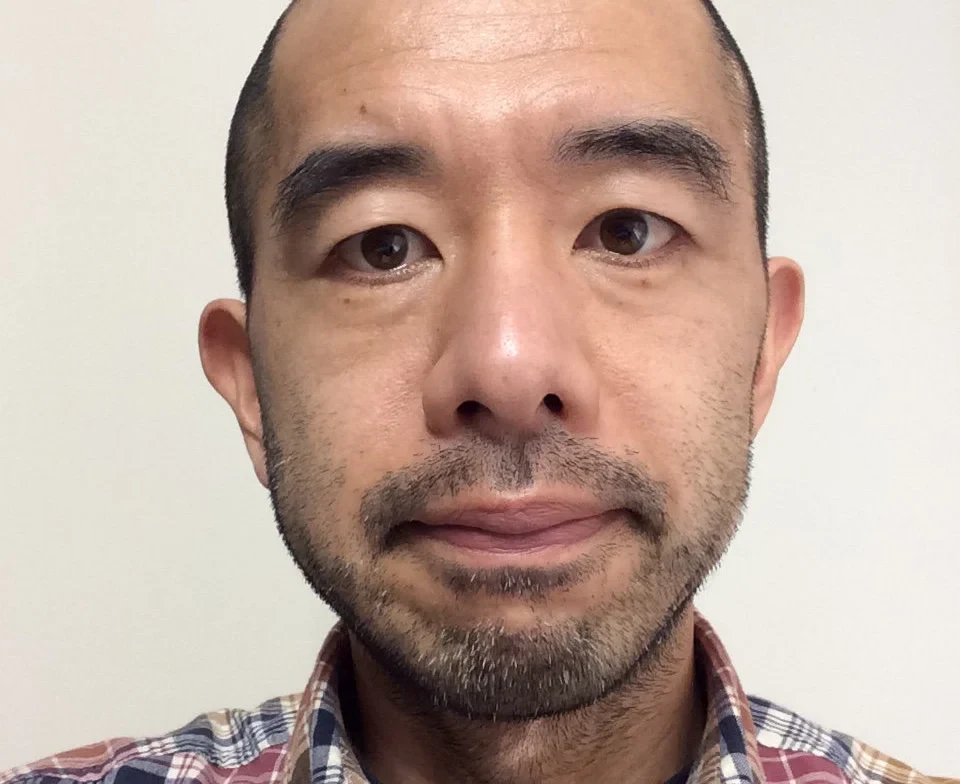
“It’s a great honor for me to receive the highly prestigious Humboldt Research Prize,” Ohta says. “I’m extremely grateful to Professor Karl-Theodor Sturm for kindly nominating me.” The Japanese mathematician, who works in the area where geometry and probability overlap, has had several spells as a guest researcher at the University of Bonn and the Max Planck Institute for Mathematics, which is also based in Bonn. The longest of these lasted two years, from April 2006 to March 2008, and was supported by the Japan Society for the Promotion of Science.
“It was during this time that I joined Theo’s group,” Ohta recalls. “It was a highly active period, coming as it did in the wake of Theo’s influential work on introducing the curvature-dimension condition. I see winning this award as the product of this long and fruitful collaboration.” Ohta is planning a trip to Bonn in either spring or summer: “I’m looking forward to resuming my work with Theo and his team and continuing our project.”
Fundamentally new ideas
“The work we did together back then produced some fundamentally new ideas and findings about optimal mass transport and heat flow on Finsler manifolds, which is an important and far-reaching generalization of the well-known class of Riemannian manifolds,” says Prof. Dr. Karl-Theodor Sturm from the Institute for Applied Mathematics and the Hausdorff Center for Mathematics, one of the Clusters of Excellence. However, he reveals, some major questions have remained unanswered ever since. “Now we’re hoping for some fresh breakthroughs in this area,” Sturm explains.
Key uses of these ideas include analyzing large quantities of data as well as in cosmological models, especially singular Lorentzian spacetime geometries inspired by Einstein’s theory of gravity. “Needless to say, the fact that the Humboldt Research Prize has gone to Professor Ohta is also a ringing endorsement of the reach and reputation of mathematics at the University of Bonn and how attractive it is to research the subject here,” Sturm adds.