


How would you describe the aim of your project to your niece or nephew?
The project aimed to understand how new systems of power developed in the countryside after the end of the Roman Empire. Instead of seeing peasants as people who simply had to accept decisions from above, I looked at how their everyday choices helped shape these systems. In particular, I explored how cooperation with religious institutions and local elites could bring advantages, but also created new forms of dependency. This helps us see feudal society not just as something imposed from above, but as something that developed through interactions between different groups.
What did you find particularly interesting about this research question?
What I find particularly interesting is the possibility of tracing how rural communities responded to major crises in ways that were not simply dictated by central powers. The archaeological evidence suggests that these communities were able to reorganise their settlements, maintain or reshape exchange networks, and negotiate new forms of social and economic relations. This challenges traditional narratives of collapse and highlights instead a variety of local strategies and adaptive responses that can only be understood through long term archaeological analysis.
Which aspects/activities of your research did the Argelander Grant make possible?
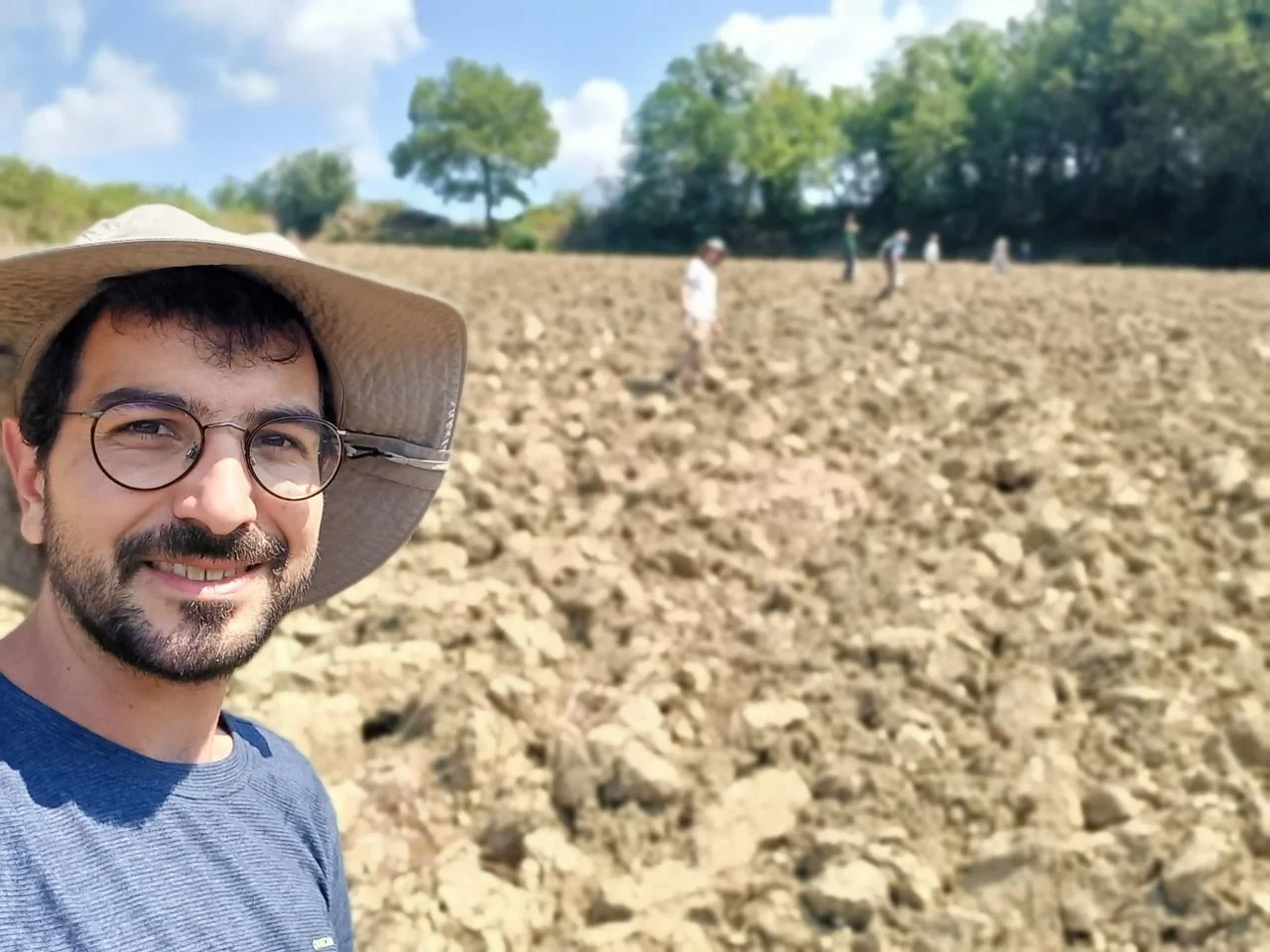
The grant made it possible to carry out a new landscape archaeological project in Umbria, a region where early medieval settlement has not been extensively studied through systematic fieldwork. This allowed me to apply intensive survey methods specifically designed to detect early medieval material, which is often underrepresented in traditional approaches. The project also integrated different types of data, from fieldwalking to spatial analysis, and involved students directly in the research process, giving them practical training in archaeological methodology.
What are the most significant results or insights you gained?
One of the most significant results was the identification of a widespread early medieval presence that had previously remained largely invisible. The distribution of ceramics, especially fine wares from the eighth and ninth centuries, indicates that rural communities were more connected than expected. The variety of these materials suggests multiple sources of production and points to dynamic exchange networks rather than isolated local economies. This supports the idea that peasants were not only producers but also active participants in wider economic systems.
What is the societal relevance of them?
The findings contribute to current discussions on resilience and crisis response. They show that the collapse of large political and economic systems does not necessarily lead to uniform decline. Instead, local communities can develop flexible strategies that combine autonomy with selective integration into wider networks. This perspective is relevant today, as it highlights the importance of recognising local forms of knowledge and adaptation when addressing large scale challenges, rather than relying exclusively on centralised solutions.
What is your current/next project about? Will it build upon the results from your current project?
The next project, funded by the DFG and starting in March 2027, is titled "Local Adaptation to Global Insecurity". It builds directly on the results of the Argelander project. The new project will enlarge the research area to include major Roman road infrastructure and new settlement types. By gathering new data in the new area, the aim is to develop a more comprehensive picture of how rural communities adapted to long term instability.
What has the Argelander Grant meant for your scientific career?
The Argelander Grant was essential in allowing me to establish an independent research profile. It enabled me to test a methodological approach that combines intensive fieldwork with broader theoretical questions about agency, power, and resilience. The results demonstrated that this approach can produce significant new insights, which was crucial in securing further funding and in developing a larger research project that expands these questions at a broader scale.
Thank you for the interview. We wish you all the best and every success for the future!